Proteins4Singapore

Can Singapore Grow More Food Without Growing Its Carbon Footprint

Can Singapore Grow More Food Without Growing Its Carbon Footprint?

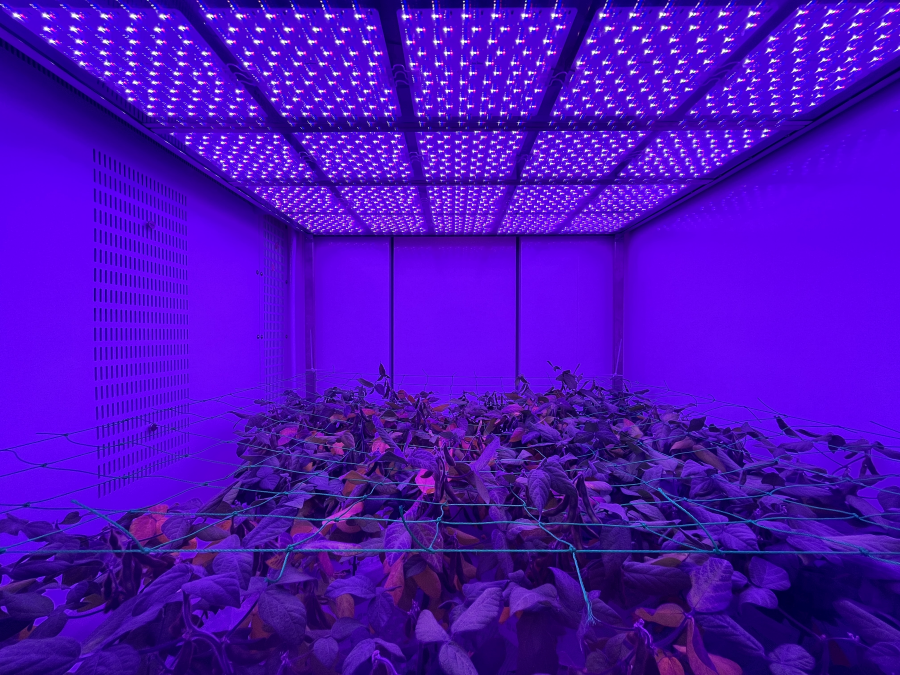
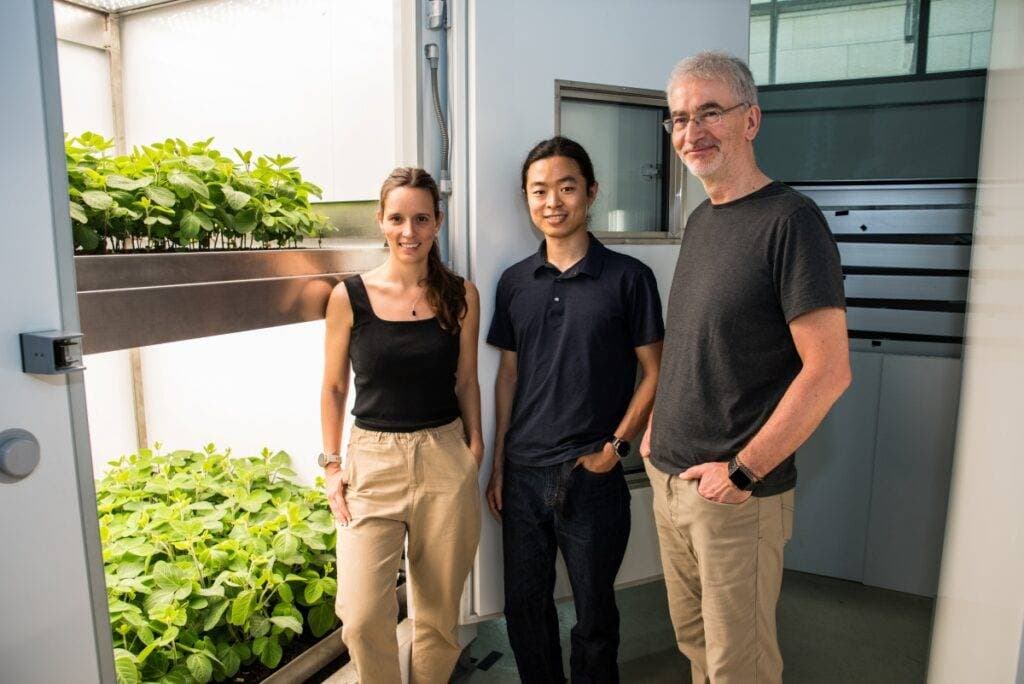
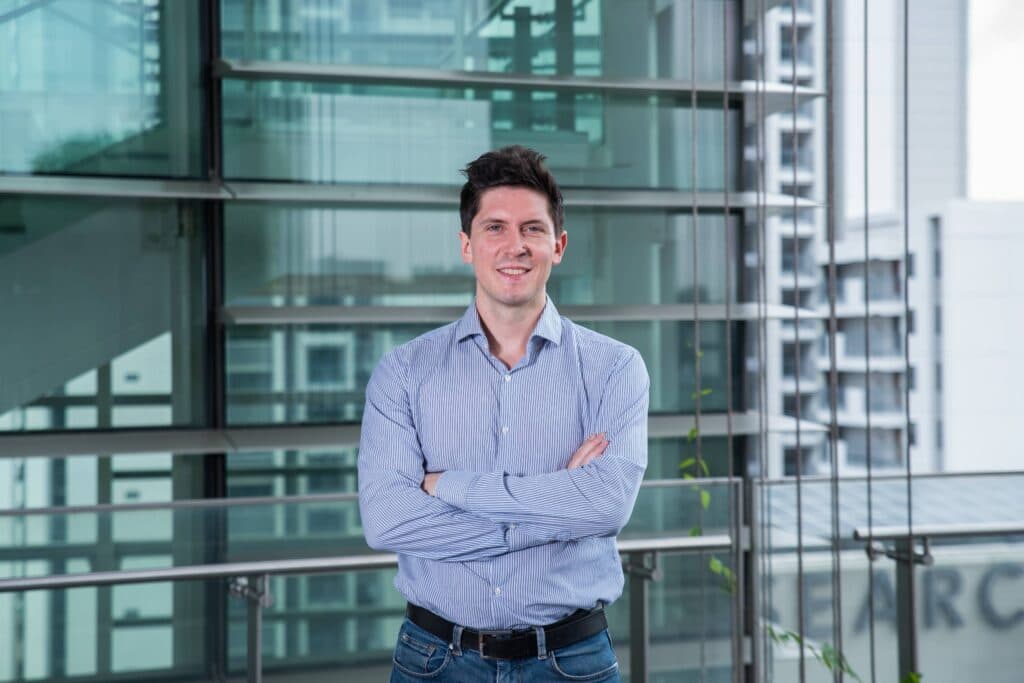
New research published in Nature Communications by Proteins4Singapore defines the energy limits of low-carbon indoor farming. On grocery runs in Singapore, we don’t usually think about where our vegetables come from. Maybe we glance at the country-of-origin label – Malaysia, China, Australia – and move on. Yet when supply chains falter due to a pandemic, geopolitical tensions or unpredictable weather, the effects are felt quickly on our plates (and wallets). For a land-scarce city that imports more than 90% of our food, resilience is not abstract, it is immediate. But what if our vegetables were grown just a few kilometres away? Vertical farms. Step into one and you won’t see soil or sunlight. Instead, rows of leafy green kai lan and arugula growing under bright purple LED lights. All in carefully controlled temperatures shielded from rain, pests and climate volatility. It very well looks like the future of farming! Except, that future runs on electricity – a lot of it. Singapore has set a target to produce 30 percent of its nutritional needs locally by 2030 (otherwise known as the 30 by 30 goal). To achieve this, the government has invested in high-tech solutions such as vertical farms and controlled environment agriculture (CEA), where crops are grown indoors under tightly managed light, temperature and humidity. These innovative systems promise food security during uncertain times. Yet they also rely heavily on energy. As Singapore advances its push for food resilience, a critical question emerges – can we grow more food without growing our carbon footprint? In a recent study published in Nature Communications, Dr Ng Shiwei (TUMCREATE), Professor Kai-Olaf Hinrichsen (Technical University of Munich), and Professor S. Viswanathan (Nanyang Technological University of Singapore) proposes a new way to answer that question by defining what they call a Maximum Energy-use Threshold (MET). Their research suggests that the sustainability of indoor farming depends not just on growing locally, but on how much energy is used and where that energy comes from. Below, we hear from Dr Shiwei on the published paper: Could you explain the concept of Maximum Energy-use Threshold (MET)? We can think of it as a “budget” for how much electricity we can use to artificially create the optimal condition for growing food. This is defined as how much electricity you use to produce one kilogram of food. If you exceed this “budget”, then you are not prudent in how you use your resources and it will not be sustainable in the long run. What were you trying to resolve in your research paper and why does it matter for how we grow food in Singapore? We wanted to provide clarity on how the “carbon-saving” potential of growing crops in a controlled environment is dependent on local context – considering factors such as how food is being sourced and the availability of low-carbon energy. Being able to quickly identify potentially “carbon-saving” ventures matter in Singapore because Singapore intends to reduce and stabilise its emissions intensity by 2030. This goal must be balanced with the goal of boosting local food productivity. Many people think of vertical farms or indoor farms as “green” solutions. What does your research say about this? There is a misconception that because vertical farms or indoor farms grow food locally, they eliminate food transportation and are “greener”. This research confirms that even if the assumption of eliminating food import is true, the “carbon-saving” potential of such a solution depends on how much electricity they use. We find that given the current electricity use estimates of vertical farms/ indoor farms in Singapore, most are not a “greener” option. Why is energy use such a critical factor in evaluating whether CEA is low-carbon or sustainable? Why isn’t it enough to simply grow food locally? It is critical because CEA uses an enormous amount of energy. Why should we care about lower carbon options and just grow food? We must pursue a lower-carbon food production because our environment and its resulting services (food, water cycle, carbon cycle) is a common good. It has also been studied that climate change can adversely affect global food production. Hence, while achieving climate goals and food security can look like competing objectives, the two are intertwined and neither one should be ignored. What are the biggest challenges – both practical and conceptual – in making CEA genuinely low-carbon at scale? Practically, we need a more efficient way to provide light for plant growth. Perhaps fibre-optic cables that transmit natural light indoor for multi-level plant growth. How might your findings influence policymaking around food security and climate action both in Singapore and the global scale? Here, we provide an approach to calculate the MET as an objective and transparent measure of operational prudence that can achieve both food security and climate goals. Policymakers can use the MET as milestones in frameworks regulating production volume and incentivising sustainable innovations. This research was conducted as part of Proteins4Singapore, a five-year strategic research programme hosted by TUMCREATE, dedicated to advancing plant-based alternative protein science and building a sustainable, high-quality protein food supply for Singapore. Read the full paper here: https://www.nature.com/articles/s41467-026-68631-w Publication detailsNg, S., Hinrichsen, O. & Viswanathan, S. Contextual conditions define maximum energy-use threshold in low-carbon controlled environment agriculture for agri-food transformation. Nat Commun 17, 880 (2026). https://doi.org/10.1038/s41467-026-68631-w

The Questions That Made Us Researchers, Leaders, Women in STEM

The Questions That Made Us Researchers, Leaders, Women in STEM

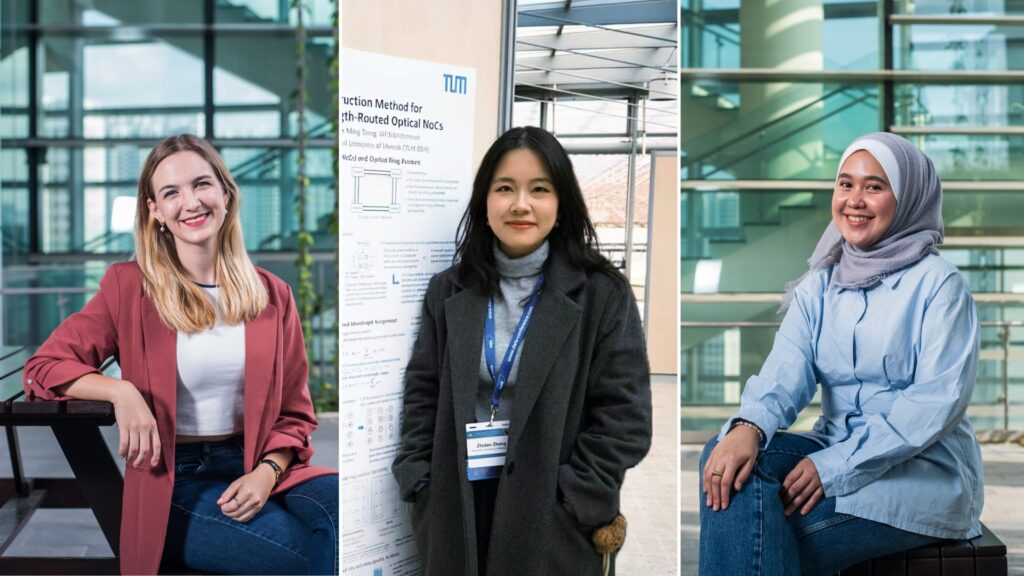
In honour of International Women’s Day, we sat down with three women at TUMCREATE to reflect on the questions that shaped their paths towards science, research and leadership. Here’s Sophia Morsten, Zhidan Zheng, and Nadyssa Willanda’s story. Sophia Morsten Research Associate under Proteins4Singapore Project What question first drew you to your field? “During a hospital internship, I was of course very fascinated by surgical robots, but I found myself unexpectedly captivated by the patients’ meal orders. Listening to them share how their diseases dictated their diets made me realise just how important their daily meals were to them. This led me to ask how our daily food intake impacts us and made me want to explore the countless interconnected topics behind food and human health.” What questions made you realise you belonged in STEM? “I have never really thought in terms of STEM or not STEM, but my direction became clear when I was baking a cake and wondered why egg whites will not whip stiff if there is even a drop of yolk in them. It truly satisfied me to understand this on a chemical level, so I knew I had to pursue something with biology and chemistry. You can imagine how ‘egg-cited’ I was when I found out one could actually study food science!” What question has stayed with you throughout your career? “On a light-hearted, daily basis, the question is often simply, ‘What do I eat for lunch?’. However, professionally, I am constantly struck by how much people assume they know about food while the processing steps remain completely non-transparent. This leaves me wondering how future food choices should be made, provided and processed so that we are no longer making uninformed daily decisions.” Zhidan Zheng Research Fellow under QUASAR Project Was there a question that shaped your path? “During my master’s thesis, my PhD mentors once told me that I had a talent for research. It was not phrased as a life-changing question, but it quietly became one in my heart: ‘Could I really do this?’ I had never thought of myself as someone ‘gifted’. I always believed what I achieved came from effort, not talent. Their words surprised me – almost embarrassed me – yet at the same time, opened a small door to me. For the first time, I allowed myself to consider the possibility that I might belong in academia.” What question has stayed with you? “Is there something in this world that only I can do, or change? I don’t think this means something grand or heroic. It might simply mean a problem I can see clearly, a connection I can make, or a path I can build in my own way. Research became meaningful to me because it gives space for that search. What truly defines me is the ability to sit with a difficult question, to look at it from different angles, and to persist until I find clarity. That realisation changed how I see myself – not as someone defined by achievements, but by the way I think.” What would you tell young women entering STEM? “Do not ask, ‘Am I good enough?’ Ask instead, ‘What am I curious enough to pursue?’ When you face doubt, negativity, or failure, do not let anyone define you or beat you down. Stand up again. We are braver and stronger than we sometimes allow ourselves to believe. So don’t stop dreaming, ladies. Curiosity is stronger than fear.” Nadyssa Willanda Research Associate under Proteins4Singapore Project Was there a question that made you ponder a career in science? “I’ve always been the kind of person who asks, ‘But what’s actually going on?’ There must be an explanation to this phenomenon or interaction. Not in a rebellious way – just genuine curiosity about mechanisms and why it is the way it is. Science just felt like a natural place to satisfy that instinct. It gives you tools to go beyond vibes and actually understand processes. At some point during my PhD, I had to ask myself: Do I still belong here if I don’t romanticize this? Curiosity gets complicated under pressure. But I realized I don’t need to glorify science to belong in it. I don’t see STEM as superior to the humanities. They’re dialectical, they shape each other. Chemistry explains flavour. Culture gives it meaning. The coexistence is the point. That’s where I’m comfortable.” What drew you to your field? “I work in flavour chemistry and I’ve always loved food. What fascinated me was realising how a single molecule, something so invisible, can completely make or break a flavour. It sounds small, but it’s powerful. Taste is chemistry meeting psychology. It’s psychology, memory, culture, emotion layered onto molecules. That intersection felt too interesting to ignore.” What question would you like young women to ask? “How can we maintain genuine curiosity in systems that sometimes reward output over reflection? I’m still learning how to protect that part of myself. If curiosity is our inheritance, then protecting it so we can ask better questions is simply honouring it.” At TUMCREATE, we are proud to work alongside women who continue to ask bold and thoughtful questions. Because progress does not begin with certainty. It begins with curiosity. Happy International Women’s Day!

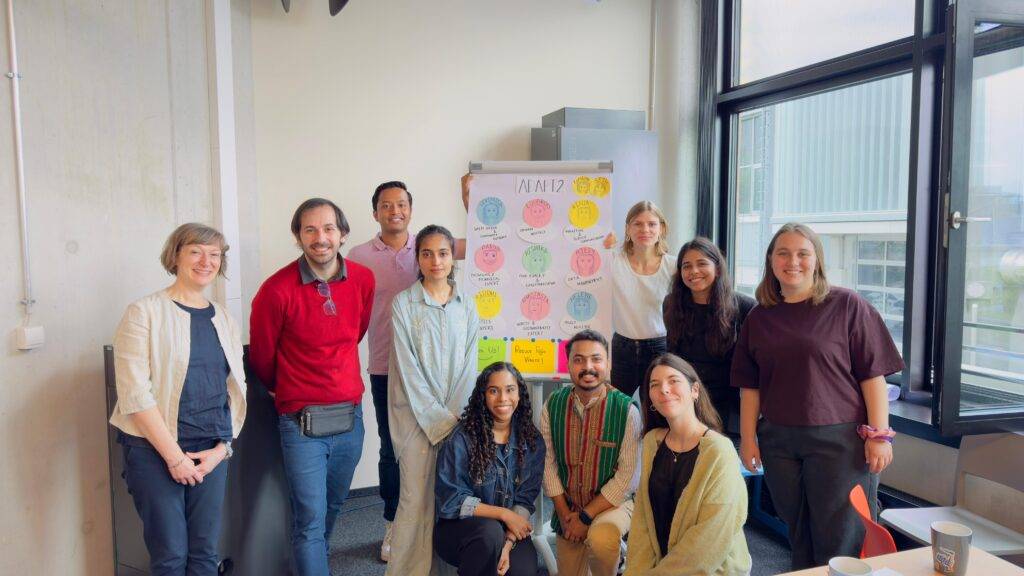
Rishika (second from right in second row) with her team

TUMCREATE Researchers Strengthen their Soft Skills at Imperial-NTU-TUM Global Fellows Programme 2025

From sparking fresh ideas to building global connections – TUMCREATE doctoral researchers took collaboration and creativity to the next level at the Global Fellows Programme (GFP) 2025. This year’s fifth trilateral GFP was held in Munich, Germany, in partnership with Imperial in London, Nanyang Technological University (NTU) and Technical University of Munich (TUM).    (Photo credit: TUM-GS) Following the theme “Multidisciplinary Solutions for Climate-Responsive Societies,” our research associates Shiddalingeshwar Devihosur (Sid), Sophia Morsten, and Rishika Batra engaged in cross-cultural discussions and co-created innovative ideas to tackle global challenges for sustainability.  Sid is researching on the integration of renewable energies in ASEAN with a focus on power engineering jointly with teams from NTU. Rishika and Sophia are food technologists specialising in alternative protein as part of the flagship programme Proteins4Singapore. We caught up with Sid, Sophia and Rishika about their experiences with their peers in Munich.   Q. What was your main motivation to apply to the Global Fellows Programme?  Sid: One motivation was fostering inter-disciplinary collaboration with people from diverse backgrounds, something that is not always possible while working in a group from a similar field. Being rather new in the field, it is important for me to establish a strong network and to understand what other students are working on and how they overcome problems in their PhD.  Sophia: It was a valuable opportunity to connect with and get to know my “home institution,” since I had not studied at TUM before. I also saw it as a chance to step outside the research bubble of food science and explore possibilities that extend beyond my field.  Rishika: My primary motivation was to collaborate with researchers from diverse disciplines to explore innovative solutions to climate-related challenges. As a food science doctoral candidate working on sustainable alternative proteins, I wanted to expand my perspective beyond the lab by engaging with engineers from other disciplines, environmental scientists, and policy specialists. The programme offered a unique platform to exchange ideas, bridge disciplinary gaps, and develop actionable strategies for a climate-resilient solutions.    Q. What are your key takeaways from the 5-day programme?  Sid: The GFP allowed me to not only communicate from the perspective of an energy system modeler but also effectively listen to different perceptions to a common problem. Finding a consensus to resolve diverging opinions was also a crucial part of the programme. This is a common and foreseeable issue in academia, especially when working on a project consisting multiple working parts.   Sophia: It was fascinating to see how we could apply our existing skills to completely new projects, how challenging it is to communicate complex topics clearly, how many minds it takes to create something new, and how quickly a strong group spirit can develop.  Rishika: The programme reinforced the importance of integrating social, technological, and environmental dimensions when designing solutions. I learnt how multidisciplinary teams can accelerate impact by aligning expertise. The workshops also enhanced my skills in cross-cultural communication, rapid ideation, and translating scientific research into policy-relevant recommendations.   Q. Tell us what sort of creative innovations to address global challenges you have developed under the programme theme “Multidisciplinary solutions for climate-responsive societies”?  Sophia: I worked in the same team as Sid, and we tackled Delhi’s air pollution caused by stubble burning on the agricultural lands around the city. Our approach combined tradition and innovation; instead of burning crop residues, we explored turning them into greener biochar, which could be returned to farmers to enrich their soil. The controlled combustion process can further be used to produce energy, which we considered storing in used EV batteries. This circular solution not only reduces pollution but also adds value to existing practices, showing how multidisciplinary thinking can create practical, climate-responsive solutions.  Rishika: I was in another team and designed a draft proposal for tackling food waste in India in off-grid or resource-limited settings. Our approach was to integrate intelligent tracking on food packaging into an app. That app would enable all the different wholesalers of fruits and vegetables across Bangalore to reduce food waste.    Q. How does this contribute to your respective research work in renewable energy and alternative protein?  Sid: The learnings will be transferable to any field in a non-technical sense as the focus of the workshop – as emphasised by the coaches – was the process of collaboration rather than the technical aspect of the project. Collaborating and effective communication with people who may not understand the technical terminologies from my field were the biggest takeaways from this programme.  Sophia: It showed me how to transfer skills across disciplines. Collaborating with people from different backgrounds highlighted the importance of clear communication when explaining complex processes and how crucial it is to have a safe and trusting team environment where you feel comfortable asking any question.  Rishika: This programme brought fresh perspectives for me and taught me how to collaborate with people from other disciplines to further enhance my brainstorming skills. It also gave me an avenue, how I can put forth my ideas in a large group, through effective communication.    Q. Why should other doctoral candidates sign up for the Global Fellows Programme?  Sid: It’s a great platform to put yourself out of your comfort zone to network in a large setting, voice your opinions out loud, talk through ideas without any restrictions or being judged. With the hustle of your own PhD work, this serves as a wonderful change in routine to really learn so many things from so many people, and to foster great friendships and connections which will be certainly needed after completing your PhD. Highly recommended!  Sophia: I’d especially recommend it for early-career researchers. The programme brings together like-minded people who are eager to create something new. It challenges you to work in a larger team and develop a project in just one week – a skill that will be valuable in any future career. Along the way, I met wonderful peers whom I look forward to seeing again.  Rishika: The programme is a rare

TUMCREATE 15TH anniversary_

TUMCREATE Celebrates 15 Years in Singapore

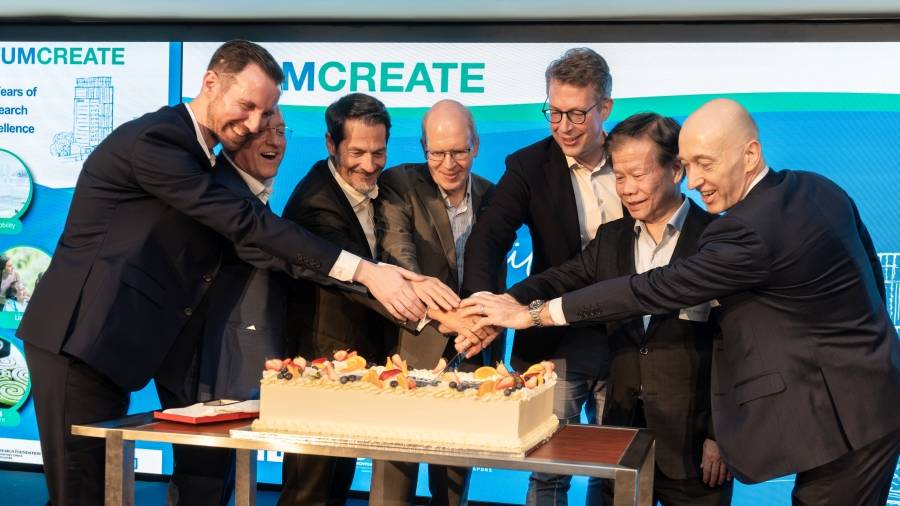
News TUMCREATE Celebrates 15 Years in Singapore TUMCREATE, the multidisciplinary research branch of the Technical University of Munich (TUM) in Singapore, celebrates its 15th anniversary — a milestone highlighting impactful research, pioneering innovation, and strategic collaboration to address real-world challenges since its inception in 2010. Bavaria’s Minister of Science Markus Blume and TUM President Prof. Thomas F. Hofmann took part in the celebrations during their visit to Singapore. Hosted under Singapore’s National Research Foundation (NRF) Campus for Research Excellence And Technological Enterprise (CREATE), TUMCREATE has contributed to advancing scientific solutions and a legacy of impact. TUMCREATE has been driving research across diverse domains such as electromobility, sustainable food solutions and processing technology, energy systems, and health tech with other leading Singaporean and global universities and research institutes. TUMCREATE’s current flagship programme, Proteins4Singapore, addresses the critical need to ensure a sustainable, nutritious, and secure food supply in rapidly growing urban environments and supports Singapore’s ’30 by 30′ food security goal of producing 30% of its nutritional needs domestically. The collaborative environment at TUMCREATE has enabled deep academic and research exchanges leading to positive results. One successful milestone was EVA, the world’s first electric taxi for the tropics, developed in 2015 in collaboration with Nanyang Technological University. TUMCREATE’s simulation technologies City Mobility Simulator (CityMoS) and Multi Energy System Modelling & Optimisation (MESMO) have been used in various government and industry projects to support the electrification of Singapore’s transport systems, infrastructure planning, and traffic flow optimisation. Based on a digital twin of Singapore, CityMoS’s utilisation to simulate traffic and mobility systems in real time has extended beyond Singapore through its commercial spin-off, intobyte. TUM President Prof. Thomas F. Hofmann says: “TUMCREATE, as a vital part of our activities in Singapore, exemplifies the spirit of scientific excellence, the passion for impact, and the added value of international cooperation that defines our university’s global mission. It brings together talents from different disciplines and continents, converges German engineering competences and Asian ingenuity, and connects TUM’s entrepreneurial spirit with Singapore’s dynamic innovation systems. I am confident that our teaching and research activities in Singapore will help to shape a smarter, more sustainable future – together.” Bavaria’s Minister of Science Markus Blume says: “Happy birthday! We are celebrating the 15th anniversary of an international success story. The cooperation between our Bavarian innovation ambassador, TUM, and the who’s who of innovation makers from Singapore has created a very special spirit. TUMCREATE is a strong platform for research cooperation between the innovation regions of Bavaria and Singapore – a bridge of excellence between the continents. For us, it is clear that innovation comes from cooperation.” Professor Subodh Mhaisalkar, NRF Executive Director says: “Over the past decade and a half, TUMCREATE has built robust partnerships with local institutions and industry, developing innovative solutions across various domains including sustainability, urban mobility, food sciences and nutrition. While bridging the gap between cutting-edge research and practical applications, the centre has provided solutions for topics related to deployment of electric vehicles, cargo management, and resource circularity.” Advancing TUM’s Global Mission The success of TUMCREATE today reflects TUM’s mission to drive excellence in research and innovation. TUMCREATE is now setting its sights on new frontiers including healthcare, artificial intelligence and quantum technologies to advance solutions that align closely with Singapore’s Research, Innovation and Enterprise strategies. Prof. Ulf Schlichtmann, CEO of TUMCREATE, says: “Pioneering solutions and impactful real-world applications are ingrained in our scientific approach. We look forward to many more successful years of pushing the boundaries of science and innovation with TUM and our academic and industry partners in Singapore.” About TUMCREATE Following the inception of TUM Asia as TUM‘s teaching branch in Singapore in 2002, TUMCREATE was founded in 2010 as a multidisciplinary research center in Singapore. TUMCREATE fosters collaborative research between the Technical University of Munich (TUM) and the world’s leading universities, local institutions, and public agencies as well as regional industry partners to contribute to the sustainable transformation of societies through science and technology. Funded by the National Research Foundation, TUMCREATE’s multi-faceted research projects span topics from urban mobility, food science and technology, biomedical technology, and preventive care to solutions for a carbon-neutral megacity. Over the last years, the research teams presented more than 1,000 publications, with more than 150 doctoral students and postdocs qualified for a career in research and industry. About Singapore’s CREATE CREATE is an international collaborative housing research centres set up by top universities. At CREATE, researchers from diverse disciplines and backgrounds work closely together to perform cutting-edge research in strategic areas of interest, for translation into practical applications leading to positive economic and societal outcomes for Singapore. The interdisciplinary research centres at CREATE focus on four thematic areas of research, namely human systems, energy systems, environmental systems and urban systems. Media and Communications: communications@tum-create.edu.sg ← Back to News

TUMCREATE Securing our Food Future with Controlled Environment Agriculture

Securing our Food Future with Controlled Environment Agriculture

Controlled environment agriculture (CEA), including vertical farming, offers substantialgains in productivity while reducing environmental impact. CEA systems can complement traditional agriculture by providing local, year-roundfood production that is independent of climate, region, or weather. Policy support, technological innovation, and public engagement are crucial to unlockthe full potential of CEA.   Climate change and a decline in available arable land are reducing crop yields which can significantly impact food security. Sustainable solutions to feed the increasingly growing population are urgent.   A research team as part of the Proteins4Singapore (P4SG) project, co-led by TUMCREATE in Singapore and the Technical University of Munich (TUM), proposes that future controlled environment agriculture – CEA systems can boost productivity for several food sources. In CEA, all growth conditions are carefully controlled to optimise growth and yield. Controllable parameters impacting these growth conditions span temperature, humidity, light, carbon dioxide concentration, and nutrients. All the outputs can be finely tuned, largely minimising environmental impact.   CEA enables a consistent year-round production of safe food and can complement traditional farming, according to Dr Vanesa Calvo-Baltanás, research fellow at TUMCREATE and the lead researcher of this finding. The team investigated the yield potential of six food groups cultivated under CEA conditions, including crops, algae, mushrooms, insects, fish and cultivated meat.   “Controlled environment agriculture systems can be set up anywhere in the world and remain unaffected by climate, weather, and location. Additionally, they can reduce water use by over 90%, which greatly benefits water-scarce regions. This can greatly enhance food security for drought-prone areas,” says Dr Vanesa Calvo-Baltanás, who works with Prof Senthold Asseng, Professor of Digital Agriculture at TUM and a co-Lead-Investigator of the P4SG project.   Despite the current high energy requirements combined with high electricity prices, as nations work towards climate resilience and food security goals, CEA could play a key role in supporting initiatives like Singapore’s ‘30 by 30’ food security strategy and the European Union’s ‘Farm to Fork’ policy by reducing the environmental and climate impact of primary production. The ‘30 by 30’ agenda aims to locally produce 30% of the city-nation’s nutritional needs by 2030.   “Controlled environment agriculture can revolutionise food production. However, to fully unlock its full potential, technological advancements to reduce energy requirements, policy incentives, and public engagement are needed. Our study provides a framework to help policymakers, industry leaders, and researchers to make informed decisions for developing sustainable food production systems,” says Dr Calvo-Baltanás.   The research is carried out by TUMCREATE, and supported by the National Research Foundation Singapore under its Campus for Research Excellence And Technological Enterprise (CREATE) programme.   Publications details Calvo-Baltanás V, Vilcinskas A, Brück T et al. The future potential of controlled environment agriculture. PNAS Nexus. 2025. doi: 10.1093/pnasnexus.pgaf078   Futher information Dr Vanesa Calvo-Baltanás has been exploring soybean productivity under CEA, in vertical farm settings with Proteins4Singapore at TUMCREATE, Singapore. The P4SG project aims to research sustainable and functional proteins to supply urban areas such as Singapore. P4SG research partners: Nanyang Technological University, Singapore Institute of Food and Biotechnology Innovation, Singapore Institute of Technology   About TUMCREATE Founded in 2010, TUMCREATE is a multidisciplinary research platform fostering bilateral research exchanges between the Technical University of Munich (TUM) and the world’s leading universities, local institutions, and public agencies as well as industry partners from the region to contribute to the sustainable transformation of societies through science and technology. Funded by the National Research Foundation, TUMCREATE’s multi-faceted research projects span topics from urban mobility, food science and technology, biomedical technology, and preventive care to solutions for a carbon-neutral megacity. Website | LinkedIn | Facebook   Proteins4Singapore Proteins4Singapore is a five-year strategic research programme hosted by TUMCREATE, dedicated to advancing plant-based alternative protein science and building a sustainable, high-quality protein food supply for Singapore. This initiative establishes a holistic research platform that integrates innovative cultivation techniques, state-of-the-art processing technologies, and new food engineering approaches alongside a molecular characterisation of flavour perception, toxicology, and health impact assessment of novel foods. Guided by techno-economic and techno-functional evaluations, the consortium aims to develop scalable and sustainable solutions for the future of alternative proteins. Website   For further information, please contact: Faye Soo TUMCREATE Corporate Communications Email: faye.soo@tum-create.edu.sg

Food@CREATE Seminar 250313_1 (165)

Food@CREATE Seminar 2025: Exploring the Frontiers of Food Science and Technology

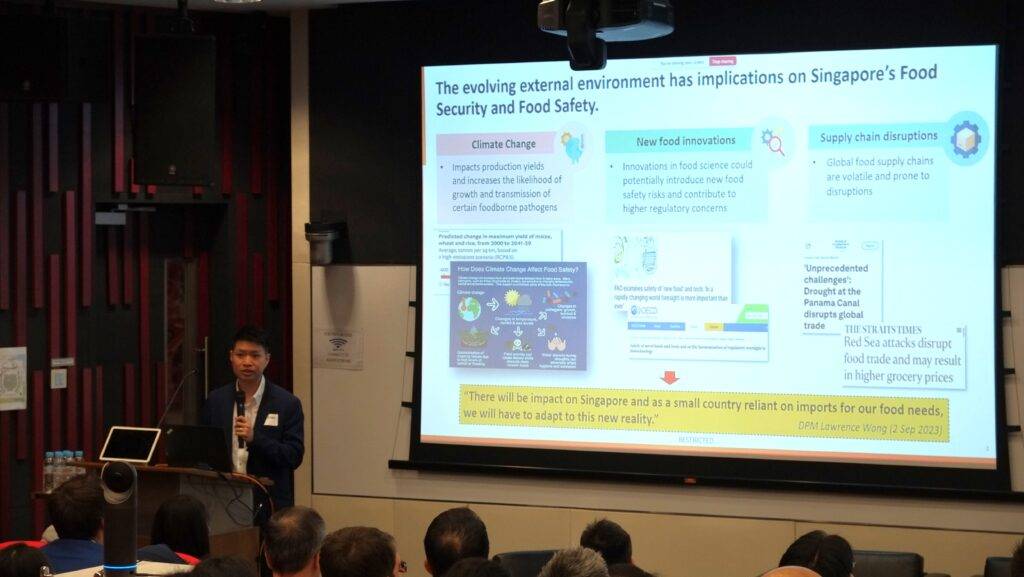
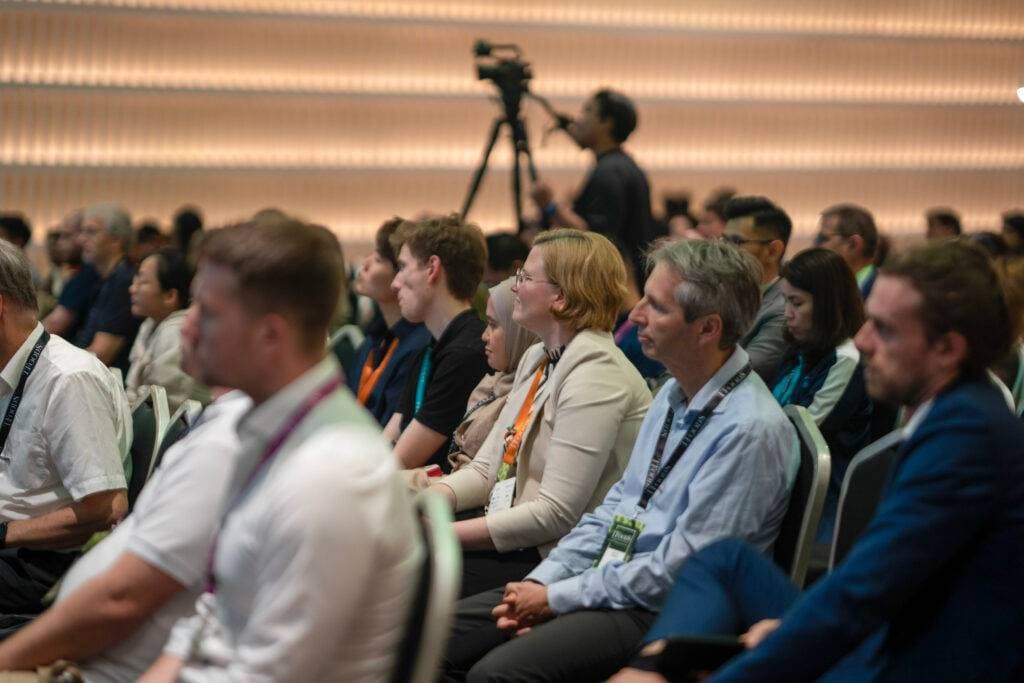
Over 200 researchers, scientific leaders, policymakers, and industry stakeholders gathered for a scientific exchange on the future of sustainable food production in Singapore and beyond at the Food@CREATE Seminar on 13th March 2025.   The fully booked seminar on the theme: ‘Food for Thought: Exploring the Frontiers of Food Science and Technology’ was supported by the National Research Foundation (NRF) on the CREATE campus. TUMCREATE and the co-organising research institutes – Illinois ARCS, Singapore-HUJ Alliance for Research and Enterprise (SHARE), Singapore-MIT Alliance for Research & Technology (SMART), and Wageningen University & Research, together with Nanyang Technological University hosted several engaging sessions with deep insights and inspiring discussions.    The five NRF-funded food research programmes came together to share advancements in alternative proteins, advanced food production systems, and sustainable agricultural innovations in support of Singapore’s ambitious “30 by 30” food security goals.      The welcome address by Dr Ngin Hoon Tong, Senior Director of the Science & Technology Division at the Singapore Food Agency (SFA), set the stage for insightful discussions. The introductory session emphasised the evolving environmental factors impacting Singapore’s food security and food safety. These challenges include climate change affecting production yields in the region, a volatile global food supply chain that may be prone to disruptions and emerging food innovations that could potentially introduce new food safety risks and contribute to higher regulatory concerns.    Researchers from various teams presented their work on novel food technologies and delved into breakthrough innovations during the talks, exploring cutting-edge advancements in food science and technology.      Among other programme introductions was Prof Yong-Su Jin’s presentation of challenges in applying biotechnology to foods. The leading investigator at the Illinois-ARCS’s Centre for Precision Fermentation and Sustainability described the use of microbial cell engineering to convert previously unutilised or inedible part of crops into molecules with nutritional value such as peptides, lipids, and vitamins.      Andrea Spaccasassi, a research fellow at TUMCREATE’s Proteins4Singapore project, presented his research on decoding the flavor of roasted chicken meat using the SENSOMICS approach in one of the deep-dive technical talks. After identifying and quantifying key odorants responsible for the characteristic aroma of roasted chicken, he attempts to recombine its full flavour profile, aiming at creating a synthetic replica of the original flavour. The approach seeks to uncover the identities and ratios of the molecular components that make up the authentic chicken flavor, ultimately guiding the flavour optimisation of alternative protein-based food products.    During the panel discussion on ‘The Present and Future of Food Research in Singapore,’ experts from Massachusetts Institute of Technology, Nanyang Technological University, Hebrew University of Jerusalem, Technical University of Munich, Wageningen University and University of Illinois Urbana-Champaign explored strategies to keep Singapore at the forefront of food science.      Rounding up the event were networking sessions and interactive poster presentations, which showcased groundbreaking developments in alternative proteins, food sustainability, and agri-tech solutions. The cross-institutional exchange deepened scientific dialogues and promoted shared learning across disciplines, reinforcing the collaborative spirit that drives innovation in food science and technology.    Thank you to everyone who joined us in making the event a success. We look forward to future opportunities and platforms for knowledge exchange to pave the way for a resilient food future.  

TUMCREATE TFoodS 2024_1 (1)

TFoodS Conference 2024 Sees Global Experts Nurture Singapore’s ’30 by 30′ Sustainable Food Vision

12th November 2024 — TUMCREATE, the research facility of the Technical University of Munich (TUM) in Singapore, kicked off the second edition of its Proteins4Singapore (P4SG) research programme’s TFoodS Conference, themed “Engaging with Alternative Proteins,” at Surbana Jurong Campus on 5th-6th November 2024.   The Guest of Honour for TFoodS, Dr Amy Khor, Senior Minister of State for Sustainability and the Environment, opened the two-day conference aimed at fostering connections and empowering researchers in the local and international community.   The TFoodS Conference reinforced Singapore’s dedication to establishing resilient and sustainable food systems, making significant strides towards the national goal of food security.   Global experts in food texturisation, agriculture, nutrition, food chemistry, health, and the circular economy gathered to share the latest results, present fresh insights, and engage in dynamic panel discussions.   Building a stronger rapport with fellow researchers, leading experts and industry players in food science and beyond allows a greater expansion of the food technetwork.   “I am delighted to witness the dynamic networking between Proteins4Singapore, the TFoodS conference, impactful industry partners, and deep tech landscapes such as Google and SGInnovate. We hope that new partnerships emerge from the conference,” said Prof. Dr. Gerhard Kramer, Senior Vice President of Research and Innovation at TUM.   Both the international conference and the comprehensive research programme, P4SG, are aligned with Singapore’s “30-by-30”[1] initiative, aimed at producing 30% of the nation’s nutritional needs locally by 2030. TUMCREATE’s researchers contribute to creating a sustainable food ecosystem together with leading institutions such as Nanyang Technological University (NTU), Singapore Institute of Technology (SIT), and Singapore Institute of Food and Biotechnology Innovation (SIFBI). These partners work towards strengthening Singapore’s food security and sustainability through the P4SG five-year research project launched in 2022.   Besides fostering collaboration and connecting global and local expertise, the TFoodS Conference also set the stage for the next phase of P4SG. Building on the momentum from this event, it is poised to advance groundbreaking solutions that address Singapore’s food security and sustainability goals.   “The next years for P4SG will be pivotal as we aim to launch a new phase that drives forward-thinking, transformative solutions. Our focus now is to harness bold, disruptive ideas for the programme’s next phase, ensuring we continue to contribute to Singapore’s dynamic research and innovation landscape. Building partnerships with like-minded people is key to creating lasting impact.” said Professor Thomas Becker, Chair of Brewing and Beverage Technology at TUM School of Life Sciences and Scientific Director of P4SG.   Through events like the TFoodS Conference, TUMCREATE fosters invaluable connections across the food science ecosystem, empowering researchers and industry professionals to explore innovative solutions together. This collaborative environment paves the way for new partnerships, driving forward advancements that respond to the evolving demands of food production and technology.   “The TFoodS Conference has emerged as an exceptional platform for scientific discourse, collaboration, and technology showcases. I had the pleasure to establish TFoodS together with the food science and innovation community to enable exchange and collaboration here in Singapore,” said Dr. Stefan Klade, Director of Research and Innovation at TUMCREATE and coordinator of the P4SG programme.   “By bringing together international and Singaporean partners across the food science and technology ecosystems, we are connecting expertise on these critical topics with decision-makers for emerging trends. Singapore, with its unique challenges in food production and its unparalleled drive for innovation, offers the perfect environment for this vital exchange.”   Some conference highlights included: • Tech and Protein Innovation Fair: Attendees explored tech advancements,sustainable food solutions, and collaborative opportunities designed to reshape industries, and improve lives. This helped to inspire and spark new ideas, forge meaningful collaborations, and unlock innovative solutions that drive lasting impact. • Science Kiosk: An interactive hub, the TFoodS Science Kiosk showcased the innovative research approaches of the P4SG consortium. Through technology displays, interactive process demonstrations, and live presentations, visitors explored alternative protein sources such as microalgae and vertically farmed soy, gained insights into gut microbiome research, and discovered emergingtechnologies like 3D food printing. Attendees were alsoguided on a sensory aroma journey and engaged in sustainability simulations. The Science Kiosk offered a unique opportunity for attendees to gain first-hand insights into alternative protein research and food security in Singapore’s urban landscape.   With food security and sustainable food production as pressing as global concerns, the focus is on innovation and developing the next generation of industry leaders who will shape the future of food systems. In alignment with TUMCREATE’s research focus, TUM Asia recently launched a new two-year Master of Science in Sustainable Food Programme in August 2024, admitting its inaugural cohort of students.   “The TFoodS conference and Proteins4Singapore initiative represent our commitment to pushing boundaries in sustainable food research and innovation,” said Dr. Markus Waechter, Managing Director of TUM Asia and Corporate Director of TUMCREATE.   “Through this, we’re not only fostering breakthrough solutions in alternative proteins but also equipping a new generation of leaders through our programme to drive impactful change in food resilience.”   Together, Proteins4Singapore, the TFoodS conference, and the Master of Science in Sustainable Food programme demonstrate TUMCREATE’s and TUM Asia’s commitment to building a sustainable food ecosystem in Singapore. About TUMCREATE Founded in 2010, TUMCREATE is a multidisciplinary research platform fostering bilateral research exchanges between the Technical University of Munich (TUM) and the world’s leading universities, local institutions, and public agencies as well as industry partners from the region to contribute to the sustainable transformation of societies through science and technology. Funded by the National Research Foundation, TUMCREATE’s multi-faceted research projects span topics from urban mobility, food science and technology, biomedical technology, and preventive care to solutions for a carbon-neutral megacity. Over the last years, the research teams presented more than 1,000 publications, with more than 70 doctoral students qualified for a career in research and industry. These achievements and the strong rapport established with its international partners reflect the institution’s high-quality research output and scientific impact. Website | LinkedIn | Facebook  About TFoodS Conference and Proteins4Singapore The TFOODS (Technology. Food.

TUMCREATE Meet Prof Stefan Guldin Bridging Material Science and Food Innovation

Bridging Material Science and Food Innovation at TUMCREATE: Meet Prof Stefan Guldin

Prof Stefan Guldin, Chair of Complex Soft Matter at Technical University of Munich (TUM) and Scientific Co-Director of Proteins4Singapore and resident Principal Investigator at TUMCREATE, is at the forefront of a new wave of research that merges material science with food innovation.   Based at TUMCREATE, a multidisciplinary research platform of TUM at the Singapore Campus for Research Excellence and Technological Enterprise (CREATE), Prof Guldin is spearheading research initiatives that reshapes the future of alternative proteins and food security.    The accomplished TUM alumnus and Fellow of the Institute of Physics and the Royal Society of Chemistry is eager to bring his extensive experience in material science to address one of the world’s most pressing challenges: sustainable food production.     His involvement in the Proteins4Singapore project aims to contribute to Singapore’s ’30 by 30′ goal, which seeks to produce 30% of the nation’s nutritional needs locally by 2030 (Singapore Food Agency; Our Food Future).     We sat down with him to discuss his vision for the Proteins4Singapore project and his role in supporting Singapore’s ambitious ‘30 by 30’ goal since joining us in August.      Welcome on board to TUMCREATE. Please tell us more about yourself and your background.  I studied physics, specialising in biophysics and soft matter at TUM and did my PhD in nanomaterials science and molecular self-assembly at the University of Cambridge. After graduating, I pursued postdoctoral research as a fellow of the German Academy of Science at École Polytechnique Fédérale de Lausanne (EPFL) in Switzerland before becoming principal investigator and head of the Adaptive and Responsive Nanomaterials Group at University College London (UCL) in 2015. I was promoted to associate professor in 2018 and full professor in 2022.     What are some areas of your research interest?  My research spans multiple aspects of material science across multiple length scales such as nano and micro. I have long been fascinated by nanoscale building blocks and how they can be arranged into functional material architectures by themselves using principles of molecular self-assembly, a mechanism for structure formation often found in nature. During my time in London, my team and I applied these principles across various research topics including biosensors to functional coatings, and new novel drug delivery methods. I am now excited to bring these broadly applicable concepts of material science into food science through our work on Proteins4Singapore research project.    What sparked the move to TUMCREATE and Singapore?  What attracted me to TUMCREATE and fascinates me about research in Singapore is people pursuing bold ideas in large multidisciplinary research teams. Singapore offers a unique research landscape, characterised by its long-term vision supported by robust funding mechanisms. Food science, particularly in the context of alternative proteins, is an exciting frontier of materials science, and I am eager to contribute to this dynamic area with my expertise.      What motivated you to apply for the opportunity at TUMCREATE?  While I was working at some of the world’s leading research institutions including Cambridge, Cornell, EPFL and UCL, I closely monitored the research scene in Germany. I was excited and honoured when I was approached to take on the opportunity at TUM and TUMCREATE. I feel very privileged now to be here in Singapore and become a member of this amazing research community.     You were admitted as a Fellow of The Royal Society of Chemistry in the UK last year. Could you share more about this significant achievement?  Fellows are admitted based on their academic merits, and in my case, a notable factor were my contributions on fundamental aspects of materials self-assembly and novel characterisation techniques to study bio-nano interfaces. I also co-founded Vesynta, a medical technology company where we successfully translated our lab innovations into a commercial venture, highlighting the relevance and real-world impact on our academic research.     What’s one highlight of your career so far?  Being selected to present at The Royal Society’s prestigious summer science exhibition in the UK last year was certainly one of the highlights. This is one of the world’s oldest and well known events for researchers and institutions to showcase science to the public, with only nine research teams chosen annually. It was incredibly rewarding to share ChromaDose, our drug monitoring technology that calculates how much cancer medicine is in a patient’s blood with the public, industry leaders, policymakers, and esteemed Fellows of The Royal Society.     What do you hope to achieve at TUMCREATE?   My goal is to ensure that our research project reaches its fullest potential, encompassing both groundbreaking fundamental research and translational efforts in collaboration with industry partners. I am driven by the ambition to innovate functional food through new insights from materials science.   If you were not in research or academia, what would you do?  I have always been very interested in technology transfer towards making an impact in industry. To this end, it is particularly inspiring that TUM is globally known for its enterprise activities. Previously at UCL, I served as the deputy head of department where I was responsible for the enterprise agenda. Also coming out of a family of entrepreneurs, I would quite likely work in this domain if I was not in academia.   However, I truly embrace my role as a professor and love doing academic research. This position provides me with opportunities for both fundamental science as well as nurturing technology transfer. Most of all, I enjoy working with young people and fostering their growth and development.   Was it your childhood dream to go into research or be a scientist?  No, I come from a 150-year-old family business in the sport industry. No one in my family had any higher education. While I enjoyed the academic pursuits of my foundational years in school, I never anticipated a career path as a researcher or scientist.    Was there a particular moment or experience that piqued your interest in pursuing a career in research?  As a student, I was always up for the academic challenge but I did not really know what

TUMCREATE Research Fellow Nikolaus Stellner - Evonik Challenge 2024

TUMCREATE Research Fellow Nikolaus Stellner wins Evonik Circularity Open Challenge 2024

We are thrilled to announce that Nikolaus Stellner, TUMCREATE research fellow from Proteins4Singapore (P4SG) research program, has won the Evonik Circularity Open Challenge 2024.    Nikolaus, who recently concluded his practical work as a PhD student at the Werner Siemens-Chair for Synthetic Biotechnology, Technical University of Munich (TUM), demonstrated exceptional creativity, innovation, and scientific excellence. Building on his work in cellular agriculture and valorisation of biogenic waste streams, Nikolaus put forward an award-winning solution that showcases how scientific ingenuity can drive sustainable practices.    He leveraged on his experience in biogenic waste stream valorisation which involves transforming waste materials into different marketable products — to propose a solution to Evonik’s challenge on: “What can you do with an aqueous mixture of acrylic acid, formaldehyde, and acetic acid?”      To address the challenge, he focused on utilising a by-product from the German specialty chemicals company’s amino acid production process.     “I knew that Evonik was looking for an application in animal nutrition so I tried to find something that would provide some value as a feed product.” said Nikolaus who holds a Bachelor’s degree in Nutritional Sciences and a Master’s degree in Molecular Biotechnology from TUM.    Although he quickly identified the product, there were some challenges initially.    “I knew relatively fast which product I wanted to go for, but working out how to get there took some time. The goal was to reuse the aqueous mixture as efficiently as possible and to minimise any waste products.” he continued.    His success in the challenge has earned him an invitation to present his idea to Evonik’s Animal Nutrition Research and Development team, alongside the other top winners.    “I will put extra focus on the technical and economic feasibility,” Nikolaus said as he prepares for this exciting opportunity to contribute to sustainable animal feed solutions and advance the circular economy.    At TUMCREATE, Nikolaus is part of a pioneering team led by Prof Thomas Brueck, focusing on microalgae-based protein production as part of the P4SG research initiative. The project aims to locally cultivate microalgae as a source of alternative proteins and to use the biomass for protein-based foods, to support Singapore’s “30 by 30” goal of enhancing food security through innovation.      By cultivating microalgae and extracting high-quality protein for food application, P4SG is setting new benchmarks in sustainable food production.    We wish Nikolaus all the best in the upcoming pitch, and we are looking forward to see how his proposal will be implemented.     

Scroll to Top