
Past Research Group
Design for Autonomous Mobility
DAM, with its team of Industrial Designers, has the role to design Autonomous Vehicles (AVs) for public transport and their related infrastructure (e.g., stations) for greater comfort and a positive travel experience for users.
Overview
DAM, with its team of Industrial Designers, has the role to design Autonomous Vehicles (AVs) for public transport and their related infrastructure (e.g., stations) for greater comfort and a positive travel experience for users. The designed concepts have to fulfil two main requirements: promote user acceptance and facilitate the operation of autonomously driven vehicles for public transport.
Beyond the consideration of the Universal Design principles, DAM investigates the advantages of new tools like Virtual Reality (VR) and pedestrian simulations that are not yet widely used within the designer community.
Furthermore, empirical research is conducted to define the Human Factors that need to be taken into consideration for design. These Human Factors help for the definition of Personas (i.e., goal-oriented user profiles) that guarantee that user needs and expectations are considered throughout the design process of AVs integrated to public transport. The outputs of the research are design concepts for AVs and infrastructure as well as novel methodologies for design.
Research
Industrial Design for AVs
The Industrial Designers of DAM have the role to design the DART vehicle to be of greater comfort and a positive travel experience for users than current public transport services. Following topics are under investigation:
- Human Machine Interfaces for AVs
- Crowd simulation tool for design of vehicle interior layout
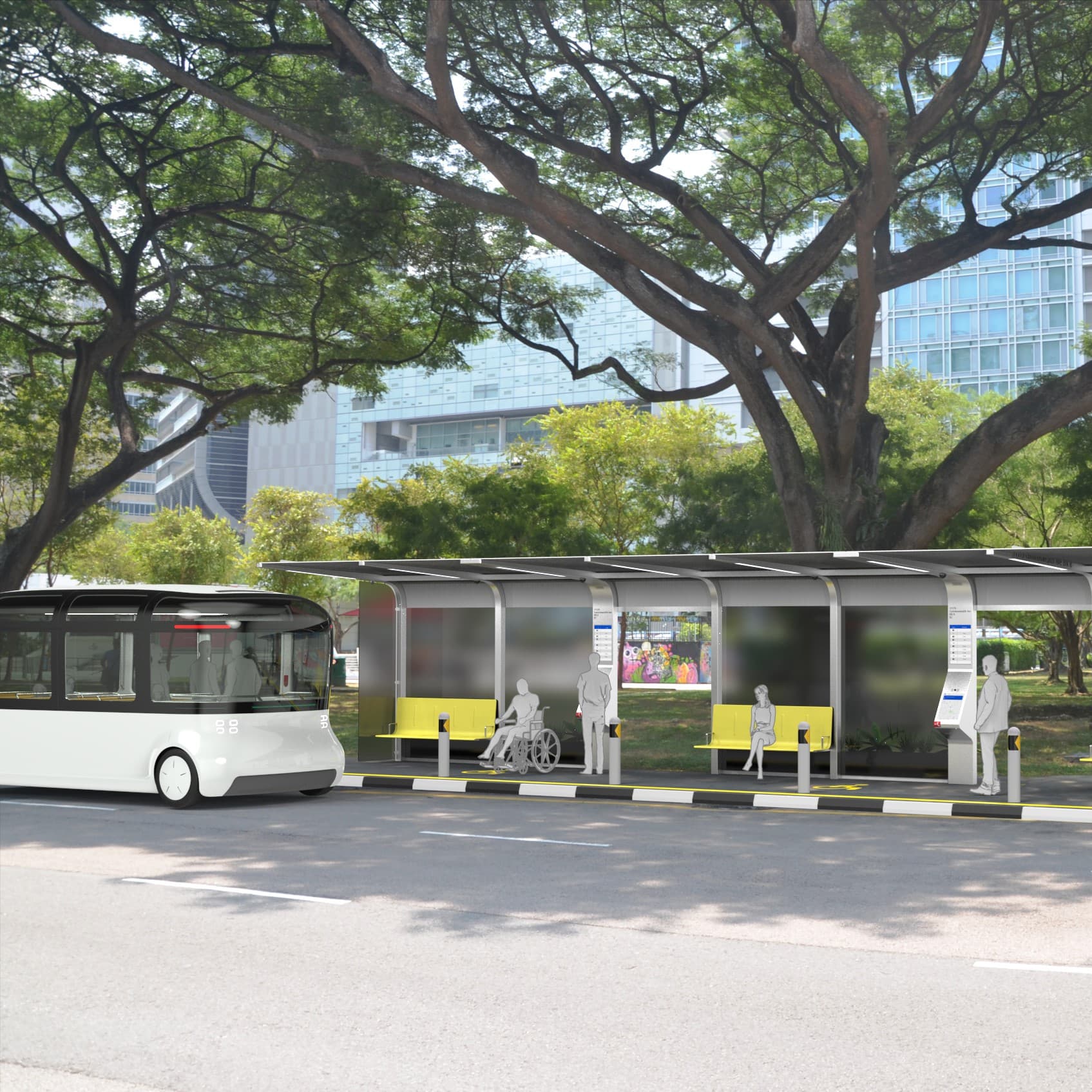
- Station retrofitting for AVs including guidance / wayfinding system
- Secondary use of AVs for freight, postal delivery or shuttle services
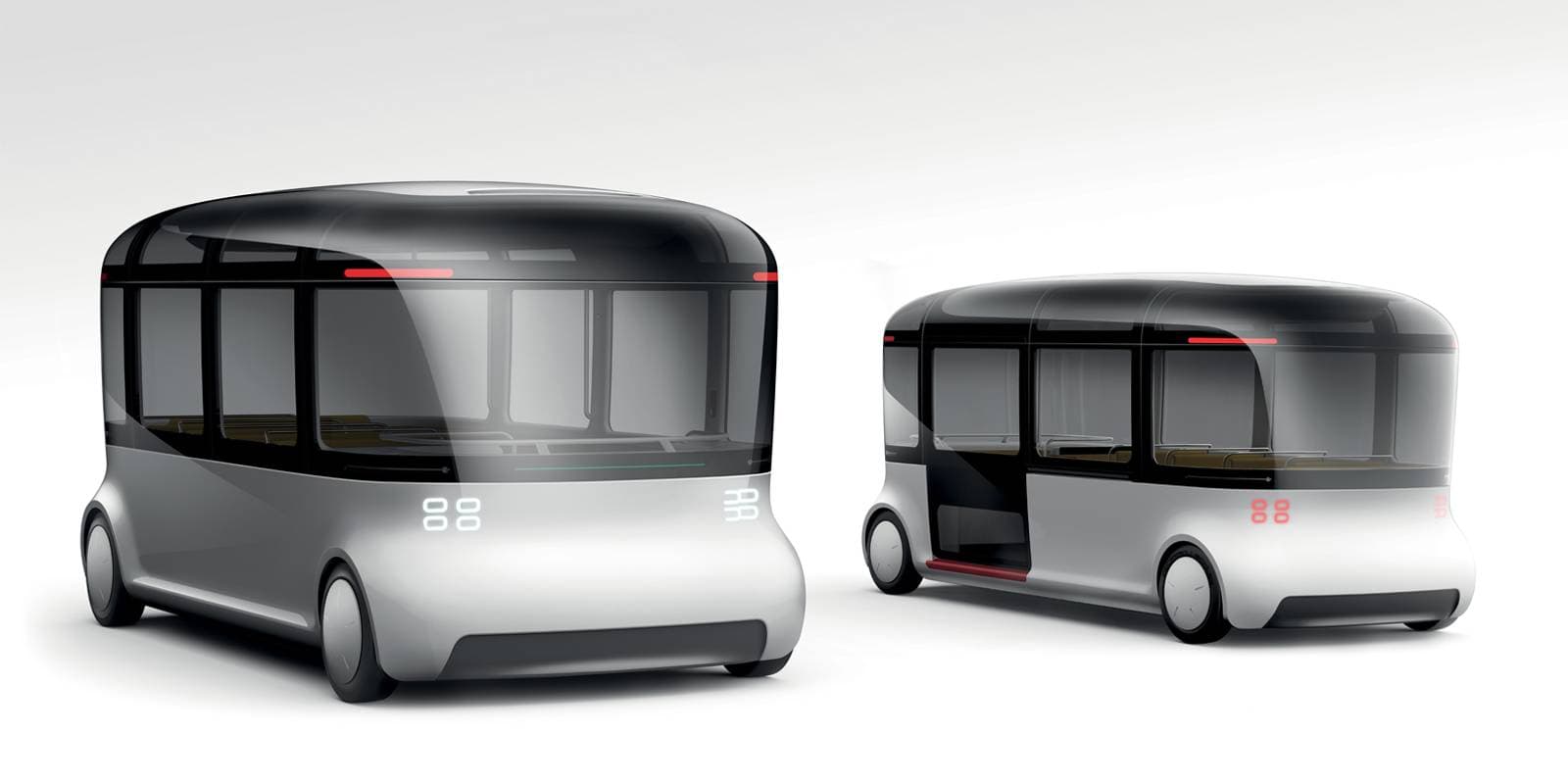
DART module – exterior (source: TUMCREATE)
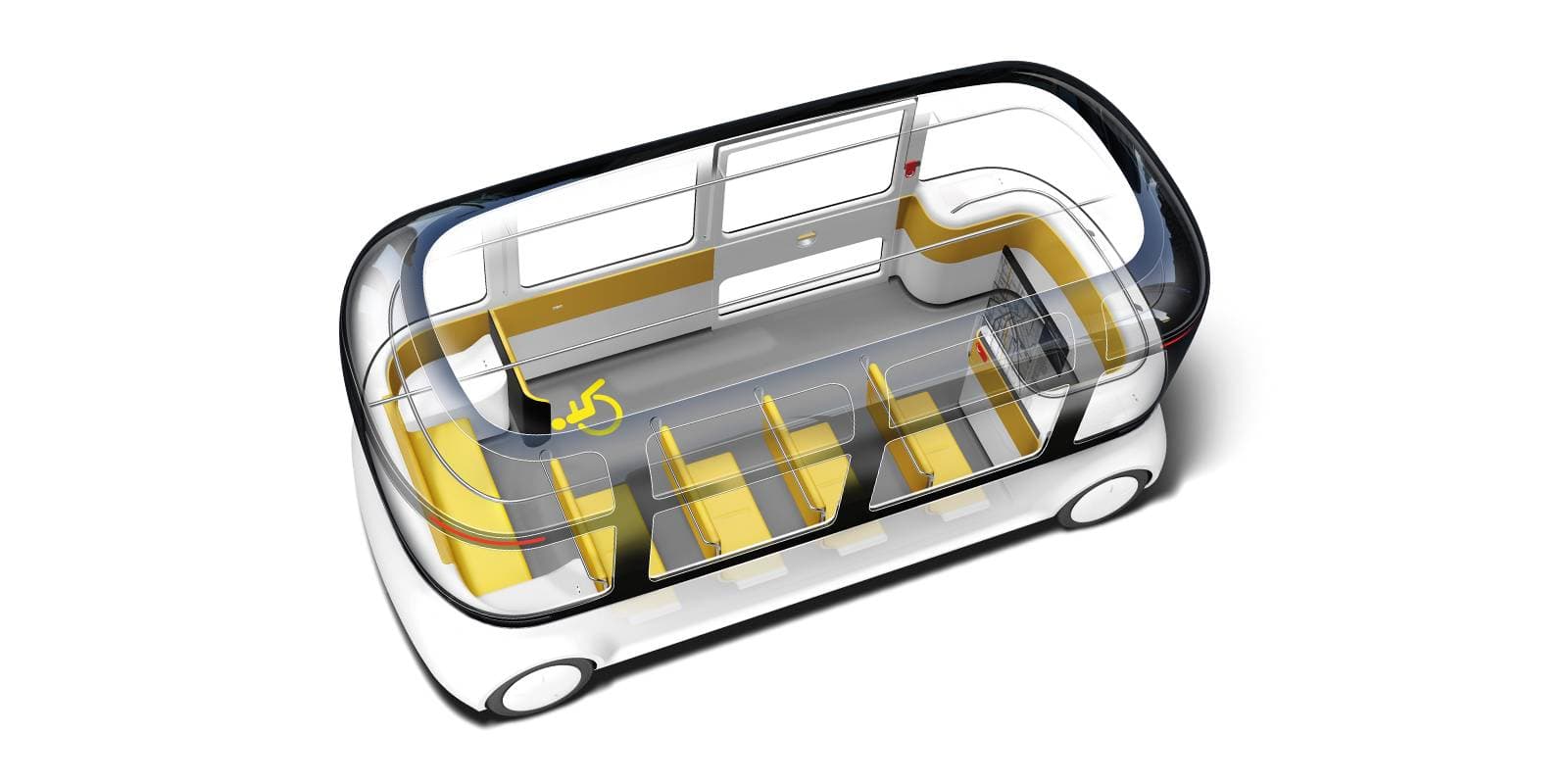
DART module – interior overview (source: TUMCREATE)
Virtual Research Lab
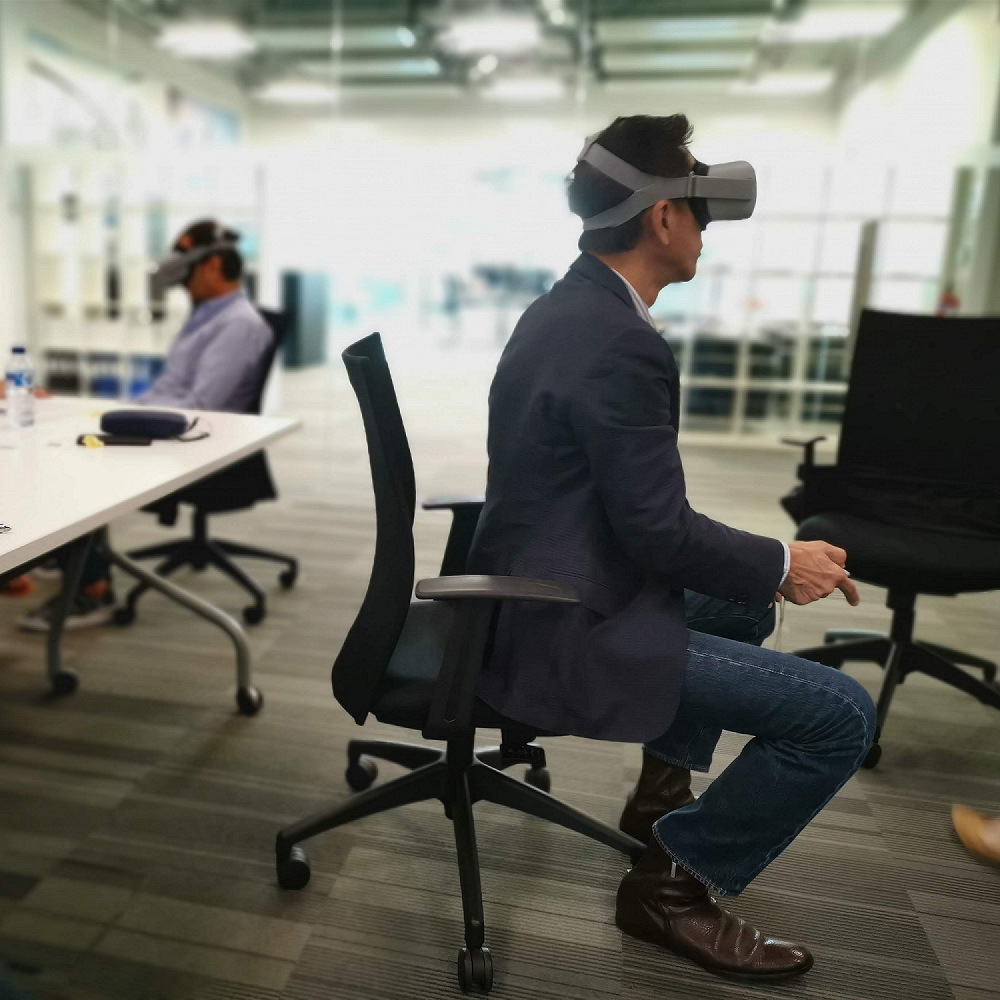
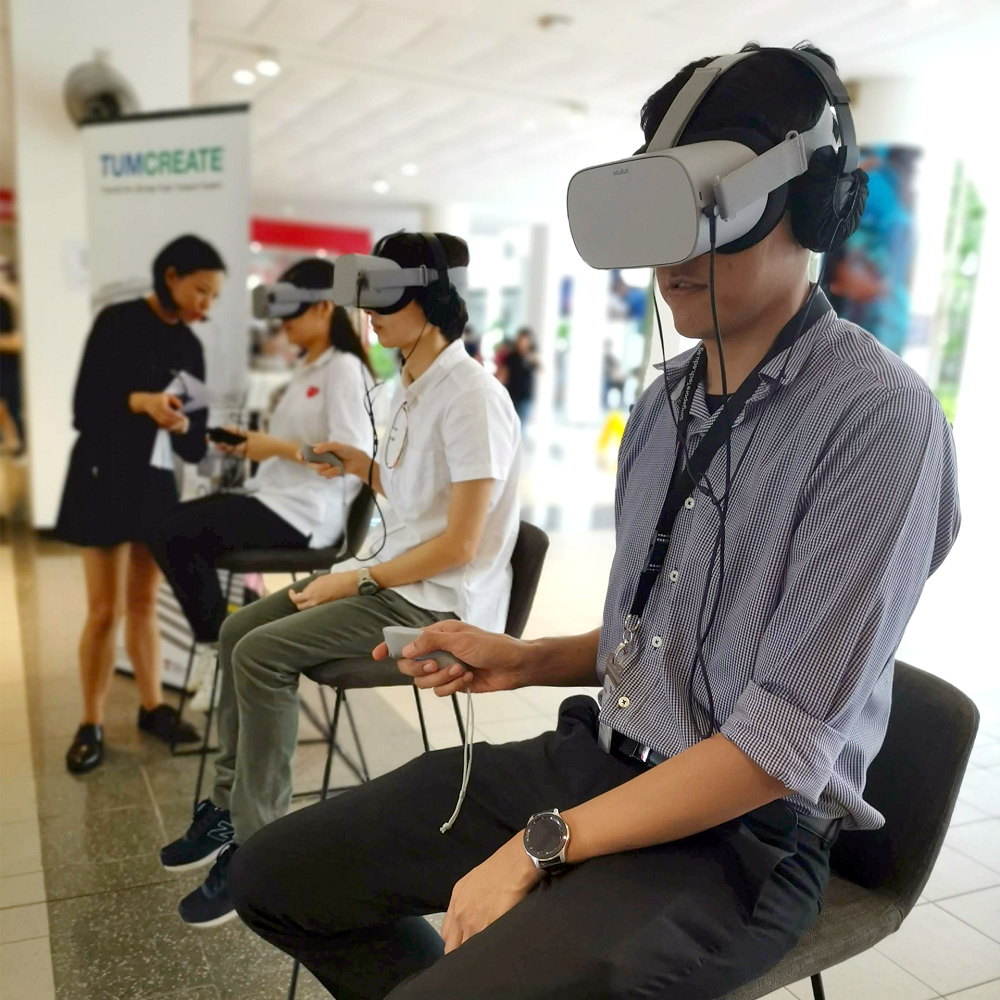
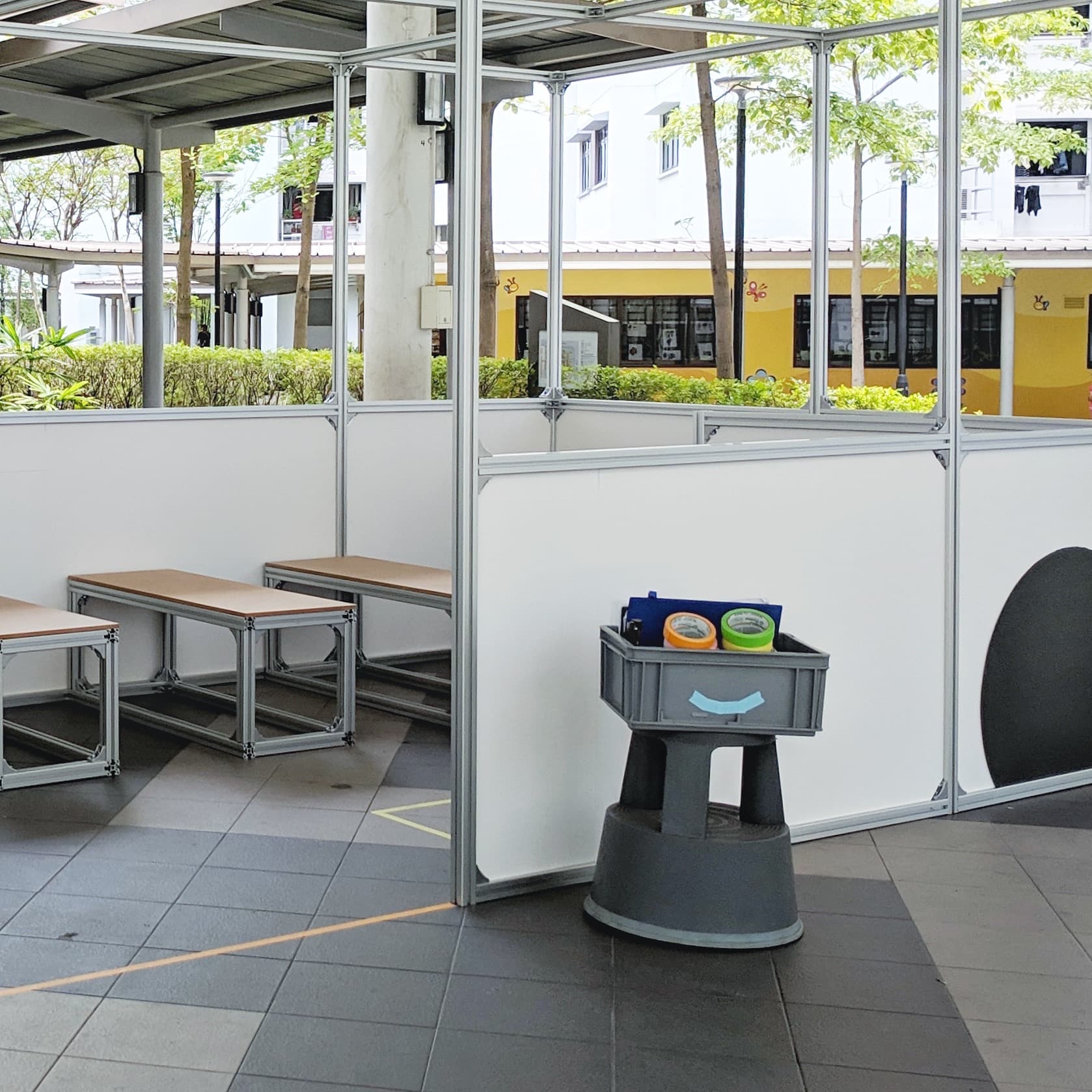
Building up experimental setups in real-life conditions to test the vehicles and mobility concepts would be a complex endeavour: It would be costly in terms of both money and time, and could be unsafe for potential test persons. Therefore, with the help of Virtual Reality (VR), alternative research methods are investigated by DAM to run experiments in a reliable way that keeps costs and time spent to a minimum while maximizing safety for test persons.
Industrial Designers consider Virtual Reality as a tool for:
- Problem identification in VR
- Ideation workshops in VR with experts’ immersion
- Usability Testing in VR with physiological sensors
- Presentation of design concepts in VR and immersive experience
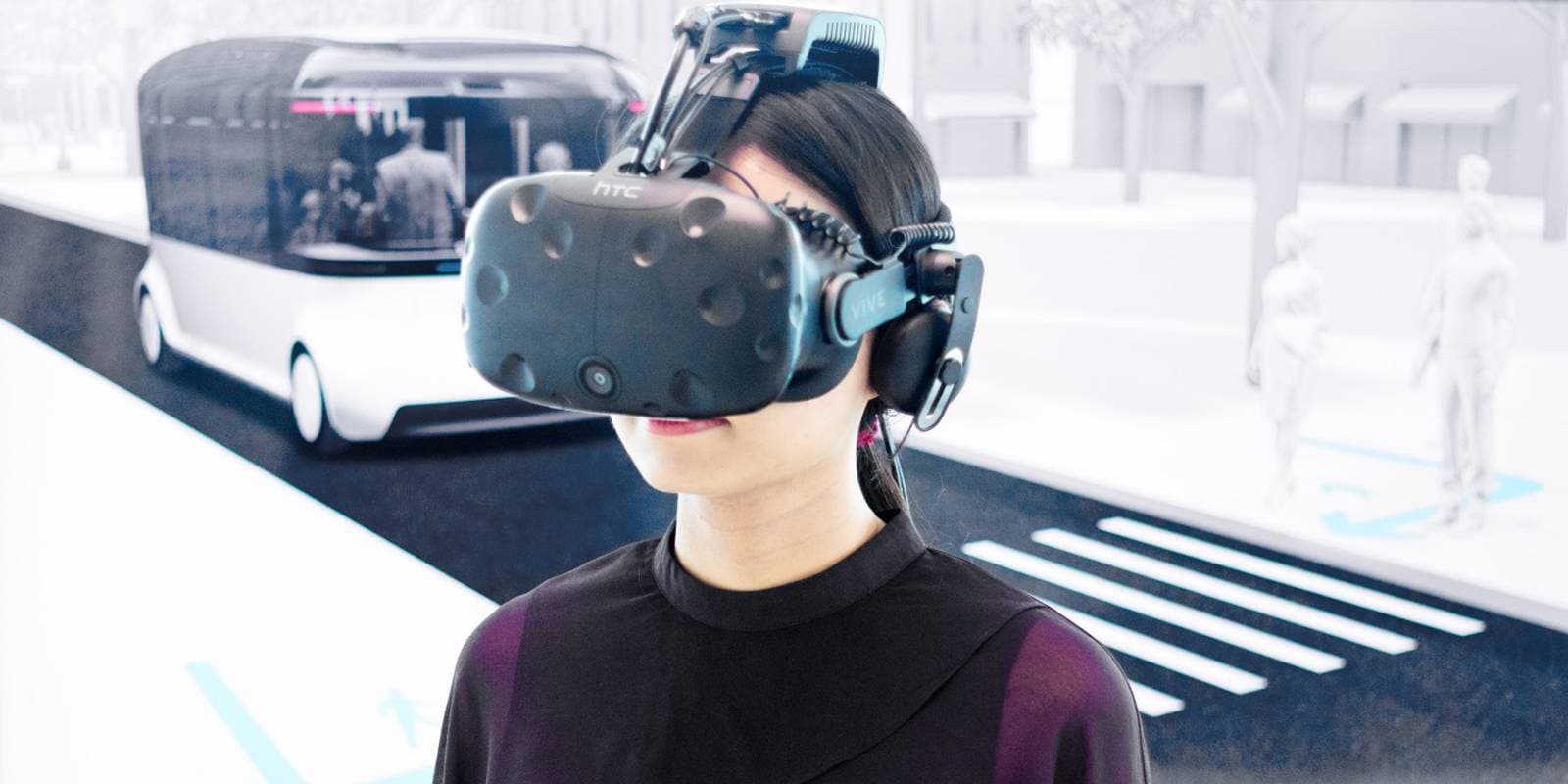
Possible set-up for experiment within VR (source: TUMCREATE)
Human Factors in Design
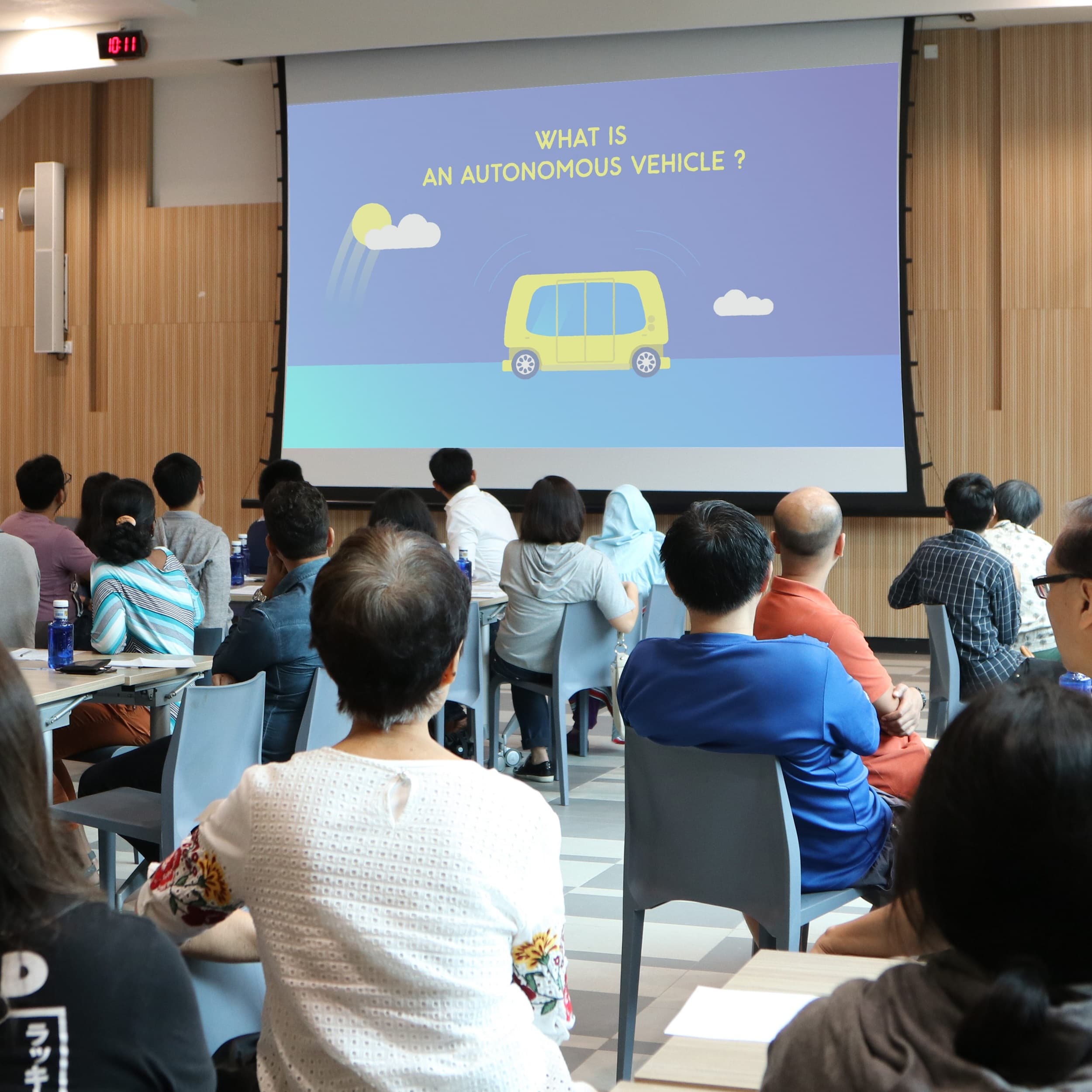
Public acceptance and adoption are major challenges to overcome with the introduction of DART. Research into user needs, and desires is part of the human-centric design approach taken by DAM. Results of this Work Package inform the design of DART stations, vehicles and human-machine interfaces (HMI).
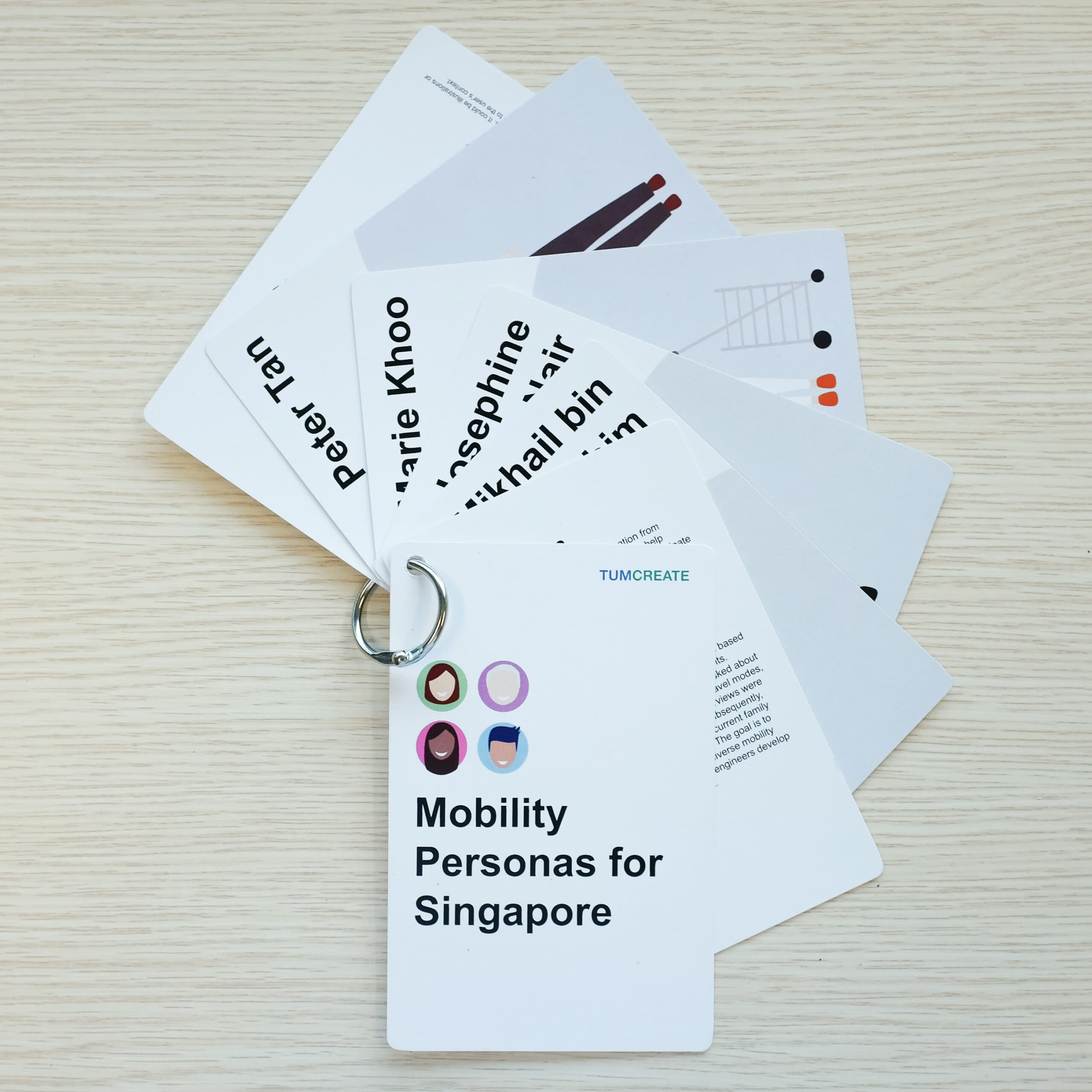
Human Factors and Personas are defined for public transport in Singapore and following studies are on-going:
- Mobility Journeys in Singapore
- Research on Attitude to AVs
- Human-centred Impact Assessment
- Case study: Virtual Companion for public transport

Mobility Journeys in Singapore (source: TUMCREATE)
Related Projects


Publications
- [17] P. Y. Lim, P. Kong, H. Cornet, and F. Frenkler, “Facilitating Independent Commuting Among Individuals with Autism – A Design Study in Singapore,” Journal of Transport & Health, Journal of Transport and Health, vol. 21, Elsevier, article no. 101022, Jun. 2021, ISSN: 2214-1405, DOI: 10.1016/j.jth.2021.101022.
- [16] P. Kong, H. Cornet, and F. Frenkler, “Designing for Delight and Disappointment with Two Companions for Future Mobility in Singapore,” in Proceedings of the 8th International Conference on Kansei Engineering and Emotion Research (KEER) 2020, Tokyo, Japan: LiU Electronic Press, Sep. 2020, ISSN: 1650-3740.
- [15] S. Stadler, H. Cornet, and F. Frenkler, “Collecting People’s Preferences in Immersive Virtual Reality: A Case Study on Public Spaces in Singapore, Germany, and France,” in Proceedings of the Design Research Society (DRS) 2020, Brisbane, Australia: Design Research Society, Aug. 2020, DOI: 10.21606/drs.2020.308.
- [14] S. Stadler, H. Cornet, D. Mazeas, J.-R. Chardonnet, and F. Frenkler, “IMPRO: Immersive Prototyping in Virtual Environments for Industrial Designers,” in Proceedings of the DESIGN2020 16th International Design Conference, Dubrovnik, Croatia: Combridge University Press, May 2020, DOI: 10.1017/dsd.2020.81.
- [13] P. Kong, H. Cornet, and F. Frenkler, “Closing the Human-machine Disconnect: Design Requirements for Two Extreme Companions for Future Autonomous Mobility,” in Proceedings of the 16th International Design Conference – DESIGN 2020, vol. 1, Cavtat, Dubrovnik, Croatia, May 2020, pp. 1627–1636, DOI: 10.1017/dsd.2020.92.
- [12] S. Stadler, H. Cornet, D. Huang, and F. Frenkler, “Designing Tomorrow’s Human-machine Interfaces in Autonomous Vehicles: An Exploratory Study in Virtual Reality,” Augmented Reality and Virtual Reality: Changing Realities in a Dynamic World, Springer International Publishing, pp. 151–160, Mar. 2020, DOI: 10.1007/978-3-030-37869-1_13.
- [11] P. Kong, S. Stadler, N. Forchhammer, and H. Cornet, “Menschzentrierte Gestaltung für ein autonomes Mobilitätssystem in Singapur,” ATZ Extra, vol. 25, Springer Nature, pp. 38–43, Mar. 2020, DOI: 10.1007/s35778-020-0112-5.
- [10] H. Cornet, S. Stadler, P. Kong, G. Marinkovic, P. M. Sathikh, and F. Frenkler, “User-centred Design of Autonomous Mobility for Public Transportation in Singapore,” Transportation Research Procedia, vol. 41, Elsevier, pp. 191–203, Nov. 2019, ISSN: 2352-1465, DOI: 10.1016/j.trpro.2019.09.038.
- [9] B. Su, P. Andelfinger, D. Eckhoff, H. Cornet, G. Marinkovic, C. Wentong, and A. Knoll, “An Agent-based Model for Evaluating the Boarding and Alighting Efficiency of Autonomous Public Transport Vehicles,” Computational Science – ICCS 2019, vol. 11536, Springer International Publishing, pp. 534–547, Jun. 2019, DOI: 10.1007/978-3-030-22734-0_39.
- [8] S. Stadler, H. Cornet, T. Theoto, and F. Frenkler, “A Tool, not a Toy: Using Virtual Reality to Evaluate the Communication Between Autonomous Vehicles and Pedestrians,” Augmented Reality and Virtual Reality – The Power of AR and VR for Business, Springer International Publishing, pp. 203–216, Apr. 2019, DOI: 10.1007/978-3-030-06246-0_15.
- [7] H. Cornet, P. Kong, F. Vallet, A. Lane, and Y. L. Theng, “Designing Sustainable Mobility for People at Risk of Social Isolation – Two Cultural Perspectives from Singapore and France,” in Designing Sustainability for All. Proceedings of the 3rd LeNS World Distributed Conference., vol. 2, Beijing, China: Ediziono POLI.design, Apr. 2019, ISBN: 978-88-95651-26-2, [Online] Available: https://hal.archives-ouvertes.fr/hal-02102840
- [6] S. Stadler, H. Cornet, and F. Frenkler, “A Study in Virtual Reality on (Non-)Gamers’ Attitudes and Behaviors,” in Proceedings of the 26th IEEE Conference on Virtual Reality and 3D User Interfaces, Osaka, Japan: IEEE, Mar. 2019, DOI: 10.1109/VR.2019.8797750.
- [5] S. Stadler, H. Cornet, and F. Frenkler, “Towards User Acceptance of Autonomous Vehicles: A Virtual reality Study on (Human-)Machine Interfaces,” International Journal of Technology Marketing, vol. 13, no. 3/4, Inderscience, Jan. 2019, DOI: 10.1504/IJTMKT.2019.10025612.
- [4] P. Kong, H. Cornet, and F. Frenkler, “Personas and Emotional Design for Public Service Robots: A Case Study with Autonomous Vehicles in Public Transportation,” in Proceedings of the CW 2018: 2018 International Conference on Cyberworlds (CW), Singapore: IEEE, Oct. 2018, DOI: 10.1109/CW.2018.00058.
- [3] S. Stadler and H. Cornet, “Virtual Design – Systematic Integration of Virtual Reality into the Design Process,” Instant Journal – PhD by Design Satellite Session at the Design Research Society Conference 2018 (DRS 2018), no. 5, PhD By Design, pp. 58–59, Jun. 2018, ISSN: 2396-8478, [Online] Available: https://issuu.com/phdbydesign/docs/instant_journal_drs2018_final
- [2] A. Ongel, H. Cornet, P. Kong, R. Khoo, T. Liu, and M. Kloeppel, “Public Transport Service Quality Improvement Using Universal Design Standards and Advanced Vehicle Technologies,” in Proceedings of the 2018 International Conference on Intelligent Autonomous Systems, Singapore, Mar. 2018, pp. 207–212, DOI: 10.1109/ICoIAS.2018.8494057.
- [1] S. Stadler, “Virtual Reality Environments for Presentation, Elaboration and Evaluation of Autonomous Vehicles for Public Transportation in Singapore,” in Proceedings of the 1st TUM Research Alumni Conference: Living and Mobility in Smart Cities, Singapore: TUM.University Press, Aug. 2017, DOI: 10.14459/2017md1429192.
- [7] S. Stadler, H. Cornet, and F. Frenkler, “Criteria Evaluation of a Virtual Reality Platform to Investigate People’s Behaviour Towards Autonomous Vehicles,” in Proceedings of the 19th Driving Simulator and Virtual Reality Conference & Exhibition (DSC) 2020, Antibes, France, Sep. 2020, [Online] Available: https://proceedings.driving-simulation.org/proceeding/dsc-2020/criteria-evaluation-of-a-virtual-reality-platform-to-investigate-peoples-behaviour-towards-autonomous-vehicles/
- [6] N. Forchhammer, P. Y. Lim, H. Cornet, and F. Frenkler, “A Virtual Reality Study on How Communication and Gamification Influence Driver Compliance and Emotion,” in Proceedings of the 19th Driving Simulator and Virtual Reality Conference & Exhibition (DSC) 2020, Antibes, France, Sep. 2020, [Online] Available: https://proceedings.driving-simulation.org/proceeding/dsc-2020/a-virtual-reality-study-on-how-communication-and-gamification-influence-driver-compliance-and-emotion/.
- [5] S. Stadler, H. Cornet, and F. Frenkler, “TUMCREATE VR,” Tech. Rep., TUMCREATE Ltd., Singapore, Apr. 2020.
- [4] P. Kong, C. Landesvatter, H. Cornet, and F. Frenkler, “Beyond Operational Improvement: A Qualitative Study on User Preferences for Public Transport in Singapore,” in Proceedings of the 26th ITS World Congress, Singapore, Oct. 2019.
- [3] P. Kong, F. Vallet, O. Al Maghraoui, H. Cornet, and F. Frenkler, “Seeking Emotions in Mobility Experience Elicitation: A Singapore-France Comparison,” in Proceedings of the International Association of Societies of Design Research Conference 2019 (IASDR 2019), Manchester, United Kingdom, Sep. 2019, [Online] Available: https://hal.archives-ouvertes.fr/hal-02381950
- [2] P. Kong, A. Gill, H. Cornet, and F. Frenkler, “Mobility Personas for Singapore Cards,” Tech. Rep., TUMCREATE Ltd., Singapore, Aug. 2019, [Online] Available: http://bit.ly/MPScards
- [1] S. Stadler, H. Cornet, P. Kong, and F. Frenkler, “How Can Communication Between Autonomous Vehicles & Humans be Improved by Using Virtual Reality? A Safe, Cost- and Time-efficient Method for the Validation of Human Machine Interaction Concepts in the Context of Public Transportation in Singapore,” in Proceedings of the Asia Design Engineering Workshop (A-DEWS 2017), Seoul, Korea, Dec. 2017.