Press Releases

16x9_P3271737e

TUMCREATE Unveils Revolutionary Two-Wheeler at EV Taiwan 2013

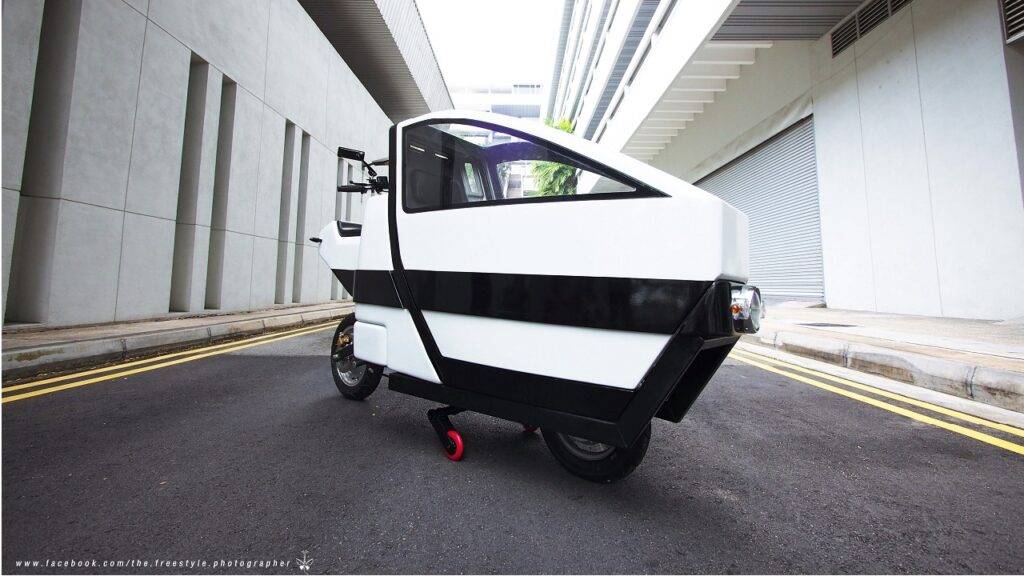
Taipei, Taiwan, ROC, 10 April 2013 — TUM CREATE has unveiled an all-new multipurpose scooter prototype, codenamed VOI, at the 3rd Taiwan International Electric Vehicle Show (EV Taiwan) Booth D0611, Hall 1, Taipei World Trade Center on 10 April 2013. It will be on display from 10 to 13 April 2013.   VOI gets its name from the Vietnamese word for elephant – a symbol of a safe and intelligent mean of transport. It is a two-wheel concept vehicle jointly developed by students from Germany’s Technische Universität München (TUM) and Singapore’s Nanyang Technological University (NTU), and was built in Singapore.   The design brief for the VOI was to develop a two-wheel transporter that is as agile and affordable as a scooter and, at the same time, as safe and comfortable as a car.   With its compact size and manoeuvrability, the two-wheel electric scooter is designed as a transporter for densely populated megacities in mind, and offers a comprehensive solution to metropolises where congested traffic is a major problem.   Positioning the rider behind allows for a compact design and the use of an enclosed passenger cabin that shields occupants from the elements. The enclosure also offers added rigidity and stiffness to the vehicle chassis which can aid in passenger protection. With the VOI, business people are able to commute quickly, comfortably and safely through the gridlocks to rush from one meeting to another.   It can also address the ‘First/Last Mile Problem’, where it complements an existing metro railway and public transport system, to offer commuters intermediate transportation between the stations to their destinations.   Furthermore, the VOI is not just limited to transporting passengers. Its modular front pod can be swapped for a cargo box or even a mobile kitchen – making it a multipurpose vehicle.   The VOI is not only a more efficient mode of transport; it also reduces pollution within a metropolis with zero tailpipe emissions. Thanks to its lightweight design, the VOI is capable of reaching a nominal range of 80 km and has a maximum speed of 45 km/h.   Project VOI is an urban mobility concept developed by final-year students from both universities and is a Work-in-Progress prototype to demonstrate the possibilities of future mobility. This project is just one of many research and development works undertaken by over 100 scientists, researchers and engineers from more than 20 countries at TUM CREATE. The cutting-edge research covers topics ranging from molecules to megacities including areas such as: electrochemistry, electric vehicle battery packs, embedded systems, air conditioning, simulation and modelling, and infrastructure.   TUM CREATE will mark another significant milestone and set history later this year when it will present the electric taxi prototype, codenamed EVA, at the Tokyo Motorshow – Asia’s largest and most important automotive trade show. EVA is a platform to showcase the research, development and innovations of TUM CREATE.

16x9_DCPROD_20121115_0162

TUMCREATE Launches New Campus

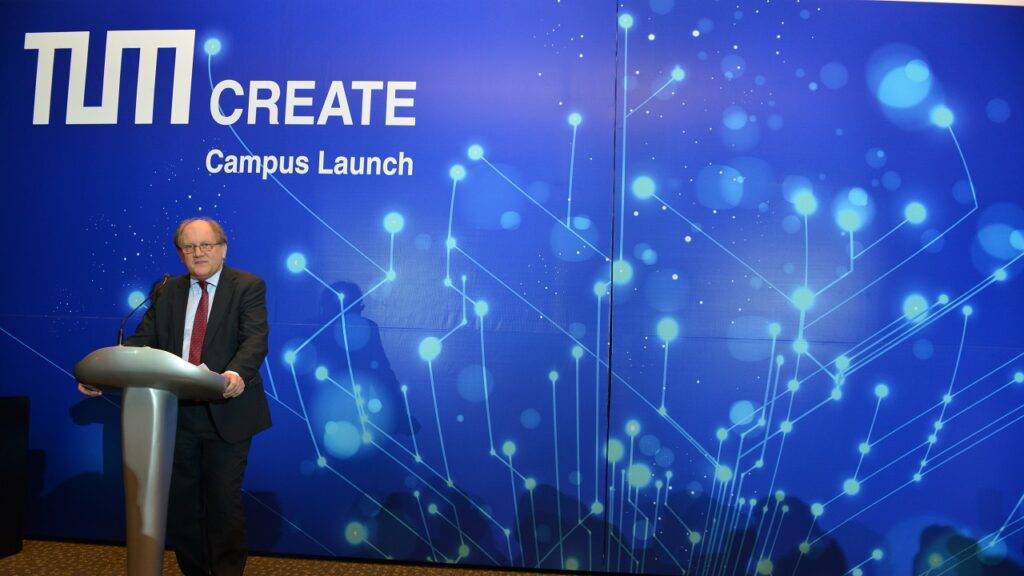
TUM CREATE officially launched its new campus at the Campus for Research Excellence and Technological Enterprise (CREATE) at University Town during an opening ceremony today. Its new and bigger location paves the way for closer collaboration among its 10 research teams, as they develop and build the first electric vehicles specifically for a tropical city, here in Singapore.   TUM CREATE is a joint research programme between Germany’s Technische Universität München (TUM) and Singapore’s Nanyang Technological University (NTU), funded by Singapore’s National Research Foundation (NRF).   Through its research in Singapore, TUM CREATE aims to contribute to the local human, intellectual and industrial capitals by training talents, innovating new technologies, forging partnerships and knowledge-sharing.   “The building-up of our scientific community from both countries (Singapore and Germany) brings valuable knowledge and opportunities to the local industry in Singapore. As part of our contribution to this wonderful country, we envision also to train Singaporean talents and develop cutting-edge technologies in cooperation with local partners,” Senior Vice-President of TUM Prof. Thomas Hofmann said.   TUM CREATE’s new campus features state-of-the-art laboratories and an automotive workshop that houses more than 100 research scientists and engineers from over 20 countries. With research ranging from the molecule to the megacity, TUM CREATE is at the forefront of inter-disciplinary research in new battery materials, Electric Vehicle (EV) design, computer modelling and simulations, and transportation systems design.   With the launch of the campus, research and development are at full steam as TUM CREATE’s scientists are able to access advanced facilities. These include some of the Southeast Asia’s firsts, which will increase Singapore’s profile in the R&D landscape across the region:   High-power battery tester: This will be the region’s first battery cycler for EV battery packs and modules. Battery Safety Laboratory: The first in Southeast Asia that is capable of safely studying high-energy EV battery cells under various charging conditions.   Bridging Ties, Exchanging Views   While spearheading sustainable mobility research in Singapore, TUM CREATE will engage and train the brightest local talents. Apart from academic staff from TUM in Germany, there are 23 NTU faculty members who actively supervise and contribute to the research at TUM CREATE. The programme also allows doctoral students from TUM and NTU, who are working towards their PhDs, to conduct their research on different aspects of electromobility. These PhD degrees are jointly conferred by TUM and NTU.   With the launch of the Graduate Center TUM CREATE, these doctoral students will be able to further enrich their education with the possibility of attending exchange programmes at the TUM Graduate School in Garching, Germany, a city near Munich. These students are able to share views and experiences with colleagues of various faculties when attending “soft skills” courses offered during these trips. This will prepare them to become future leaders in industry and academia.   President of NTU Professor Bertil Andersson said that the launch of the new Graduate Center TUM CREATE is very timely.   “It will offer new opportunities for NTU and TUM PhD students here to interact with other TUM doctoral students in Germany,” he said. “At a time where the evolving labour markets around the world require future leaders to hold a holistic outlook that is not just limited to their own disciplines or countries, the Graduate Center TUM CREATE places strong emphasis on interdisciplinary and international programmes that develop team leadership, project management skills and entrepreneurial spirit.”

Reality Check

TUM CREATE is an ambitious programme that researches the application of electric vehicles and future transportation concepts in tropical megacities.  Singapore was chosen as the ideal test-bed for many reasons, including its technologically advanced infrastructure. TUM CREATE is a joint research programme between Technische Universität München (TUM) in Germany and Nanyang Technological University (NTU) in Singapore with funding by the National Research Foundation of Singapore.  Over 100 scientists and engineers are involved in this 5-year long project.   TUM CREATE is part of the new CREATE campus in University Town next to NUS.   But how do you build an electric vehicle infrastructure using technology that doesn’t exist in an environment that doesn’t yet exist?  The investment costs for a government to electrify their transportation systems are huge.  How do you choose where to place charging stations? How much do you need to modify the existing power grid?  How much stress do various levels of e-vehicle penetration have on the system?  If answered incorrectly, these questions could have multi-million dollar implications.   TUM CREATE offers a unique perspective in this regard.  A technique called ‘Modelling and Simulation’ is generally used when trying to understand the various scenarios that new technologies can create.  With experts from science and engineering researching all levels of electric vehicles, TUM CREATE is perfectly positioned to develop a simulation system capable of capturing all aspects of the problem.  The diagram below shows how all the research projects within TUM CREATE use modelling and simulation techniques at all scales of the problem, all the way from the molecule to the megacity.   Modelling and simulation helps reduce the uncertainty of implementing new systems, by giving a prediction of what might happen if you change particular parameters.   For example, if you replace taxis, which consume roughly 14% of all fuel in Singapore, with electric taxis, what is the impact on Singapore’s carbon footprint?  Each charging station takes time and money to install.  What is the optimum number of charging stations if you’re conducting a cost-benefit analysis?   Dr. Michael Lees, NTU professor and head of Simulations and Optimisation at TUM CREATE says, “TUM CREATE is a unique place where you can find people from diverse backgrounds working together to develop methods and solutions for the future of electric vehicles. Modelling and simulation is important as it helps us not only to better understand the implications of the many design choices we have to make but also to optimise and improve them.”   For further information about the TUM CREATE project and for high resolution images, please contact communications@tum-create.edu.sg

The Last Mile Problem

Does walking to and from your bus stop sometimes take longer than the bus journey itself?  This is a problem that Associate Professor Wong Yiik Diew and Dr Andreas Rau of TUM CREATE aim to solve. “While Singapore already has a very good public transport system, with more MRT stations and links on the way, this so-called ‘first/last mile’ problem plagues many commuters,” Professor Wong explains.  “People sometimes need to walk 10-15 minutes from their home to the nearest bus stop, MRT or LRT station.  And it can take just as long after the journey to get to their final destination.”  To improve public transport accessibility, Dr Rau says, “We are exploring the use of innovative electric transportation solutions, including electric bicycles, electric buses and vehicles, escalators, conveyor belts, etc.”   The first/last mile research project is the result of a long-lasting collaboration between Professor Wong from Singapore’s Nanyang Technological University (NTU) and Dr Rau, from Germany.  They have been working together since 2004 when Rau, then a PhD student, was offered a scholarship in Germany to study abroad.  He chose to come to Singapore to work in Wong’s Transportation Lab at NTU.  Although Rau returned to Germany, Wong and Rau’s cooperation resumed when Rau returned to Singapore in 2009.   The TUM CREATE project was launched with exactly this sort of collaboration in mind.  A joint research programme between Technische Universität München (TUM) in Germany and Nanyang Technological University (NTU) in Singapore with funding by National Research Foundation of Singapore, TUM CREATE focuses on developing innovative technologies and future transportation concepts for tropical megacities.  Over 90 scientists and engineers are involved in this 5-year long project.   Together Prof. Wong and Dr. Rau set up TUM CREATE’s Transportation and Traffic Engineering research programme, which today they jointly administer.  The first/last mile problem is just one of their many research projects.  Together, they are leading a group of PhD and Masters students working on innovative transportation solutions, such as designing prefabricated pavement slabs for wireless charging of electric vehicles and developing a model to understand the impact of electric vehicles on energy efficiency and emissions in Singapore.  They have several funded PhD positions open so interested parties should contact either cydwong@ntu.edu.sg or andreas.rau@tum-create.edu.sg.   For further information about the TUM CREATE project and for high resolution images, please contact  communications@tum-create.com.sg or +65 6592 3014.

20120511_1280x720_Press release_The last mile problem

An Electric Taxi for Singapore

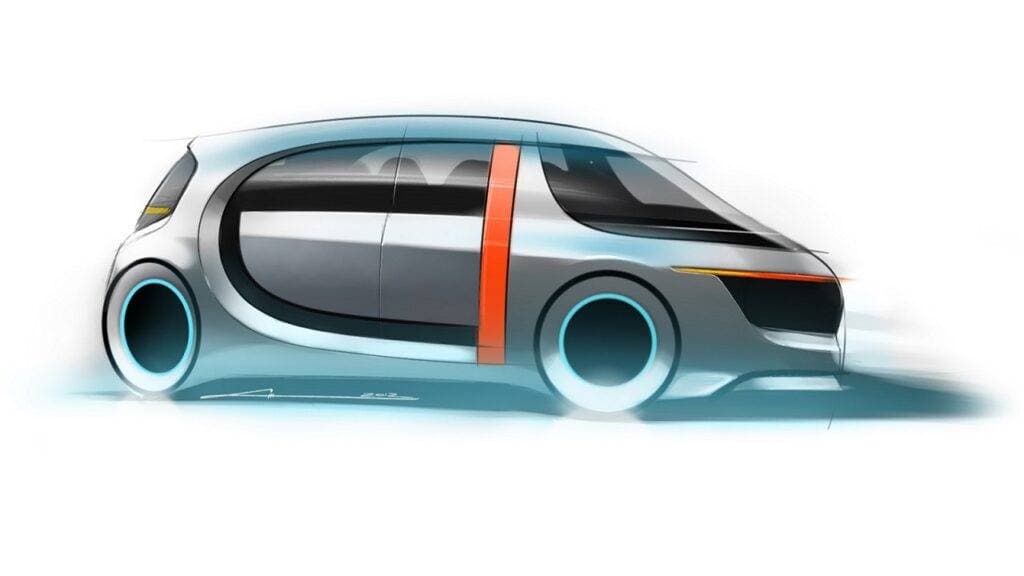
TUM CREATE is researching innovative technologies and future transportation concepts for tropical megacities. The focus is on developing electric transport solutions that will be applicable to Singapore and cities worldwide. TUM CREATE is a joint research programme between Technische Universität München (TUM) in Germany and Nanyang Technological University (NTU) in Singapore with funding by National Research Foundation of Singapore.  Over 90 scientists and engineers are involved in this 5-year long project. One of TUM CREATE’s current endeavours is to design and build the world’s first purpose-built electric taxi.  When the team started collaborating in early 2011, they were given the challenge to design and build a cutting-edge electric vehicle for Singapore.  They decided to focus on developing a taxi for several key reasons.  First of all, they were attracted by the unique problems posed by taxis: most personal cars run for only a few hours per day, but most of Singapore’s taxis are shared by two or three drivers and run for 24 hours a day, 7 days a week.   Inventing a battery system that does not require overnight or frequent charging is one of the key challenges facing the electric car industry and TUM CREATE’s scientists.  Secondly, the impact of taxis is enormous.  Taxis make-up only 3% of all vehicles in Singapore, but they consume roughly 14% of all fuel.   Finally, when a visitor arrives in a city, the first impression they get is from the interior of a taxi.  In the same way that London’s black cabs are synonymous with the city, TUM CREATE aims to design an iconic taxi that becomes a symbol for Singapore. Singapore and other tropical megacities provide a particular challenge – finding an innovative solution to continuous air-conditioning demands, a further demand on the battery and car design. The research project includes all aspects of electric transport – ranging from the most basic sub-molecular components of batteries, to the taxi design itself, and extending to city-wide infrastructure systems.   The scientists and engineers are exploring cutting-edge concepts including solar-powered parking lots, high-speed battery charging, wireless charging and other radical technologies. As Professor Ulrich Stimming, CEO of TUM CREATE says, “Germany is a global front-runner in vehicle design and production, while Singapore leads the way in high-tech parts production. Together we are working with the best scientists and engineers from both countries to develop far-reaching innovations in electric transport for megacities. The taxi is only one part of the project.  It is the platform for testing all the new technology that we are developing.”                             The team’s design workshop in early March, which included over 20 engineers and designers from Singapore and Germany, resulted in a preliminary concept (see image above).  The final product will be a taxi built and tested by the team. A demonstrator vehicle is scheduled to be released in 2014. The programme offers considerable potential for start-ups and spin-offs, creating jobs and further knowledge and know-how. Similar results have been achieved in TUM’s home campus in Germany, where the strong cooperation between TUM and its industry partners fosters the creation of new small high-tech companies. TUM CREATE has already attracted the interest of several German companies. Industry partners already working with TUM CREATE include IBM, Bosch, Infineon, Siemens and Singapore Technologies. Please contact communications@tum-create.com.sg for further information and high resolution images.

Scroll to Top