Press Releases

SITEM_Visual_Eyecatcher_V04

Singapore’s first Integrated Simulation Model of Vehicle Electrification Created by A*STAR and TUMCREATE

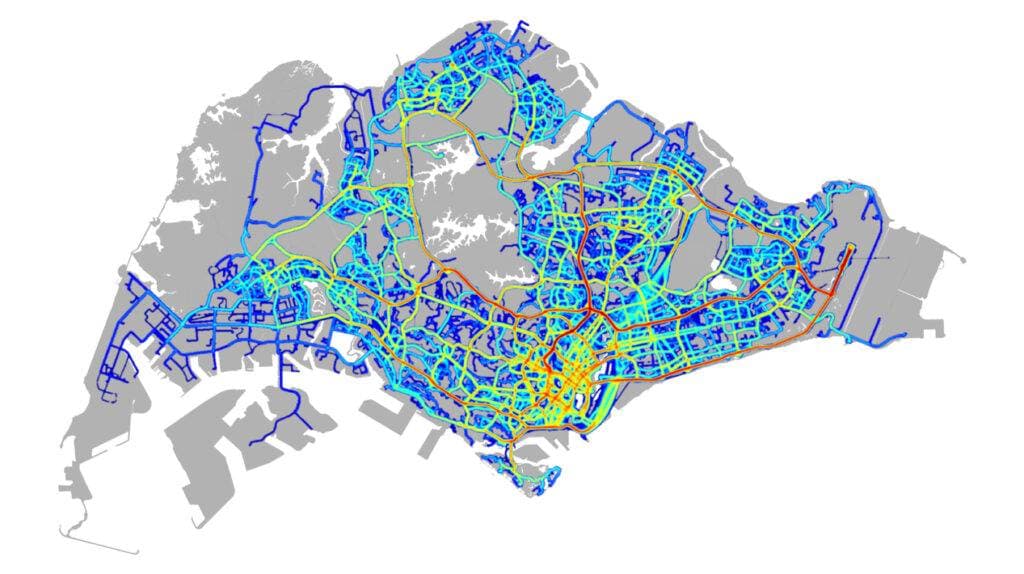
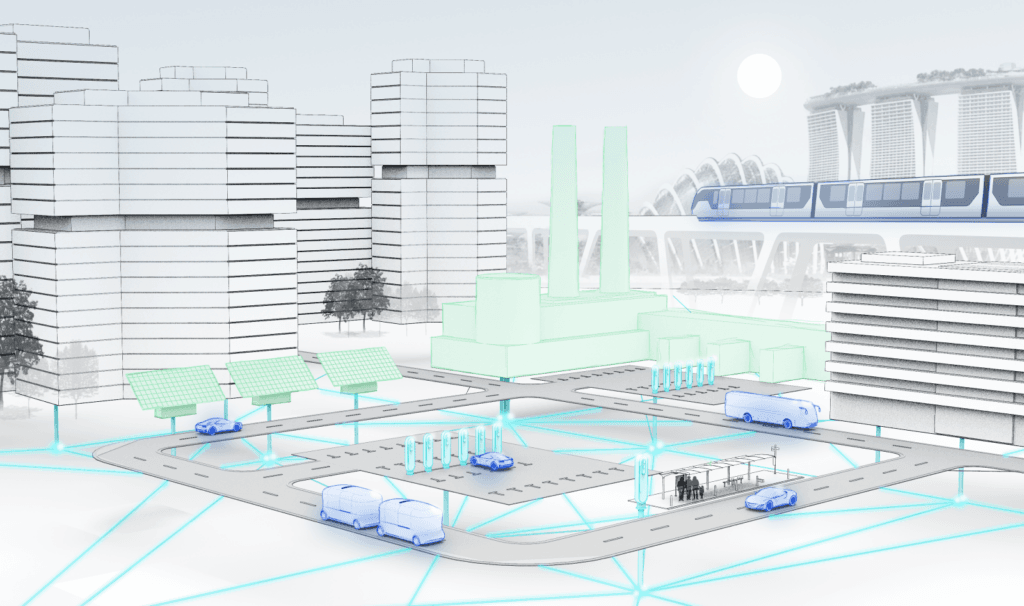
Created in collaboration with relevant government agencies, this is the first island-wide integrated model to provide a comprehensive impact analysis of projected electric vehicle (EV) charging demands. A*STAR’s Institute of High Performance Computing (IHPC) and TUMCREATE Ltd (TUMCREATE) are working together on a research project that supports Singapore’s planning for the transition to electric vehicles (EVs) nationwide. The Singapore Integrated Transport Energy Model (SITEM) will be used to conduct a comprehensive analysis of projected electric vehicle (EV) charging patterns and energy demand, which will support policymaking on Singapore’s budget 2040 vision for all vehicles to run on cleaner energy and contribute towards Singapore’s decarbonisation commitments. The research project is commissioned by the Science and Technology Policy and Plans Office (S&TPPO), Prime Minister’s Office, and aims to advance the nation’s capabilities in integrated modelling and simulation of transport and power systems. Singapore’s 2040 vision to phase out internal combustion engine (ICE) vehicles and have all vehicles run on cleaner energy will involve a large-scale, multi-agency effort to provide charging infrastructure, electrify public vehicles, and upgrade the electrical grid to accommodate the new demand. Designed to support this effort, SITEM is the first high-fidelity, island-wide simulation of EV transport in Singapore that integrates multiple aspects of mobility and energy modelling, including the movements of individual vehicles, drivers’ decisions about where and when to charge, and the interaction of EV charging demand with electricity grid capacity. Through advanced scenario modelling and simulation, the project aims to deliver insights on how Singapore can optimise EV charging stations’ placement to address drivers’ charging needs and to efficiently allocate energy demand and upgrades across the power grid. Robust modelling and simulation has potential to reap significant cost avoidance, as projects in the infrastructure and energy space are typically costly and hard to re-work once in the implementation stage. To model such a large-scale and multi-layered system at high resolution, IHPC and TUMCREATE are employing advanced capabilities including large scale complex systems modelling and optimisation, high performance and distributed computing, advanced data analytics and empirically grounded agent-based modelling of human behaviour. The project team also draw on extensive experience in past and ongoing project collaborations with various local entities in the transport ecosystem, including transit operators, regulatory bodies and urban planners. The SITEM project builds on two primary simulation technologies developed by TUMCREATE in Singapore under its NRF-funded Mobility Programme: City Mobility Simulator (CityMoS) utilises high-performance computing techniques to enable high-detail transport simulation of the entire island of Singapore, while maintaining short turnaround times. . Multi Energy System Modelling & Optimisation (MESMO) is an advanced software framework that combines simulation of electrical grids and optimisation techniques to mitigate the grid impact of distributed energy resources (such as photovoltaics) and new types of loads (such as EV charging). Network data and modelling considerations were provided by the Energy Market Authority and national grid operator SP Group. While further development of SITEM is ongoing, preliminary findings from simulation studies conducted by the IHPC and TUMCREATE research team have enabled collaborating government agencies and industry partners to validate and refine their planning assumptions regarding such questions as the adequacy of electric charger provisioning to meet projected demand and the sufficiency of electrical grid capacity to support vehicle electrification requirements. In addition, SITEM’s advanced scenario modelling capabilities have enabled regulatory agencies to explore and evaluate varied pathways to vehicle electrification. For example, in light of the fact that private electric cars will generally park longer than the actual duration required for the car to charge fully, smart charge management can help to reduce grid infrastructure upgrade costs without compromising the overall energy provisioned to the electric cars. SITEM makes it possible to estimate the efficiency gains from such systems, and can model their impact alongside or in combination with other mechanisms such as incentive-based demand shifting, smart scheduling and local energy storage. Dr Lim Keng Hui, Executive Director of A*STAR’s IHPC, said “The beauty of simulation and modelling in urban planning is that we can integrate with multiple real-world datasets to create realistic computational models of our city, and explore different designs to achieve the optimal outcomes before physical infrastructure upgrade is commissioned. Our aim is for this collaboration to allow local government agencies to tap on A*STAR’s advanced systems modelling and simulation capabilities to better plan and support the electrification effort in Singapore. IHPC has years of expertise in land transportation research, and we look forward to this collaboration with TUMCREATE to undertake this national-level strategic modelling project.” Prof Ulf Schlichtmann, CEO of TUMCREATE, said, “It is with great pleasure that TUMCREATE is part of this exciting multi-stakeholder project, together with our partner IHPC and the various Singapore government agencies. I am delighted to see that our simulators, CityMoS and MESMO, play an important role in providing recommendations for the electrification of Singapore’s transport system. Since its establishment, TUMCREATE has been conducting innovative research in support of Singapore’s sustainability goals and this is a great opportunity for us to contribute further on and show the relevance of our technologies.” Er Pang Chung Khiang, Group Chief Systems Officer of S&TPPO, PMO, said, “This collaboration between the research teams and relevant government agencies allows for integration of the best from two research institutes to address national level challenges. The coupled transport and energy simulation model allow for continuous refinement of planning parameters to better understand interdependencies and emergent behaviours with new concept of operations for decision making. Modelling and simulation generate insights that brings downstream savings on infrastructure upgrades whilst allowing our agencies to focus efforts to enhance overall commuter satisfaction. These efforts dovetail with developments like our Smart Nation Initiative.”   About the Institute of High Performance Computing (IHPC) A*STAR’s Institute of High Performance Computing (IHPC) was established in August 1998 to provide leadership in computational modelling, simulation and AI to solve major scientific, industrial and societal challenges. It seeks to promote and spearhead scientific advances and technological innovations through multidisciplinary R&D, and to develop impactful applications to further economic

HW-TC Logo (2)

Huawei and TUMCREATE set up New Joint Innovation Lab in Singapore to Boost Mobility Simulation Research

Singapore, 23 April 2021 – Huawei and TUM CREATE Ltd (TUMCREATE) are entering a new partnership to set up an innovation lab, the Mobility in Virtual Environments at Scale (MoVES) Lab, in Singapore to conduct cutting-edge research that will enhance transport system simulation, facilitating and improving urban planning in smart cities.   For simulations to support real-world deployments and decision making, a high level of realism needs to be exhibited from the simulator. Currently, one of the biggest challenges is that most mobility simulators are unable to replicate more complex and challenging situations, such as busy intersections in some parts of Asia and the rest of the world. The MoVES Lab aims to develop new simulation models that can accurately reflect such scenarios. These enhanced simulations can then be used as a base to support traffic flow planning and traffic light control, contributing to more efficient transportation solutions.   The joint innovation lab will further improve the scalability of mobility simulations using high performance computing techniques and leverage on the expertise and resources from both sides. Researchers and engineers will push boundaries to optimize performance on multi-core computers and even engage super computers to help solve traffic problems around the world and contribute to a more efficient operation of intelligent transport systems. These efforts will be utilizing TUMCREATE’s City Mobility Simulator (CityMoS), which has been developed since 2011 in the research group led by TUM’s Professor Alois Knoll. CityMoS is a high-performance mobility simulator that can simulate hundreds of thousands of entities (e.g., private vehicles, taxis, trains, public transport passengers) in parallel to offer a holistic evaluation approach for the transport systems of entire cities in great detail. The simulator can be used to predict traffic situations, support the building and configuration of transport infrastructure, and answer a wide range of what-if questions in the mobility domain.   Huawei, as a leading global tech company, will also be lending their expertise in the field of urban transportation with their vast experience with mobility projects internationally. The know-how from real world deployments will be a decisive contribution, making simulations more realistic and useful to support smart city transport systems.   The first phase of this collaboration will be for two years and will bring together researchers and engineers from Huawei and TUMCREATE. As CityMoS is developed in Singapore, most of the research activities will be conducted locally. The R&D activities are also expected to create more opportunities for locals in the area of modelling and simulation.   TUMCREATE’s Dr David Eckhoff, Director of MoVES Lab, said “We are looking forward to work with a strong partner like Huawei to take the leap from research to real-world deployment with our CityMoS simulation platform. This newly established joint lab is a great opportunity to bring our technology to the next level and expand the possibilities of transport simulation and modelling. We hope with Huawei’s global network, our work will be able to benefit more cities around the world in transport planning. I would also like to thank Professor Alois Knoll for his support in making this collaboration possible.”   Dr Götz Brasche, Huawei CTO Cloud BU Europe, Co-Director of MoVES Lab, said “The cooperation with the leading experts of TUMCREATE is an important milestone on the way to future smart mobility and transportation solutions. The joint lab is a reference example for close academic-industry cooperation and effective transfer of research results driven by academic flagship institutions to industry.”     About TUMCREATE TUMCREATE is a research platform for the improvement of Singapore’s public transportation, including the deployment of electric and autonomous mobility. Researchers from world-leading universities, Technical University Munich (TUM) and Nanyang Technological University (NTU), joined forces and are funded by Singapore’s National Research Foundation as part of the Campus for Research Excellence And Technological Enterprise (CREATE).   Website: https://www.tum-create.edu.sg Facebook: https://www.facebook.com/TUMCREATE LinkedIn: https://www.linkedin.com/company/tum-create-limited   About Huawei Huawei is a leading global provider of information and communications technology (ICT) infrastructure and smart devices. With integrated solutions across four key domains – telecom networks, IT, smart devices, and cloud services – we are committed to bringing digital to every person, home and organization for a fully connected, intelligent world.   Huawei’s end-to-end portfolio of products, solutions and services are both competitive and secure. Through open collaboration with ecosystem partners, we create lasting value for our customers, working to empower people, enrich home life, and inspire innovation in organizations of all shapes and sizes.   At Huawei, innovation focuses on customer needs. We invest heavily in basic research, concentrating on technological breakthroughs that drive the world forward. We have 194,000 employees, and we operate in more than 170 countries and regions. Founded in 1987, Huawei is a private company fully owned by its employees.   For more information, please visit Huawei online at www.huawei.com or follow us on: http://www.linkedin.com/company/Huawei http://www.twitter.com/Huawei http://www.facebook.com/Huawei http://www.google.com/+Huawei http://www.youtube.com/Huawei   For any queries, please contact: TUMCREATE Brenda Yap Media and Communications Email: brenda.yap@tum-create.edu.sg

Image Edit 1

Singapore ranks first as the most optimistic city for Driverless Mobility

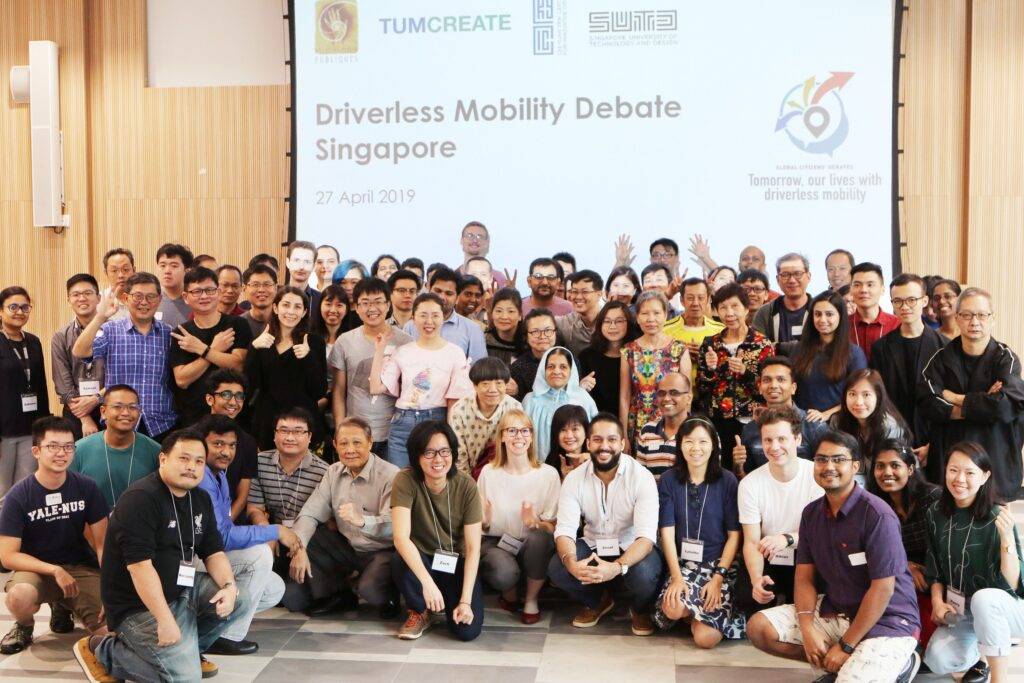
FEBRUARY 2020 – According to the latest findings from a Driverless Mobility Dialogue, most Singaporeans are ready to embrace the introduction of autonomous vehicles (AVs) on the road.     TUMCREATE and the Singapore University of Technology and Design (SUTD) worked together to conduct a Driverless Mobility Dialogue, with 60 Singaporeans from all walks of life, to better understand Singaporeans’ expectations and perceptions of AVs in Singapore. Data collected from the dialogue were then analysed and compared at a global scale among 17 cities[1].   Based on one of the evaluation categories, Singapore ranked first, tied with Salzburg, as the most optimistic city towards driverless mobility. Most Singaporeans had used positive keywords like ‘exciting’ and ‘forward’ to describe their views on having AVs on the road. Among the 17 cities, Singapore also scored the highest for the level of trust in government across all six issues, namely, Privacy, Infrastructure, Justice/Equity, Cybersecurity, Safety and Environment.   The data collected showed that improvement in convenience and efficiency for transportation were some of the expectations by Singaporeans. A mixed sentiment was presented for the considerations on safety and cost where the two were indicated to be a cause for both hope and concern. On the type of AV deployment scenario, 92% of Singaporeans preferred the deployment of driverless mobility in a public transport model. Globally, an average of 90% of the participants from all cities agreed on the deployment of driverless mobility in a public transport model while only 25% wished for individual ownership of driverless cars.   “It is encouraging that many support the deployment of autonomous vehicles in public transport in cities, as opposed to driverless personal cars. In compact cities like Singapore, shared use of AVs makes sense to enhance mobility opportunities for all,” said SUTD Associate Professor for engineering systems and design, Lynette Cheah, a co-organiser of the event.   “This dialogue was a great opportunity to hear about the hopes and concerns for driverless mobility from people all over the world as they are, ultimately, the users of the technology” said Dr Henriette Cornet, Principal Investigator at TUMCREATE. She added, “With plans to expand testing grounds for AVs in Singapore, it is good to know that Singaporeans are very optimistic about going driverless, but we would need to tread carefully on aspects like safety, infrastructure and privacy protection.”   Dr Cornet and Associate Professor Cheah, supported by Penny Kong from TUMCREATE and Dr Samuel Chng from the Lee Kuan Yew Centre for Innovative Cities at SUTD, are currently working on a scientific publication based on the results analysis. Ms Kong and Dr Chng were also involved in organising the Driverless Mobility Dialogue. Results from the dialogue will be released for public access through TUMCREATE website and social media platforms.   [1] The 17 cities include: Vienne, Pörtschach, Linz, Salzburg, Graz, Aachen, Paderborn, Boston, Washington, Buffalo, Phoenix, Lille, Montreal, Manchester, Lisbon, Cascais and Singapore.     About TUMCREATE TUMCREATE is a research platform geared towards the improvement of Singapore’s public transportation, including the deployment of electric and autonomous mobility. Researchers from the Technical University of Munich (TUM) and Nanyang Technological University (NTU) join forces, with the aim of significantly improving the public transport mobility of the nation. TUMCREATE is funded by Singapore’s National Research Foundation (NRF) as part of the Campus for Research Excellence And Technological Enterprise (CREATE).   About Singapore University of Technology and Design The Singapore University of Technology and Design (SUTD) is Singapore’s fourth public university, and one of the first universities in the world to incorporate the art and science of design and technology into a transdisciplinary, human-centric curriculum. SUTD seeks to advance knowledge and nurture technically-grounded leaders and innovators to serve societal needs. SUTD also recently topped a list of emerging engineering schools in the world in a study conducted by MIT. A research-intensive university, SUTD is distinguished by its unique East and West academic programmes which incorporate elements of innovation, entrepreneurship, design thinking and local and international industry collaborations. SUTD will focus in key areas – Healthcare, Cities and Aviation, supported by capabilities in Artificial Intelligence/Data Science and Digital Manufacturing. Multiple post-graduate opportunities are available. In addition, skill-based professional education and training courses are also available at SUTD Academy.   For media queries, please contact: TUMCREATE Brenda Yap Media and Communications Email: brenda.yap@tum-create.edu.sg   Singapore University of Technology and Design Jessica Sasayiah Marketing and Communications Email: jessica_sasayiah@sutd.edu.sg

thumb

TUMCREATE’s electric scooter for cargo delivery, LEO, bags eMove360° Award 2017

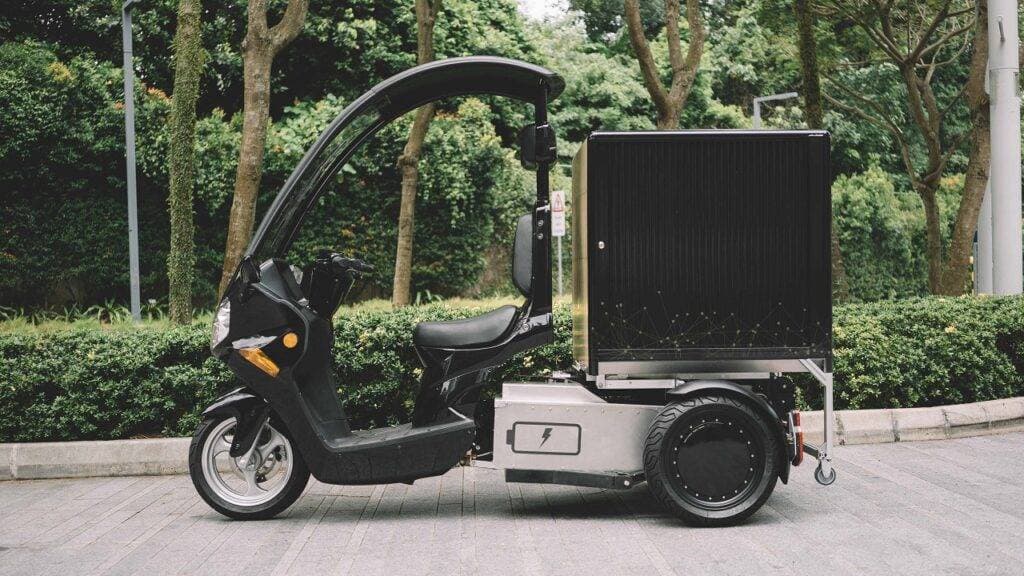
MUNICH, 16 October 2017 – TUMCREATE’s electric scooter for cargo delivery, known as LEO, won the eMove360° award 2017 in the ‘Electric Vehicles’ category.   The international award was presented in six categories: Mobility Concepts & Software, Energy Storage, Charging Infrastructure, Powertrain, Automated Driving, and Electric Vehicles. LEO was hailed a winner alongside Robert Bosch GmbH, Rolls Royce and Daimler AG who received awards in other categories.   TUMCREATE’s interdisciplinary team of engineers and designers has jointly developed and built a unique 3-wheeled electric scooter for cargo handling and delivery operations in megacities. This work was done in collaboration with Singapore Post Ltd. (SingPost), the Singaporean postal services and ecommerce logistics provider.   With the increase of e-commerce, the postal volume for delivery has been consistently increasing. Catering to this growth, the delivery vehicles have to upgrade their carrying capacity as there has been a significant rise in the fleet mileage and hence the impact of these delivery vehicles on urban congestion and pollution is a growing concern. On the other hand, higher postal volume and increasing complexity of delivery logistics have led to inefficient and arduous warehouse operations.     Considering these challenges, LEO was designed with the following features: Portable cargo compartment for improved cargo handling Modular battery system enabling cost optimisation for the vehicle fleet Compact vehicle-platform for fast-agile and emission free urban utility Smart connectivity for increasing resource efficiency   1. Portable cargo compartment Currently, a micro transportation gap exists within cargo handling operations. The cargo arrives in warehouses, where it is stored and processed. This cargo needs to be transported to the vehicles which ultimately deliver it. This micro transport from the warehouse to the vehicle can be highly time, effort and finance consuming depending on the type of cargo handled. The portable cargo compartment designed for LEO can be detached and attached within seconds on press of a button and can be rolled inside the building where cargo is directly sorted into this compartment. For SingPost this solution improves their workflow saving 40 minutes of time and effort per post officer per day.     2. Modular battery system The battery is the most expensive and a considerably heavy component in an electric vehicle. Postal services have very predictable operations. They have fixed delivery zones and driving distances, hence a single battery pack designed for the maximum distance would be underutilised in many cases adding unnecessary cost and weight. Hence, a modular battery pack is a solution enabling cost optimisation over the entire vehicle fleet. A fleet manager can configure the vehicles to have a range of either 35 km or 70 km without compromising on vehicle performance.   3. Compact vehicle-platform for urban utility Urban delivery vehicles should be agile. They need to travel quickly through traffic and narrow streets while carrying high payloads and volumes for making deliveries on time. The current market offers several cargo scooters which may be agile but are not suitable for high payloads and volumes. The 4-wheelers on the other hand can carry heavy cargo and big volumes but get affected by urban congestion and have difficulties finding parking spaces. LEO addresses this issue with a compact 3-wheel platform with a footprint fitting within a standard 2-wheeler parking lot. It features a tilting rider cabin and has a cargo carrying capacity of 600 litres – 120 kg payload. The tilting rider cabin is independent of the cargo compartment which always stays upright. This makes it very comfortable, safe and intuitive for the rider to weave through traffic while carrying heavy cargo at the rear. With its electric powertrain, LEO is locally emission-free and quiet.     4. Smart connectivity The instrument cluster developed for LEO integrates useful functions into its dashboard like fleet monitoring, real-time parcel tracking, GPS routing and real-time camera recording. This enables the fleet manager to optimise delivery operations using dynamic routing, instant push notifications and vehicle tracking.     LEO fills a gap in the current transportation system for cargo delivery and anticipates the future needs of this service regarding efficiency, environmental and social impacts. Field trials were conducted successfully together with SingPost in March 2017 as a first step toward implementation and concept validation, where LEO was used in the ‘real world’ for routine delivery operations in Singapore for two weeks. LEO received a very positive feedback from its primary users, the post officers. Furthermore, it maximises operational comfort for the post officers with its innovative features and helps escalate the acceptance of this routine job, thus producing a significant social impact.   Prof. Ulf Schlichtmann, Professor at the Technical University of Munich (TUM) and TUMCREATE Programme Director, said: “We congratulate the research team involved in the development of LEO. Clinching this award shows what can be accomplished with a strong research background based on innovative German Engineering coupled with Singapore as a perfect test bed for fresh concepts. Smart mobility is an important part of our future. The dedicated TUMCREATE team has demonstrated again that it is committed to play a key role in keeping Singapore at the forefront of urban mobility.”   Dr. Thomas Aulig, Corporate Director of TUMCREATE, said: “LEO’s development period of 12 months was directly supported by TUMCREATE Chief Executive Officer Prof. Maria-Elisabeth Michel-Beyerle and the management team. The customised vehicle increases living quality through the reduction of carbon dioxide and noise emissions in residential zones.” About eMove360° Award The future of the mobility is electric, connected and autonomous – it belongs to Mobility 4.0. According to surveys the market potential of the “New MobilitY” is estimated to grow up to 115 Billion Euro until 2020 – which is four times as much compared to its current level.   We extensively reflect this development with eMove360° Europe 2018 – International Trade Fair for Mobility 4.0 – electric – connected – autonomous. Under this forward-thinking umbrella brand name we have united our trade fair topics Electric Mobility, Connected & Autonomous Driving as well as Materials & Design

1280x720electric 3w-1

SingPost and TUMCREATE launch trial of electric vehicle for mail delivery

SINGAPORE, 24 March 2017 – Singapore Post Limited (SingPost) and TUMCREATE will on 28 March 2017 commence a road trial of a prototype electric three-wheeler that is environmentally friendly and features innovations to boost mail delivery efficiency.   Developed by researchers with the support of the management team at TUMCREATE, in conjunction with SingPost, the customised vehicle will serve as a test bed for concepts that will guide SingPost’s application of electric vehicle technology for postal operations and eCommerce logistics.   The three wheeler has been designed to streamline postal processes, improve rider experience and reduce greenhouse gas emissions. SingPost currently operates a fleet of 674 petrol-driven scooters for last mile postal delivery. Of these, about half are three-wheelers, which offer greater ride stability and load capacity than conventional two-wheelers.   Mr Tan Tien Po, SingPost Senior Vice President for Domestic Mail, said, “Innovation and the application of new technologies is how we improve SingPost’s services and meet the evolving postal needs of Singapore. We are excited to take this step forward with TUMCREATE, towards realising an urban logistics solution that addresses the future needs of mail and eCommerce logistics, increasing demands for fast and flexible delivery, and the growing need for environmental sustainability.”   Prof Ulf Schlichtmann, Professor at Technical University of Munich (TUM) and TUMCREATE Program Director, said: “I am really excited about this innovative vehicle for Singapore which our dedicated TUMCREATE team has developed in cooperation with SingPost. It has been a very rewarding collaboration, and we feel that Singapore will benefit from our research expertise which is backed up by TUM’s strong track record in vehicular technology, especially electrically powered vehicles.”   The vehicle’s all-electric drive produces zero local exhaust emissions and, with relative simplicity and fewer moving parts compared with combustion engines, reduces maintenance costs and downtime. Additionally, it offers near-silent operation, thus curbing noise disturbance, especially during deliveries in residential areas.   Modular batteries, the costliest component of the vehicle, were developed by TUMCREATE so that fleet cost may be optimised by matching battery capacity to the route on which the vehicle is deployed. By changing the battery configuration, the vehicle’s range may be configured to 35 kilometres, which is sufficient for an average mail delivery route – or 70 kilometres, which will satisfy almost all postal delivery trips made.   Operating costs as well as battery end-of-life management may be further minimised by incorporating regular charging into routine overnight parking of postal vehicles at delivery bases, thus avoiding the battery degradation caused by fast charging, and the cost of fast chargers.   The vehicle features a specially designed storage system that can reduce a postman’s daily delivery routine by up to 40 minutes. This is achieved through a detachable, rollable storage box that the postman may pack at his mail sorting station, wheel to the vehicle, and load up on the vehicle with the help of a motorised hoist. Packing and unpacking is cut down as the postman no longer requires a separate trolley to transport mail from sorting station to his delivery vehicle. The box, at 567 litres, offers 23 per cent more carrying capacity than those on existing postal scooters. This enhances delivery efficiency, especially as postal services are used increasingly for eCommerce delivery.   For environmental sustainability, the sidewalls of the box are made from an advanced bamboo composite developed by advanced fibre composite material researchers under the Future Cities Laboratory at the Singapore-ETH Centre. Bamboo is durable, grows fast and is recyclable.   Manoeuvrability and stability when cornering is improved by an articulated tilt mechanism that allows the rider cabin to lean into a turn, independent from the rear cargo section. This increases the vehicle’s agility and reduces steering effort and counteracts cornering forces. While parked, the tilt mechanism is locked to ensure a stable position on three wheels without a kickstand.   The electric three-wheeler is equipped with a smart instrument cluster that includes dynamic GPS routing for priority deliveries and optimised delivery routing, fleet monitoring for data collection and management, integrated cameras, and on-demand tracking.   The trial will take place along two delivery routes between SingPost’s Ayer Rajah Regional Delivery Base and the National University of Singapore and end on 7 April 2017. Three SingPost postmen have been assigned to provide real-world feedback for further development, while a manufacturing partner is being sought to convert the prototype into a market-ready product.   About Singapore Post Limited   For over 150 years, Singapore Post (SingPost) as the country’s postal service provider, has been delivering trusted and reliable services to homes and businesses in Singapore.   Today, SingPost is pioneering and leading in eCommerce logistics as well as providing innovative mail and logistics solutions in Singapore and around the world, with operations in 19 markets.   Building on its trusted communications through domestic and international postal services, SingPost is taking the lead in end-to-end integrated and digital mail solutions. The suite of SingPost eCommerce logistics solutions includes front end web management, warehousing and fulfilment, last mile delivery and international freight forwarding.   SingPost has been listed on the Main Board of the Singapore Exchange since 2003. The market capitalisation of SingPost stood at S$3.53 billion as of 31 March 2016.   About TUMCREATE   TUMCREATE is a research platform for the improvement of Singapore’s public transportation, including the deployment of electric and autonomous mobility. Researchers from the Technical University of Munich (TUM) and Nanyang Technological University (NTU) join forces and are supported by the National Research Foundation (NRF) as part of the Campus for Research Excellence and Technological Enterprise (CREATE). TUMCREATE is made up of over 100 scientists, researchers and engineers led by professors from TUM and NTU. For more information, visit www.tum-create.edu.sg.   CREATE is an international collaboratory housing research centres set up by top universities. At CREATE, researchers from diverse disciplines and backgrounds work closely together to perform cutting-edge research in strategic areas of interest, for translation into practical applications leading to positive economic and

1280x780_ease

TUMCREATE: Researchers develop mobile electric motor for bicycles

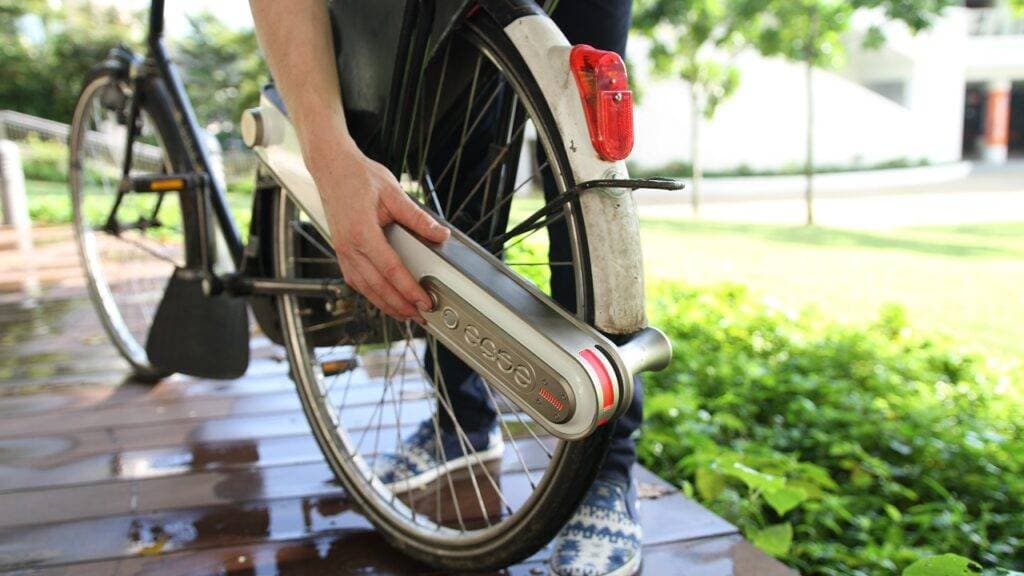
Engineers at TUMCREATE in Singapore have developed an electric motor which can be easily attached to almost any bicycle, turning it into a pedelec (pedal electric cycle). The drive device is so light that it can be taken along easily before and after use. It was designed for commuters who ride their bikes to work. The TUMCREATE researchers have already tested an initial prototype of their product, which they’ve dubbed “ease”.   Commuting to work by bike is particularly common in major cities. This can turn into a strenuous undertaking, depending on the weather, the route travelled and the individual’s mood. When the ride gets difficult, many cyclists might wish they had the help of an electric motor. But the high price of a conventional pedelec is an obstacle for many riders who might not want to simply lock up such an expensive bike on the street.   Felix Römer is a doctoral candidate at Singapore’s TUMCREATE, a research facility run jointly by TUM and Nanyang Technological University (NTU). Almost every day he rides his bike to the next subway station, where he continues his commute to work. Riding a bicycle in Singapore’s hot and humid climate is not always pleasant. This gave Römer the idea of developing a flexible electric motor that can easily be attached to any bicycle.    Many components in a single housing   “There have already been several attempts to do something similar, but most of them require modification of the bicycle,” Römer says. “The effort involved discourages many potential users.” Furthermore, these units often only fit specific bicycles or wheel rims. This led Römer and Master’s students Marius Mrosek and Simon Schmalfuss to develop a completely self-contained device.   The largest challenge the team faced was fitting the necessary components such as the motor, storage battery and sensors into a single compact housing. “For example, we need optical sensors that detect when the pedals are being pushed,” says Römer. Most pedelecs feature these sensors permanently installed in the bicycle’s bottom bracket. “It took quite a lot of time and trouble to get everything to work properly without cables or additional equipment.” In addition, legal regulations for pedelecs require the ability to detect the movement of the pedals.    In legal terms, pedelecs considered equivalent to bicycles and can be operated without insurance indicators, registration or a driver’s license.    The device features a lithium storage battery enabling a range of up to 50 kilometers, depending on performance requirements, and which recharges in only a few hours. The motor is capable of generating 250 watts and automatically switches off when the bicycle’s speed reaches 25 kilometers per hour. These aspects are also required by law.   Mounted in under ten seconds   The engineers have already developed a functional prototype that weighs 3.5 kilograms and can be folded at a joint in the middle. The cyclist can easily carry the unit in a backpack.    It can be fastened to the bicycle using a cable loop which is hooked onto the frame and attached with a rotating knob – in under ten seconds. “Nothing stays on the bicycle after the unit has been removed,” says Römer. The scientists spent a long time tinkering with the unit before they came up with a design that fits various differently shaped bike frames. It can be mounted with equal ease on either side of the bicycle. The device automatically detects the side on which it has been installed.   Practical solution for commuters    Römer doesn’t consider the “ease” to be in direct competition with conventional pedelecs. “Our product is suitable for those whose daily commute to work is too long for a bicycle, but for whom buying an expensive Pedelec capable of longer ranges isn’t practical.”    The team is already working on improvements. “After the first tests we received feedback indicating that some riders bumped into the unit with their shoes,” says Römer. The initial mistakes have been corrected and the unit has been optimized. The scientists are hoping for support from an industry partner for further developments. Only then, they point out, will it be possible to estimate how much the “ease” will cost. The scientists have already applied for a patent for their invention.    About TUMCREATE:   TUMCREATE is a research platform for the improvement of Singapore’s public transportation, including the deployment of electric and autonomous mobility. Researchers from the Technical University of Munich (TUM) and Nanyang Technological University (NTU) join forces and are supported by the National Research Foundation (NRF) as part of the Campus for Research Excellence and Technological Enterprise (CREATE). TUMCREATE is made up of over 100 scientists, researchers and engineers led by professors from TUM and NTU. For more information, visit www.tum-create.edu.sg.    CREATE is an international collaboratory housing research centres set up by top universities. At CREATE, researchers from diverse disciplines and backgrounds work closely together to perform cutting-edge research in strategic areas of interest, for translation into practical applications leading to positive economic and societal outcomes for Singapore. The interdisciplinary research centres at CREATE focus on four areas of interdisciplinary thematic areas of research, namely human systems, energy systems, environmental systems and urban systems. More information on the CREATE programme can be obtained from www.create.edu.sg.     Contact: Dipl-Ing. Felix Römer TUMCREATE 1 CREATE Way, #10-02, CREATE Tower, Singapore 138602 T: +65 9778 8739 (SG) E:  felix.roemer@tum-create.edu.sg https://www.easecycle.com/

16x9_DSC_0399

NTU and TUM Design World’s First Electric Taxi For The Tropics

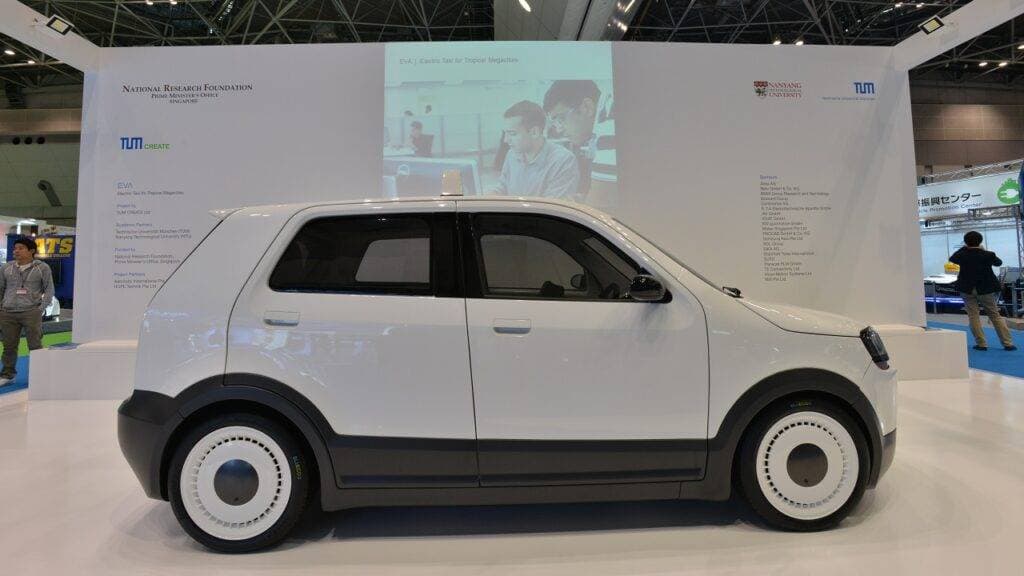
The world’s first electric taxi for tropical megacities has been launched.   Named EVA, the electric taxi is built by TUM CREATE, a collaboration between Nanyang Technological University (NTU) and one of Europe’s top universities, Germany’s Technische Universität München (TUM). The project is supported by the National Research Foundation, Prime Minister’s Office, Singapore.   Gracing the unveiling ceremony is His Excellency Dr Michael Witter, Ambassador of the Federal Republic of Germany, accompanied by NTU President Professor Bertil Andersson and TUM Vice President for Research and Innovation Professor Thomas Hofmann.   Professor Bertil Andersson said the EVA Electric Taxi project is a good example of future electro-mobility and its possibilities, achieved by leveraging NTU’s established track record in application-driven engineering and TUM’s deep expertise in electro-mobility.   “NTU is at the forefront of sustainability research and we had identified electro-mobility as one of the solutions necessary to tackle climate change. Our success in building an electric car for the tropics is a big step forward in realising our vision for a more sustainable future for everyone,” said Prof Andersson.   “Equally significant is that EVA is the first car ever designed, developed, and manufactured locally. While Singapore is not an automotive manufacturing country, the nation’s economy will definitely benefit in the long run through technology transfer. We are now among the leaders in electro-mobility systems and will be able to offer our knowledge and services to the automotive industries in this region.   “Through TUM CREATE, we have also trained local talent and built a pool of electro-mobility experts who will be in strong demand, given that the electric vehicle production globally is expected to rise rapidly over the next decade.”   TUM CREATE Chief Executive Officer Professor Maria-Elisabeth Michel-Beyerle said many of the technologies researched and used in building EVA, such as its specially tailored fast-charging battery system, had yielded innovations beneficial to the automotive industry.   “Through EVA, this partnership between TUM and NTU has led to the development of several technology innovations which has caught the attention of the automotive industry,” said Prof Michel-Beyerle.   “Last year EVA received the eCarTec Award, the Bavarian State Prize for Electromobility at the eCarTec, the world’s largest electromobility fair held in Munich, Germany. We are also now in discussions with some companies who are interested to commercialise our innovations.”   Prof Michel-Beyerle highlighted that EVA’s achievements are even more significant as it was built here in two years by a small team of about 40 researchers, who were mostly PhD students from about 20 nationalities. In contrast, car manufacturers typically have huge work teams with vast experience at their disposal to design and build concept cars.   EVA’s suitability for Singapore   The research team’s decision to build an electric taxi fitting Singapore’s climate was for very practical reasons.   By replacing fuel-burning vehicles with electric-powered ones, carbon emissions as well as local noise and exhaust emissions can be reduced.   Existing taxis also have far greater impact on the environment compared to private passenger cars. In Singapore, taxis make up less than 3 per cent of the vehicle population. Despite their small numbers, they account for 15 per cent of the total distance covered by all vehicles in Singapore.   Many taxis run on two-shift rotation for up to 24 hours every day, covering an average of 520 km.  In addition, transportation companies around the world typically re-purpose passenger cars as taxis.   Professor Markus Lienkamp, the Scientific Advisor Director at TUM CREATE who planned the EVA project from conception to its eventual completion, said the research team had set out four years ago asking very important questions such as whether electric vehicles would be feasible for public transport systems in megacities.   “Many of the public transportation vehicles today are re-purposed from their original design as passenger cars and vans, into taxis and shuttle buses,” said Prof Lienkamp, who is also the Director of Research for TUM’s Munich School of Engineering and the Science Center for Electromobility.   “Now that we have proven that it is possible to design vehicles for specific purposes of public transport, it has opened up new questions for us to explore, mainly how  purpose-built electric vehicles would fit into the whole transport eco-system together with the trains and buses, and these solutions can reduce travelling times and energy usage used for transportation.”   Professor Lam Khin Yong, NTU’s Chief of Staff and Vice President for Research, said many of EVA’s innovations can also be applicable and deployed to other industry sectors in Singapore, such as its energy-efficient air conditioning system and lightweight carbon-fibre composites.   “Due to the hot and humid weather in the tropics, a significant amount of energy is consumed by the air conditioning system in automobiles,” said Prof Lam, who is also the Co-Scientific Advisor Director at TUM CREATE.   “The innovative energy efficient air conditioning solutions deployed in EVA, like its new energy-efficient compressor technologies, can be adopted in both current and future vehicles to reduce their carbon footprint.   “In addition, NTU’s key research projects at the Energy Research Institute such as our inductive wireless charging technology, a good alternative to the current plug-in conductive charging, are also successfully installed in EVA.”   EVA’s innovative design   EVA’s fast-charging battery system is able to give it a range of up to 200 kilometres with just a 15-minute recharge. Despite having to house a large battery pack, EVA is actually 150kg lighter than other comparable-sized taxis due to its lightweight carbon-fibre composites.   Its ergonomically designed seats are equipped with a purpose-built system where moisture and heat are sucked away from the surfaces of the seat, so as to maximise comfort for passengers.   The front passenger seat can also be folded forward to reveal an integrated child seat for children aged 9 months to 3 years old, filling the void in the area of safety for young taxi passengers   The climate controls, in-car entertainment, booking and digital

500x500_RDSC_5716

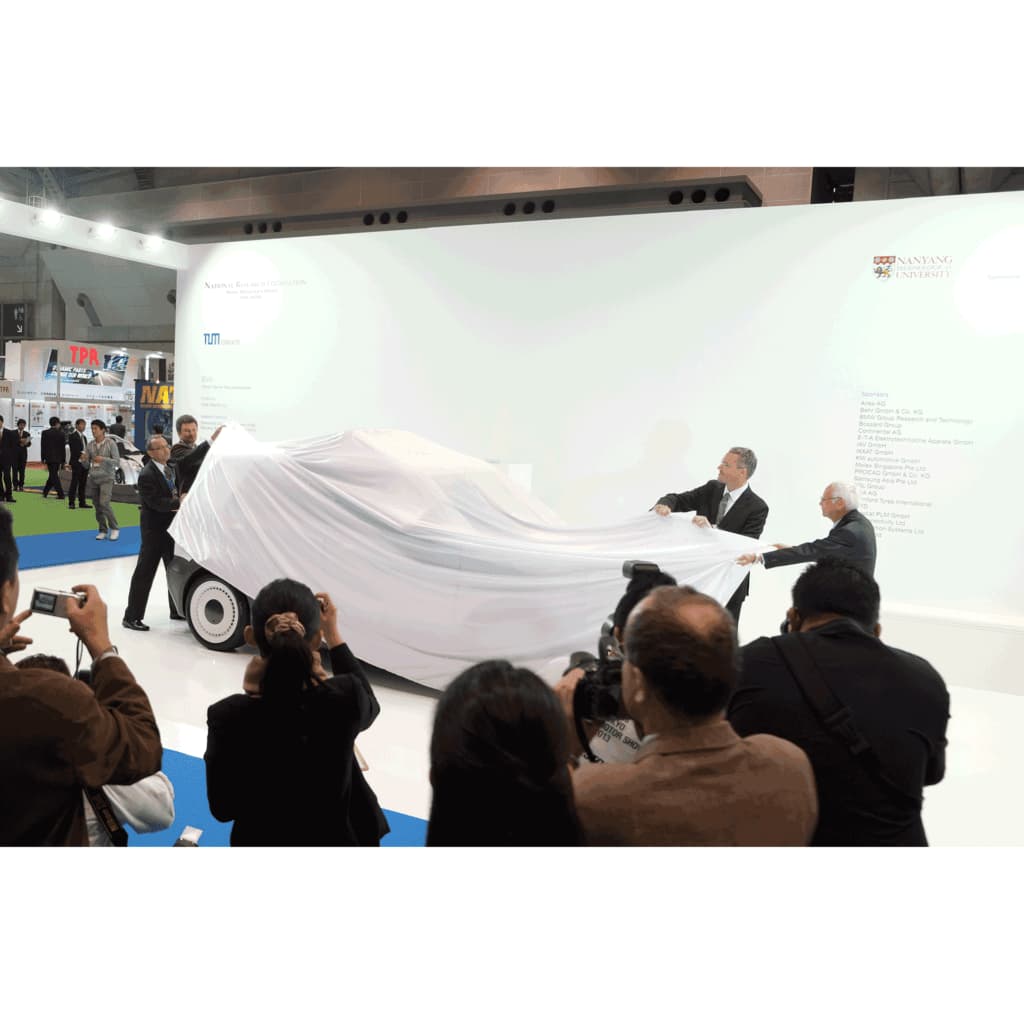
TUMCREATE Showcases Future EV Technologies with E-Taxi Launch at Tokyo

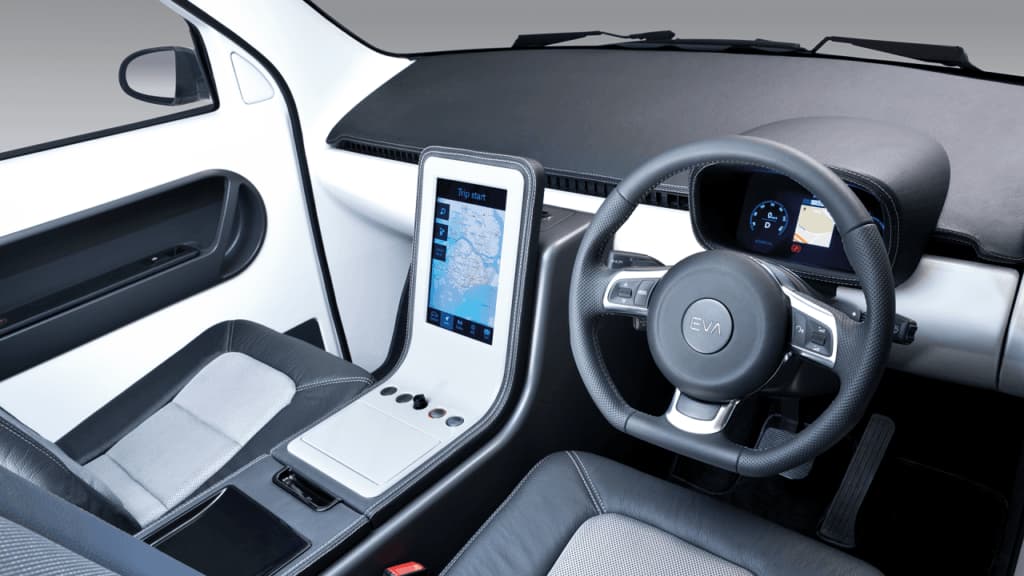
TOKYO, JAPAN (21 November 2013) — TUM CREATE has unveiled its electric taxi prototype, codenamed EVA, at the 43rd Tokyo Motor Show today. It will be on display at Booth 8 in West Hall 4 of the Tokyo Big Sight from 22 November to 1 December 2013.   • Features 15-minute super-fast charging as solution to EV range challenge • Extensive use of energy- and weight-saving materials and technologies • Infotainment system allows passengers to control climate and audio via mobile devices   EVA serves as a platform to showcase the results of the innovations and developments at TUM CREATE, a joint research programme by Technische Universität München (TUM) and Nanyang Technological University (NTU).   A key highlight is the car’s super-fast charging system. It is designed to be recharged in just 15 minutes to cover a realistic range of 200 km (based on Singapore driving patterns), which will be an industry benchmark. Other features found on EVA include the extensive use of lightweight materials and energy-saving solutions such as individualized overhead air-conditioning.   Professor Dr. Wolfgang A. Herrmann, President of Technische Universität München, said, “This new electric taxi for tropical mega cities, developed and constructed by two leading universities, highlights the successful collaboration of TUM and NTU. The scientific and technological breakthroughs are based on a spirit of mutual trust and understanding. For more than ten years, Technische Universität München has been operating its branch TUM Asia in Singapore, which has a current enrolment of 380 students and produced hundreds alumni. It is a great joy for me to see that our untiring joint efforts, supported by the National Research Foundation, have borne fruits now.”   Professor Bertil Andersson, NTU’s President, said the technological innovations developed for EVA is a great demonstration of how two of the world’s top engineering universities can successfully collaborate to combine their expertise and knowledge to solve the tough challenges of today. “NTU’s deep expertise in energy technologies, such as battery systems, wireless charging, and materials science, in combination with TUM’s strengths in automotive and electromobility, gave our research team a strong platform in which to design and build EVA on,” Prof Andersson added. “A robust and energy-efficient electric taxi for use in real world conditions is testimony of our strengths in engineering and how we apply it to make a difference. It is also a reminder to the world that it is essential for all of us to play a part for our environment and such R&D efforts is an investment towards a more sustainable future for everyone.”   Transportation companies around the world typically re-purpose passenger cars as taxis. However, the challenge of current electric vehicles is the extremely limited range and long recharge times (up to 8 hours), making them impractical as taxis. TUM CREATE aims to address these issues, as well as the unique challenges posed by the heat and humidity in tropical megacities, through its research and development. Unlike temperate climates, passenger cooling and battery pack heat management are issues specific to tropical and equatorial regions.   As a form of public transportation, introducing e-taxis into the local taxi fleets has a high leveraging effect to decrease carbon emissions.   “While taxis account for less than 3% of the vehicle population in Singapore, they contribute to 15% of the total distance travelled,” explains Principal Investigator Dr. Daniel Gleyzes. “The average two-shift taxi covers over 500 km a day.”   EVA was designed from the ground-up as an e-taxi and is a result of interdisciplinary research in the areas of energy storage, battery charging, thermal management, and lightweight materials and design.   TUM CREATE is funded by the Campus for Research Excellence And Technological Enterprise (CREATE) programme under the National Research Foundation (NRF), an agency of Singapore’s Prime Minister’s Office.   Professor Low Teck Seng, NRF’s Chief Executive Officer, said, “The launch of this prototype electric-vehicle today marks a major milestone for TUM CREATE. In the short time since TUM and NTU came together at CREATE in 2010 with support from the NRF, they have developed strong research and engineering capabilities in e-vehicular technology resulting in this demonstrator.  With EVA, we have a public commuter car that is green, energy-efficient, and tailored for a tropical urban environment. We look forward to this partnership strengthening in the years to come.”   This project milestone marks the first time that a Singapore-based organization is participating and presenting a vehicle in the 59-year history of Asia’s most important automotive tradeshow.   EVA feature highlights: • Super-fast charging; • Individualized air-conditioning; • Interactive infotainment system; and • Integrated child-seats.   EVA’s super-fast charging system is designed to achieve a re-charge in just 15 minutes. This allows the car to be driven for 200 km with the air-conditioning switched on, based on the driving patterns of Singaporean taxis collected by TUM CREATE. With its fast recharge times, EVA can achieve long ranges with short downtimes — as charging can be performed during the driver’s rest breaks.     Apart from tackling the energy storage and battery charging challenges, EVA will also feature innovations that are particular to tropical climates. TUM CREATE’s researchers have developed an individualized, overhead air-conditioning system with which they target to reduce the cabin cooling power. Ergonomics studies have shown that localized cooling has a direct impact on the overall thermal comfort. The overhead outlets and the seat ventilation target these areas to create better thermal comfort without the need to cool down the whole cabin. Unoccupied zones can also be switched off to further reduce energy consumption. Interestingly, this system also reduces the exposure of air-borne particles or germs from being blown from one seat to another zone in the vehicle.   Besides the cabin cooling system, EVA’s innovative seats provide a maximum comfort for both the driver and passengers driving in humid tropical climate. The ergonomically designed seats are equipped with a purpose-built system where suction draws away moisture and heat from the surfaces of the seat. In addition,

16x9_eva_interior_driver

TUMCREATE to Unveil Electric Taxi Prototype at Tokyo Motor Show

SINGAPORE (3 September 2013) — TUM CREATE will present a purpose-built electric taxi, codenamed EVA, at the 43rd Tokyo Motor Show at West Hall 4 of the Tokyo Big Sight (Tokyo International Exhibition Center) from 22 November to 1 December 2013. This prototype vehicle is a platform to showcase the results of the research and development carried out by the Singapore-based institution.   This project milestone marks the first time that a Singapore-based organization is participating and presenting a vehicle in the 59-year history of Asia’s most important automotive tradeshow   EVA was designed from the ground-up as an e-taxi and is a result of interdisciplinary research in areas such as energy storage, battery charging, thermal management, and lightweight materials and design. A key highlight is the car’s super-fast charging ability. Our engineers have developed a battery pack that can be recharged in 15 minutes to achieve a realistic range of 200 km with the cabin air conditioner switched on. The range is calculated based on data collected by our researchers who tracked driving patterns of Singaporean taxi drivers. With minimal downtime for charging and a high range, TUM CREATE’s solution will set a benchmark in EV technology.   Transportation companies around the world typically re-purpose passenger cars as taxis. However, the challenge of current electric vehicles is the extremely limited range and long recharge times (up to 8 hours), making them unsuitable as taxis. TUM CREATE aims to address these issues, as well as the unique challenges posed by the heat and humidity in tropical megacities, through its research and development. Unlike temperate climates, passenger cooling and battery pack heat management are issues specific to this part of the world.   EVA is an interdisciplinary project as part of the diverse research and development undertaken at TUM CREATE. Funded by the National Research Foundation, an agency of the Prime Minister’s Office, TUM CREATE is a joint electromobility project between two world-leading universities Technische Universität München (TUM) and Nanyang Technological University (NTU).

16x9_TUMCreate5March_051

TUMCREATE Opens New Battery Lab Boasting Regional Firsts

• Cutting-edge equipment including some that are seen for the first time in Southeast Asia • Research focus on battery material, safety and pack engineering • Research to further build knowledge base and competencies in Singapore   TUM CREATE, a joint research project between Technische Universität München and Nanyang Technological University, has opened its state-of-the-art battery laboratory at the Campus for Research Excellence And Technological Enterprise (CREATE) at University Town today.   The new laboratory boasts cutting-edge equipment including some that are seen for the first time in the region. These include:   • Battery abuse chamber; • High capacity battery cycler; and • Walk-in climate chamber.   The laboratory was officially opened, marked by a ribbon-cutting ceremony with National Research Foundation Deputy CEO Philip Ong, CREATE director George Loh, TUM CREATE Scientific Director Professor Harry Hoster and Corporate Director Dr Thomas Aulig.   “With our new equipment ready, we are able to conduct more detailed and in-depth studies and research into battery material and safety at the cell level, as well as develop new battery pack technologies for the future,” said Prof. Hoster. “There has been a lot of research done on battery material in Singapore, but not much has been done at the cell and battery engineering levels. Our research spans from the electrodes to battery packs to integration into electric vehicles.”   Scientists, researchers and engineers, who had been working at TUM CREATE’s satellite laboratory at Nanyang Technological University, are now able to take their research and development into the next level with the advanced equipment.   Apart from researching into new battery materials and engineering the next generation of batteries, TUM CREATE’s research focus includes battery safety, which can now be done in the safe and controlled laboratory environment. This facility was successfully implemented into the construction of the CREATE Research wing by the experts from TUM CREATE, and has received safety certification from local building and safety authorities.   “We have one of the safest battery test facilities in the world,” said Prof. Hoster, referring to the walk-in battery abuse chamber that is able to handle battery abuse tests of up to 1,200A and handle a 500Wh explosion. “Nobody else in the region has such a bunker specifically for such battery tests. We are able to drive battery cells to their limits.”   TUM CREATE’s research on batteries extends beyond electric vehicles and can be applied to a wide variety of purposes and industries. As a publicly funded research institution, knowledge gleaned from the research can be published and shared publicly. In so doing, it will enable TUM CREATE to achieve its goals of building the knowledge base and competencies in Singapore, as well as developing talents in the area of battery research and engineering.   Energy Storage is just one of the many research and development topics undertaken by over 100 scientists, researchers and engineers from more than 20 countries at TUM CREATE. The cutting-edge research covers topics ranging from molecules to megacities including areas such as: electrochemistry, electric vehicle battery packs, embedded systems, air conditioning, simulation and modelling, and infrastructure.   TUM CREATE will mark another significant milestone and set history later this year when it will present the electric taxi prototype, codenamed EVA, at the Tokyo Motor Show – Asia’s largest and most important automotive trade show. EVA is a platform to showcase the research, development and innovations of TUM CREATE.   Key features of the battery laboratory:   • Battery abuse chamber is able to handle battery cells tests involving currents up to 440A (-6V to 18V). The chamber can withstand tests on cells with energy content of up to 500Wh in abuse scenarios, and is the first in the region of this scale. • Battery pack tester can handle battery systems of up to 160kW (Max: 600A or 600V), and is the first of its scale in the region. • Battery cell cyclers can perform tests with a current range from 0.2A to 1,200A on single cells and small modules. • Seven climate chambers to perform battery tests in a variety of controlled environment – including a walk-in chamber that is one of the largest available in a research and academic setting. • Accelerating Rate Calorimeter (ARC) to accurately study the exothermal reactions thermal runaway under adiabatic conditions both on materials and battery cell levels. • Electrochemical Impedance Spectroscopy (EIS) with 12 channels Media Gallery TUMCREATE scientists work in the new battery laboratory at CREATE's Research wing. A battery cell being tested in the abuse chamber. The battery pack cycler is seen on the right. Battery tests being carried out in a climate chamber. A view of the walk-in climate chamber that is one of the largest available in a research and academic setting.

Scroll to Top