In The News

International Womens Day in Science TUMCREATE Dr HuiQi Yeo_1

International Day of Women in Science Spotlight: Dr HuiQi Yeo’s Passion for Flavour and Research

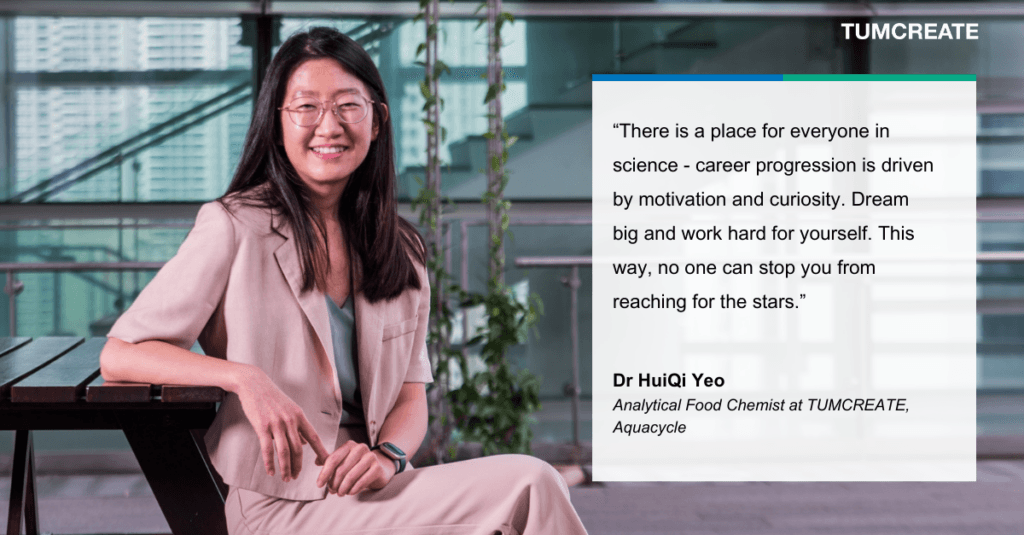
The science of flavour has always been fascinating for Dr HuiQi Yeo. She joined TUMCREATE in 2022 to work on enhancing food security in Singapore through the AquaCycle research project.  HuiQi’s goal is to identify nutritious, palatable ingredients for food products from aquacultural sidestreams. She aims to create pleasant flavour profiles without bitter off-notes together with collaborators from the Nanyang Technological University.  Her passion and journey into the world of food research sparked early in her academic career when she was pursuing food science and technology at the National University of Singapore.   We sat down with HuiQi to learn more about her work and her motivation behind pursuing a career in research.    Share with us what do you do at TUMCREATE?  I work as an analytical food chemist on the AquaCycle project. My job is to identify and isolate the tasty compounds, specifically peptides, from fermented tuna waste using a combined analytical and sensory approach. Beyond the project, I also oversee the running of the lab and ensure lab activities are performed smoothly and safely together with our colleagues.    What excites you most about your current research project?  AquaCycle is a project about the valorisation of fish waste and the possibility of making something useful out of ‘waste’ is very meaningful. What’s more, I get to taste samples!       What inspired and motivated you to get into the field of research?  My flavour journey began with my Final Year Project during my Bachelor of Science. As a young researcher then, using fancy instruments and learning about the aromas of volatile compounds was fascinating. Despite the advancement in food processing technologies, there is still so much to discover in the vast odorant chemical space. I am still curious about new aroma compounds and enjoy exploring the space of flavours in food items a lot.    What are some challenges you’ve faced in your journey from PhD to working at a research institute and how did you overcome it?   One challenge occurred when I transitioned into the multi-disciplinary research team at TUMCREATE. During my PhD, I worked with colleagues from the same research field where we naturally spoke the same scientific language.   It took some effort to help other team members understand what my team does and why we approach things in certain ways. However, that was also the beauty of it – sharing your discipline with others, learning about theirs and finding ways to collaborate. Having an open mind is one of the keys to communication.    Any advice for young women who aspire to pursue a career in science?  There is a place for everyone in science – career progression is driven by motivation and curiosity. Dream big and work hard for yourself. This way, no one can stop you from reaching for the stars.      What do you like to do outside of work?  I am a gym junkie and enjoy attending pilates, yoga, pump and HIIT classes to take my mind off work. As a foodie with a sweet tooth, I also love checking out new dessert menus in town!

Trends and Predictions for AI in 2025

Trends and Predictions for AI in 2025

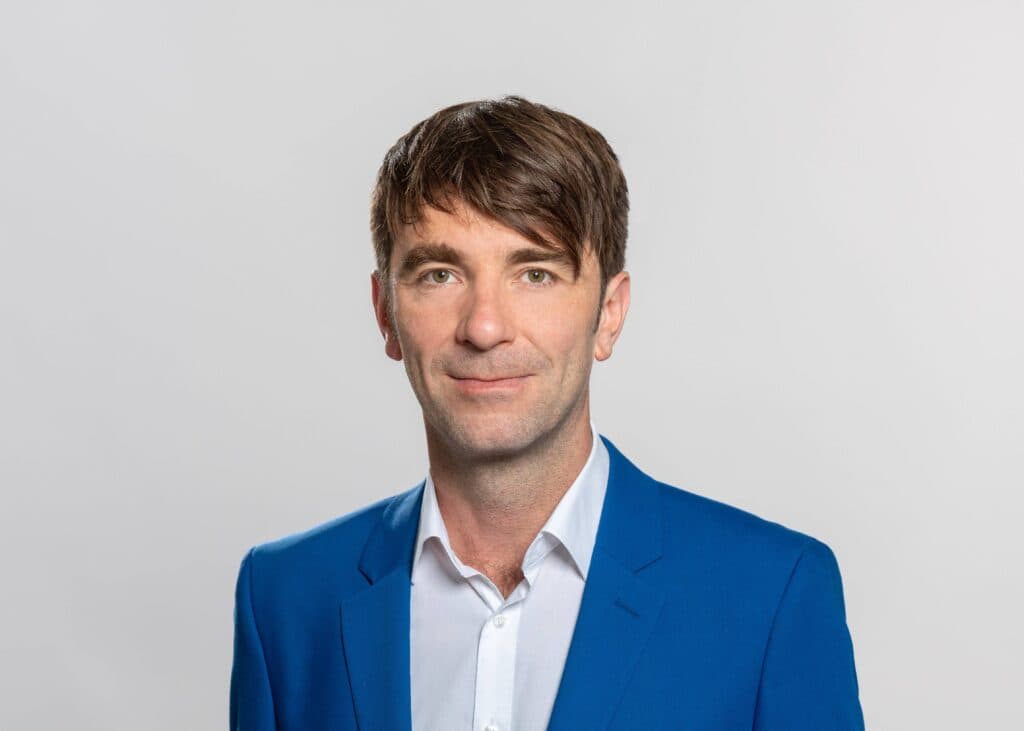
News Trends and Predictions for AI in 2025 Leading experts at TUM and TUMCREATE weigh in on Artificial Intelligence (AI) including agentic AI AI is revolutionising science and reshaping industries. It increases our efficiency and can transform how researchers and decision makers analyse large amounts of data, identify patterns and model complex systems. This could accelerate scientific breakthroughs, redefine impact and streamline workflow automation. Read the insights from experts across AI-assisted medical imaging, urban transport planning and more! From Bench to Bedside: AI revolutionising healthcare The recent hype in AI aside, one thing is clear – AI is here to stay. There is no doubt, one of the largest and most crucial sectors for society that AI will improve is healthcare, from enhancing patient satisfaction in hospitals to robotic surgeries. We anticipate rapid growth in cellular imaging-based diagnostics as AI continues to drive personalised and preventive medicine in the coming years. This progress will translate into faster, more precise, and information-rich test results for clinicians—offering insights that simply weren’t possible with traditional image and data-processing algorithms. That’s why at CellFACE, we are at the forefront of advancing AI-enhanced imaging flow cytometry for haematology and infectious diseases, leveraging our patented technology to uncover hidden biomarkers. We also recognise Singapore as an excellent ecosystem for conducting clinical studies, ensuring that innovative AI-based medical solutions reach patients quickly and cost-effectively. As we look ahead, one thing remains certain. AI will continue to revolutionise healthcare, enabling us to deliver better patient outcomes, more efficient workflows, and ultimately shape a healthier future for everyone. – Kerem Delikoyun, Research Associate at TUMCREATE, CellFACE Trends Shaping AI-assisted medical imaging in 2025 Photo credit: Juli Eberle / TUM There are several trends which will shape the field in 2025. The first trend is the significant growth of foundation models in the field of medical imaging. A foundation model is a large-scale, pre-trained neural network that serves as a general-purpose model for a wide range of tasks. These models are trained on vast amounts of data and can be fine-tuned for specific applications. In the context of medical imaging, these models can significantly improve medical imaging by enhancing accuracy, efficiency, and accessibility, ultimately leading to better patient care. A second trend is the development of large language models (LLMs, such as chatGPT), in particular vision language models (VLMs). Such VLMs understand and generate both visual (e.g. understanding radiological images) and textual information (e.g. understanding radiological reports). Since VLMs can learn the relationships between visual and textual information, they can be used for a wide variety of tasks such as Visual Question Answering (e.g. “show me the tumour in the image”) or Report Generation. This provides a completely new way to interface with AI systems in the context of radiology and pathology. Agentic AI – autonomous action and decision-making One important trend is the emergence of agentic AI systems in medicine and healthcare. In particular, LLM-based agentic systems are capable of processing input information, making plans and decisions, recalling and reflecting, interacting and collaborating, utilising various tools, and taking action. This capability unlocks numerous opportunities in medicine and healthcare, from automating clinical workflows to supporting multi-agent-assisted diagnosis. This is also described in a recent publication [1]. Challenges, transformation and future of medicine and healthcare I expect that the transformative impact of AI in medicine and healthcare will continue, but the speed of adoption will be limited by the fact that clinical translation requires careful validation of AI solutions, understanding AI regulations but also understanding clinical needs and workflows. To tackle these challenges, it will be crucial for multi-disciplinary teams to work together to advance AI for the benefit of patients and doctors. I also expect that the future of biomedical research will be fully data-driven: Experiments will increasingly be guided by data-driven AI models, complementing the currently prevalent serendipity-based methods. This approach will be applicable to both basic research and clinical translation. Just as engineering has facilitated the simulation-based design of cars and planes, data-driven system models will revolutionise human health by enabling the development of therapeutic strategies and precision diagnostics. – Prof. Daniel Rückert, Alexander von Humboldt Professor for AI in Medicine and Healthcare at the Technical University of Munich. Navigating AI and AI-human interactions The scientific community increasingly recognises AI’s importance in research, as evidenced by recent Nobel Prize awards in Chemistry and Physics for AI-related breakthroughs. We’ll see the merging of traditional knowledge silos, with AI serving as a bridge between different scientific disciplines. However, with the current AI hype, one of the big challenges I foresee on the application side is to acknowledge and understand the limitations of certain AI approaches, especially when reasoning and explainability play an important role. Domain expertise must remain at the core of innovation. That’s why Singapore’s National AI Strategy[2] is so important as it allows us, researchers, to strengthen the very foundation on which future technology will rely on. I believe there’s significant potential to improve how humans interact with complex software, particularly expert tools. By incorporating powerful natural language interfaces and AI agents capable of deriving insights and executing concrete actions, we can flatten traditionally steep learning curves and make these tools more intuitive and productive. For CityMoS (City Mobility Simulator), our transport planning software, this could mean AI agents analysing large datasets, identifying key metrics, and automating the extraction of insights, enabling users to focus on strategic decisions rather than on technical details. – Dr. David Eckhoff, TUMCREATE Principal Scientist and Business Development Manager, Co-Founder intobyte (a spin-off from TUMCREATE) References Qiu, J., Lam, K., Li, G. et al. LLM-based agentic systems in medicine and healthcare. Nat Mach Intell 6, 1418–1420 (2024). https://doi.org/10.1038/s42256-024-00944-1 Singapore National AI Strategy 2.0 (NAIS 2.0) | Ministry of Digital Development and Information (2025) Available at: https://www.smartnation.gov.sg/nais/ Media and Communications: communications@tum-create.edu.sg ← Back to News

Prof. Lam Khin Yong Co-Chairman of TUMCREATE Governing Board appointed Honorary Senator of TUM

Prof. Lam Khin Yong Co-Chair of TUMCREATE Governing Board Appointed Honorary Senator of TUM

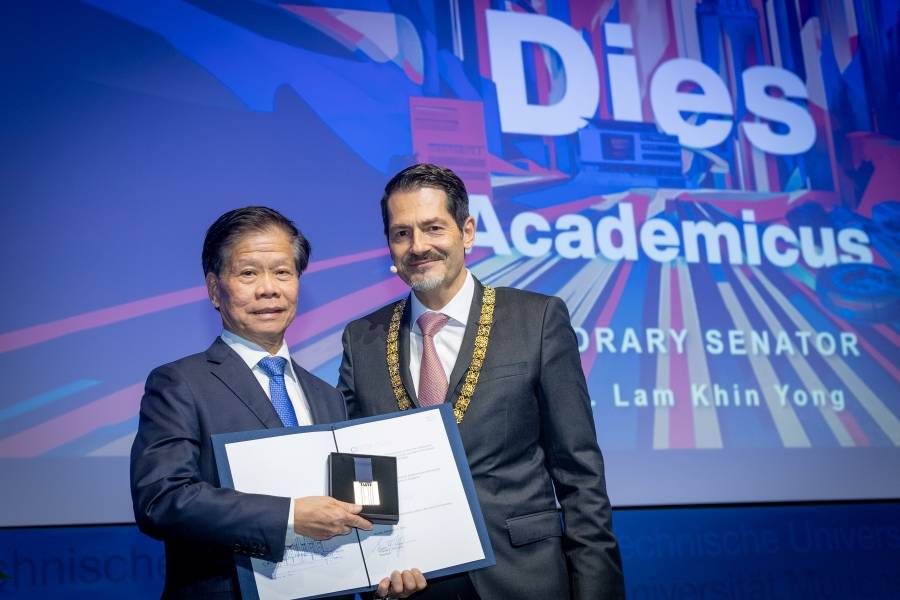
Our heartfelt congratulations to Prof. Lam Khin Yong for being appointed an Honorary Senator of Technical University of Munich (TUM) during the Dies Academicus 2024 ceremony! Prof. Lam is being recognised for his outstanding achievements as an accomplished science manager and his efforts in growing TUM’s presence in Singapore. He has been a valuable advisor and trusted ally of TUM from the start, contributing significantly through his work with TUMCREATE and TUM Asia. He played a critical role in integrating TUM as one of the founding partners of Singapore’s CREATE initiative. Since then, he has been a staunch supporter of TUMCREATE, promoting pivotal research projects, such as “Electromobility in Megacities” and the “Ultimate Public Transport System”. (L-R) NTU Vice President (Industry) Prof Lam Khin Yong, and TUM President, Thomas F. Hofmann, at the Dies Academicus 2024. Photo credit: Andreas Heddergott/TUM Prof. Lam has been elevating TUMCREATE’s management team as Co-Chairman of our Governing Board since 2018. He is instrumental in driving several of our achievements with great overview and strategic insight, ensuring our projects align with Singapore’s standards and innovation goals. We’re grateful for Prof Lam’s plentiful contributions and look forward to his continued support in the years to come. Find out more about the Dies Academicus 2024 here and watch the academic celebration here!

TUMCREATE Meet Prof Stefan Guldin Bridging Material Science and Food Innovation

Bridging Material Science and Food Innovation at TUMCREATE: Meet Prof Stefan Guldin

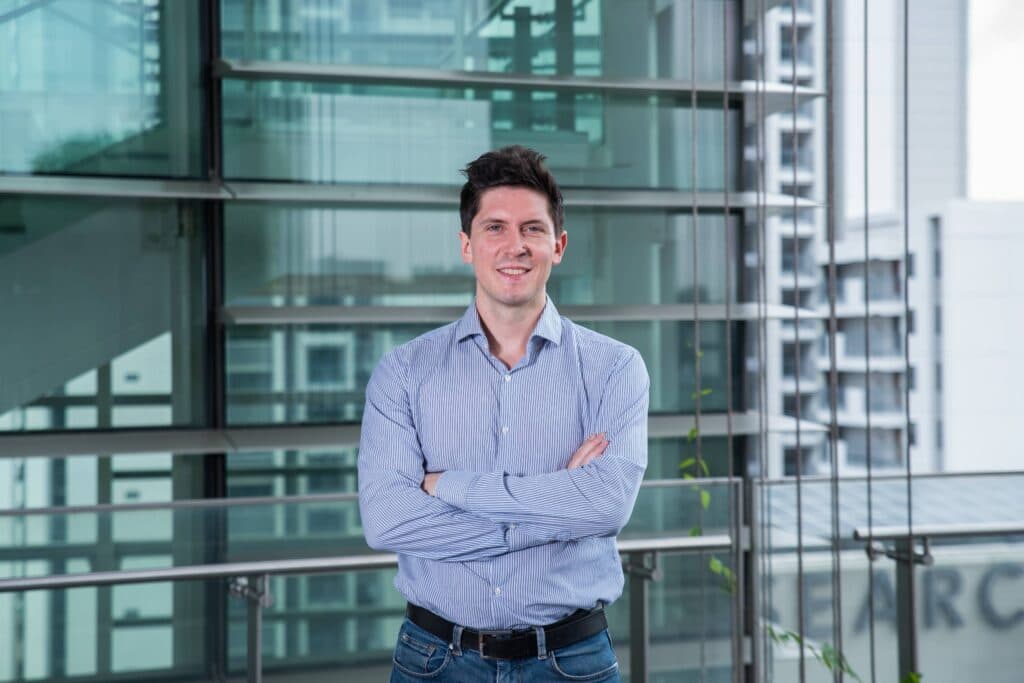
Prof Stefan Guldin, Chair of Complex Soft Matter at Technical University of Munich (TUM) and Scientific Co-Director of Proteins4Singapore and resident Principal Investigator at TUMCREATE, is at the forefront of a new wave of research that merges material science with food innovation.   Based at TUMCREATE, a multidisciplinary research platform of TUM at the Singapore Campus for Research Excellence and Technological Enterprise (CREATE), Prof Guldin is spearheading research initiatives that reshapes the future of alternative proteins and food security.    The accomplished TUM alumnus and Fellow of the Institute of Physics and the Royal Society of Chemistry is eager to bring his extensive experience in material science to address one of the world’s most pressing challenges: sustainable food production.     His involvement in the Proteins4Singapore project aims to contribute to Singapore’s ’30 by 30′ goal, which seeks to produce 30% of the nation’s nutritional needs locally by 2030 (Singapore Food Agency; Our Food Future).     We sat down with him to discuss his vision for the Proteins4Singapore project and his role in supporting Singapore’s ambitious ‘30 by 30’ goal since joining us in August.      Welcome on board to TUMCREATE. Please tell us more about yourself and your background.  I studied physics, specialising in biophysics and soft matter at TUM and did my PhD in nanomaterials science and molecular self-assembly at the University of Cambridge. After graduating, I pursued postdoctoral research as a fellow of the German Academy of Science at École Polytechnique Fédérale de Lausanne (EPFL) in Switzerland before becoming principal investigator and head of the Adaptive and Responsive Nanomaterials Group at University College London (UCL) in 2015. I was promoted to associate professor in 2018 and full professor in 2022.     What are some areas of your research interest?  My research spans multiple aspects of material science across multiple length scales such as nano and micro. I have long been fascinated by nanoscale building blocks and how they can be arranged into functional material architectures by themselves using principles of molecular self-assembly, a mechanism for structure formation often found in nature. During my time in London, my team and I applied these principles across various research topics including biosensors to functional coatings, and new novel drug delivery methods. I am now excited to bring these broadly applicable concepts of material science into food science through our work on Proteins4Singapore research project.    What sparked the move to TUMCREATE and Singapore?  What attracted me to TUMCREATE and fascinates me about research in Singapore is people pursuing bold ideas in large multidisciplinary research teams. Singapore offers a unique research landscape, characterised by its long-term vision supported by robust funding mechanisms. Food science, particularly in the context of alternative proteins, is an exciting frontier of materials science, and I am eager to contribute to this dynamic area with my expertise.      What motivated you to apply for the opportunity at TUMCREATE?  While I was working at some of the world’s leading research institutions including Cambridge, Cornell, EPFL and UCL, I closely monitored the research scene in Germany. I was excited and honoured when I was approached to take on the opportunity at TUM and TUMCREATE. I feel very privileged now to be here in Singapore and become a member of this amazing research community.     You were admitted as a Fellow of The Royal Society of Chemistry in the UK last year. Could you share more about this significant achievement?  Fellows are admitted based on their academic merits, and in my case, a notable factor were my contributions on fundamental aspects of materials self-assembly and novel characterisation techniques to study bio-nano interfaces. I also co-founded Vesynta, a medical technology company where we successfully translated our lab innovations into a commercial venture, highlighting the relevance and real-world impact on our academic research.     What’s one highlight of your career so far?  Being selected to present at The Royal Society’s prestigious summer science exhibition in the UK last year was certainly one of the highlights. This is one of the world’s oldest and well known events for researchers and institutions to showcase science to the public, with only nine research teams chosen annually. It was incredibly rewarding to share ChromaDose, our drug monitoring technology that calculates how much cancer medicine is in a patient’s blood with the public, industry leaders, policymakers, and esteemed Fellows of The Royal Society.     What do you hope to achieve at TUMCREATE?   My goal is to ensure that our research project reaches its fullest potential, encompassing both groundbreaking fundamental research and translational efforts in collaboration with industry partners. I am driven by the ambition to innovate functional food through new insights from materials science.   If you were not in research or academia, what would you do?  I have always been very interested in technology transfer towards making an impact in industry. To this end, it is particularly inspiring that TUM is globally known for its enterprise activities. Previously at UCL, I served as the deputy head of department where I was responsible for the enterprise agenda. Also coming out of a family of entrepreneurs, I would quite likely work in this domain if I was not in academia.   However, I truly embrace my role as a professor and love doing academic research. This position provides me with opportunities for both fundamental science as well as nurturing technology transfer. Most of all, I enjoy working with young people and fostering their growth and development.   Was it your childhood dream to go into research or be a scientist?  No, I come from a 150-year-old family business in the sport industry. No one in my family had any higher education. While I enjoyed the academic pursuits of my foundational years in school, I never anticipated a career path as a researcher or scientist.    Was there a particular moment or experience that piqued your interest in pursuing a career in research?  As a student, I was always up for the academic challenge but I did not really know what

TUMCREATE Research Fellow Nikolaus Stellner - Evonik Challenge 2024

TUMCREATE Research Fellow Nikolaus Stellner wins Evonik Circularity Open Challenge 2024

We are thrilled to announce that Nikolaus Stellner, TUMCREATE research fellow from Proteins4Singapore (P4SG) research program, has won the Evonik Circularity Open Challenge 2024.    Nikolaus, who recently concluded his practical work as a PhD student at the Werner Siemens-Chair for Synthetic Biotechnology, Technical University of Munich (TUM), demonstrated exceptional creativity, innovation, and scientific excellence. Building on his work in cellular agriculture and valorisation of biogenic waste streams, Nikolaus put forward an award-winning solution that showcases how scientific ingenuity can drive sustainable practices.    He leveraged on his experience in biogenic waste stream valorisation which involves transforming waste materials into different marketable products — to propose a solution to Evonik’s challenge on: “What can you do with an aqueous mixture of acrylic acid, formaldehyde, and acetic acid?”      To address the challenge, he focused on utilising a by-product from the German specialty chemicals company’s amino acid production process.     “I knew that Evonik was looking for an application in animal nutrition so I tried to find something that would provide some value as a feed product.” said Nikolaus who holds a Bachelor’s degree in Nutritional Sciences and a Master’s degree in Molecular Biotechnology from TUM.    Although he quickly identified the product, there were some challenges initially.    “I knew relatively fast which product I wanted to go for, but working out how to get there took some time. The goal was to reuse the aqueous mixture as efficiently as possible and to minimise any waste products.” he continued.    His success in the challenge has earned him an invitation to present his idea to Evonik’s Animal Nutrition Research and Development team, alongside the other top winners.    “I will put extra focus on the technical and economic feasibility,” Nikolaus said as he prepares for this exciting opportunity to contribute to sustainable animal feed solutions and advance the circular economy.    At TUMCREATE, Nikolaus is part of a pioneering team led by Prof Thomas Brueck, focusing on microalgae-based protein production as part of the P4SG research initiative. The project aims to locally cultivate microalgae as a source of alternative proteins and to use the biomass for protein-based foods, to support Singapore’s “30 by 30” goal of enhancing food security through innovation.      By cultivating microalgae and extracting high-quality protein for food application, P4SG is setting new benchmarks in sustainable food production.    We wish Nikolaus all the best in the upcoming pitch, and we are looking forward to see how his proposal will be implemented.     

TUM and TUMCREATE DRAGON Symposium 15Oct

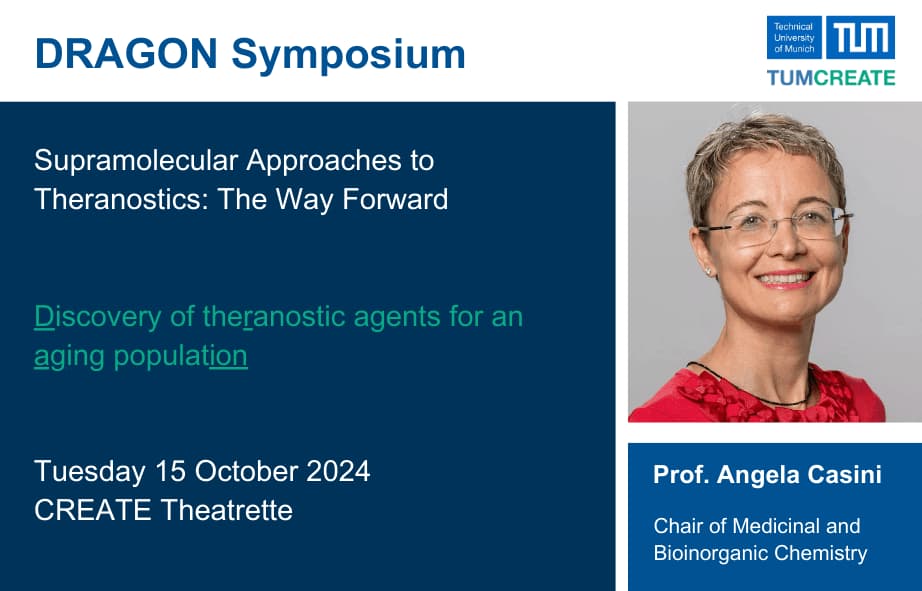
DRAGON Symposium 2024: Spotlight on host Prof Casini Chair of Medicinal and Bioinorganic Chemistry at TUM

Save the date if you are passionate about drug discovery! The DRAGON (Discovery of theranostic agents for an aging population) Symposium, organised by TUMCREATE and hosted by Prof Angela Casini, Chair of Medicinal and Bioinorganic Chemistry at the Technical University of Munich (TUM) will be held on 15 October 2024.  The event, themed “Supramolecular Approaches to Theranostics: The Way Forward,” will explore pioneering research on supramolecules and self-assembled materials, theranostics, and innovative strategies for imaging and therapy. It offers valuable insights into emerging trends in drug discovery and precision healthcare with speakers from TUM, National University of Singapore (NUS) and Nanyang Technological University (NTU).   We had a chat with Prof Casini, a leading expert in medicinal and bioinorganic chemistry on what attendees can expect and how her expertise in supramolecular approaches at TUM directly connects to the Symposium.   Prof Casini’s research at TUM aligns closely with the DRAGON Symposium, drawing on her extensive expertise and expanding the range of supramolecular approaches that can be applied as next-generation multifunctional theranostic agents.  Biomedical applications of metal-based compounds for therapy and imaging, and the roles of metal ions in biological systems has always been intriguing for her.   “The pursuit of new concepts in drug design, while bridging the gap between basic research and clinical applications, is my goal,” says Prof Casini who began her research journey in her hometown of Florence, Italy and has a background in inorganic chemistry.  One of her research interests include novel design strategies for metal-based molecules and materials. This includes supramolecular coordination complexes, applied in various domains of chemical biology, bioanalytical chemistry, radiochemistry, drug delivery and regenerative medicine.   “Besides small molecule metallodrugs, my research broadened to supramolecular structures based on noncovalent interactions. Over the years, I developed a highly interdisciplinary investigational approach. In addition to synthetic inorganic chemistry and structural characterisation of new metal compounds, our group strongly focuses on intensive biological evaluation as potential therapeutic and imaging agents for cancer treatment. We also investigate their mechanisms of action via biophysical and analytical techniques coupled to pharmacological methods,” she continues.  If you are passionate about drug discovery, the DRAGON Symposium offers a valuable opportunity to learn and network with leading scientists and industry experts in the field.  Some scientific highlights include recent results on the assembly of a new generation of radiopharmaceuticals with supramolecular theranostics; the 3D-printing of metal organic frameworks (MOFs) for biomedical applications; bioinspired supramolecular materials as drug delivery systems; ML applied to the understanding of noncovalent interactions via the acceleration of atomistic simulations.  “The presentations will feature senior scientists but also early career postdoctoral researchers who bring all their out-of-the-box ideas, energy and enthusiasm to the event,” says Prof Casini.  The future of medicinal chemistry and precision healthcare is an exciting space to watch. For her, the opportunity to “broaden the chemical space to material design via the control of noncovalent interactions is attractive and recent discoveries in the area of targeted radio-theranostic agents shows that it is possible to accelerate the bench-to-bedside process.” The DRAGON Symposium offers a valuable opportunity to learn and network with leading scientists and industry experts in the field. Register now to be part of this groundbreaking event: here.

TUMCREATE-EPSG workshop240725

TUMCREATE EPSG Research Team Hosted Workshop on Renewable Energies in Southeast Asia

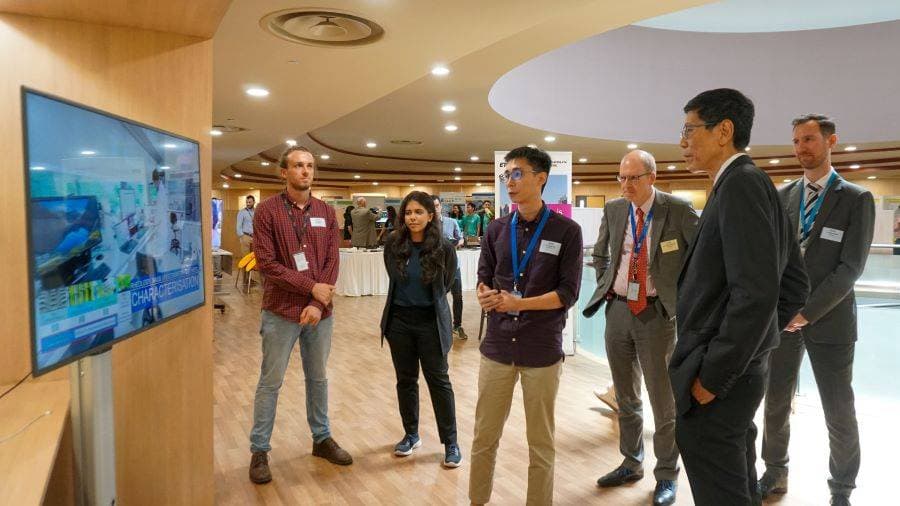
The Energy and Power Systems Group (EPSG) at TUMCREATE hosted a workshop on ASEAN’s transition to a low-carbon future using renewable energy. This is part of TUMCREATE’s research project on Singapore’s Pathway to Carbon Neutrality in collaboration with Nanyang Technological University (NTU).    Both invited and internal speakers addressed current and future challenges to reach the goal of climate neutrality. Requirements for a low-carbon energy system in the Association of Southeast Asian Nations (ASEAN) were also discussed.  Shiddaling Devihosur, a research associate at TUMCREATE, who forecasts Singapore’s and ASEAN’s future energy demand as part of his work package shared about “Forecasting ASEAN’s Electricity Demand”.     He noted, “The electricity demand across ASEAN is expected to triple by 2050. This is driven by population growth and economic prosperity. The transition from petroleum to electric vehicles is an essential first step towards decarbonising our road transport sector. The utilisation of green electricity would further reduce carbon emissions significantly in this sector.”    ASEAN’s path to a low-carbon future is reachable in the years to come.   Fellow research associate and teammate ShweSin Han shared, “Reaching 80% or 95% CO2 reduction in the power sector by 2050 is possible by harnessing ASEAN’s renewable potentials.”    “Introducing new photovoltaic (PV) systems or H2 fuel reduces electricity curtailment and lowers energy system costs. PV, as the leading renewable technology in the region, can be more effectively utilised. This together with hydrogen can serve as an alternative energy carrier, allowing countries with limited renewables to diversify their electricity generation mix,” said Han who presented “A Low-Carbon Power System for ASEAN with Renewables”.    The session concluded with an engaging round-table discussion that included all speakers and the audience.    Thank you to Dr Zulfikar Yurnaidi from ASEAN Centre for Energy, Associate Professor Azmi from Universiti Teknologi MARA and Professor S. Viswanathan from Nanyang Technological University Singapore for sharing valuable insights and to all participants for joining the discussion.    We look forward to future sessions and fostering interdisciplinary discussions with experts from diverse fields within CREATE building and across various research institutions.   Find out more about TUMCREATE’s research on EPSG here.

TUMCREATE Tobias Massier CNA Interview_1

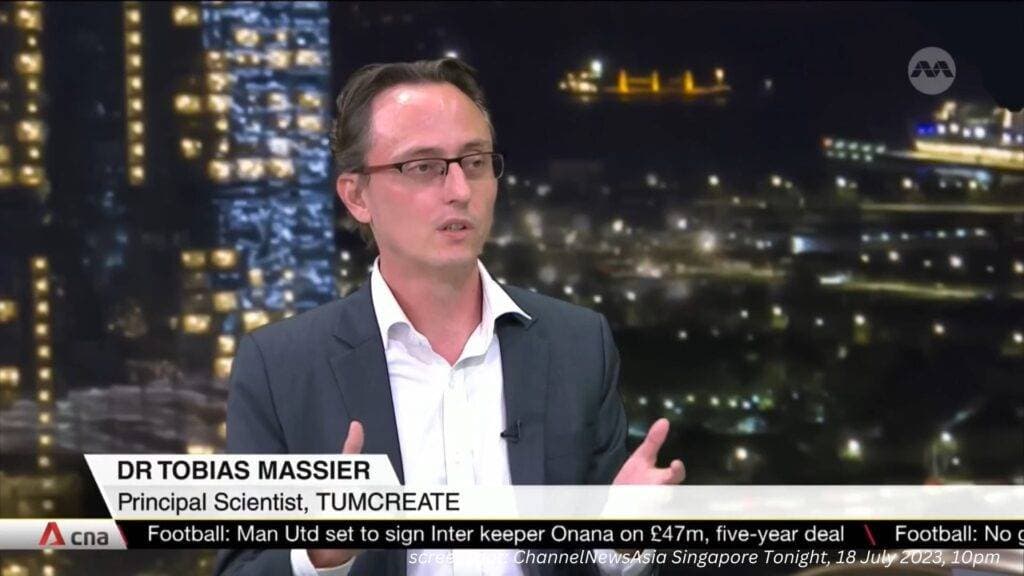
In the News: Dr. Tobias Massier Interview on Channel NewsAsia on Recent Geothermal Discovery in Singapore

A recent research project undertaken by TUMCREATE’s Principal Scientist, Dr. Tobias Massier and Prof. Alessandro Romagnoli from Nanyang Technological University Singapore and Surbana Jurong Group, have uncovered significant geothermal resource that could be a consistent source of clean energy in addition to solar power. Found at a site near the Sembawang Hot spring where the temperature 1.1km underground was 60 deg C to 90 deg C, the resource uncovered opens up possibilities to harness the energy to cover the country’s cooling demand. “Every gigawatt of geothermal power could cover about 12 per cent of Singapore’s current cooling demand, which sounds quite exciting. We are currently researching on the utilisation of geothermal energy to augment Singapore’s energy mix. This is also part of TUMCREATE’s contribution towards achieving Singapore’s national climate target of net zero emissions by 2050,” Dr Massier stated. Check out the broadcast interview on Youtube.

TUMCREATE_Create Webinar_Tobias Massier

TUMCREATE Presents Breaking Down Barriers – Singapore’s Pathway to Carbon Neutrality

With the impact of #climatechange becoming increasingly palpable, the need for climate action has become more pressing than ever.    In the monthly #CREATESeminar series by CREATE, Dr. Tobias Massier, the Lead Principal Scientist of TUMCREATE’s Pathway to Carbon Neutrality, gave a talk about Singapore’s energy transition and its path to carbon neutrality and the role technology can play in this space.   As Singapore sets a slew of initiatives in motion to reach net-zero emissions in the power sector by 2050, many questions begin to unfurl: With 95 per cent of Singapore’s electricity generating from natural gas, what does it mean to be #carbonneutral? How does it affect the supply of energy sources, and how are we achieving net zero emissions?   In this seminar, Dr. Massier shared some strategies researched in the Singapore’s Pathway to Carbon Neutrality project, in which carbon emissions can be mitigated from the demand side, such as utilising cleaner-energy vehicles and making the switch to alternative systems, such as using a central cooling system. In a separate Geothermal-Driven Technologies for Passing Enabling of Urban Sustainability Solutions project, NTU and TUMCREATE have also been exploring Singapore’s #geothermal potential and how it could help to cover the cooling demand in Singapore. Other strategies discussed to reduce Singapore’s carbon footprint are #carboncapture, utilisation and storage, electricity imports, alternative fuels and, in the further distant future – #nuclearpower.   Taken together, they tell a larger narrative of our efforts towards carbon neutrality, and of a long journey in achieving net zero carbon emissions at the core of tackling climate change. We hope the seminar provided an opportunity to learn about some strategies for climate action. We believe that learning in-depth and the magnitude of the work in achieving carbon neutrality would lend more power and impact to the end work itself.    #sustainability #sustainablefuture

Scroll to Top