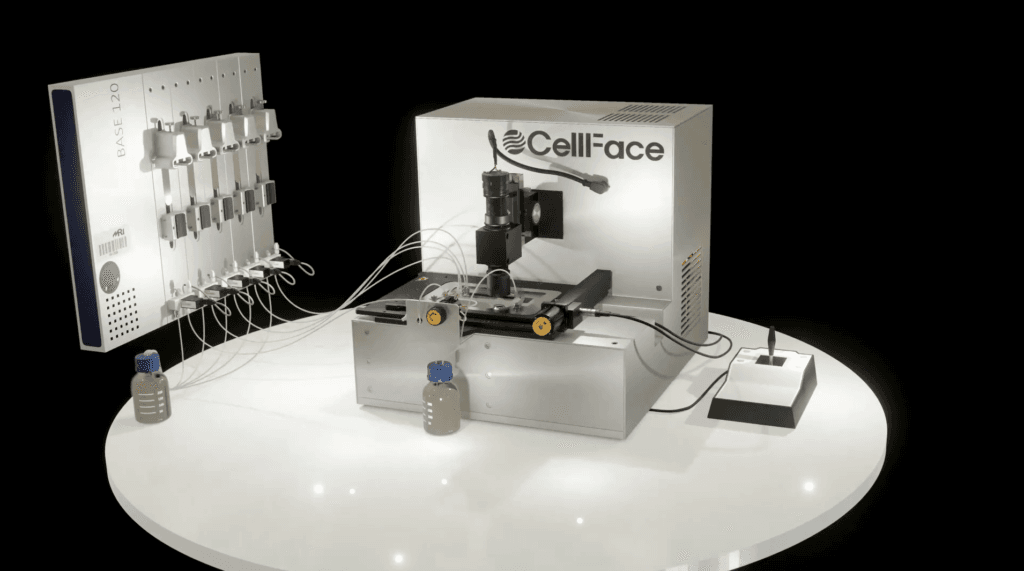
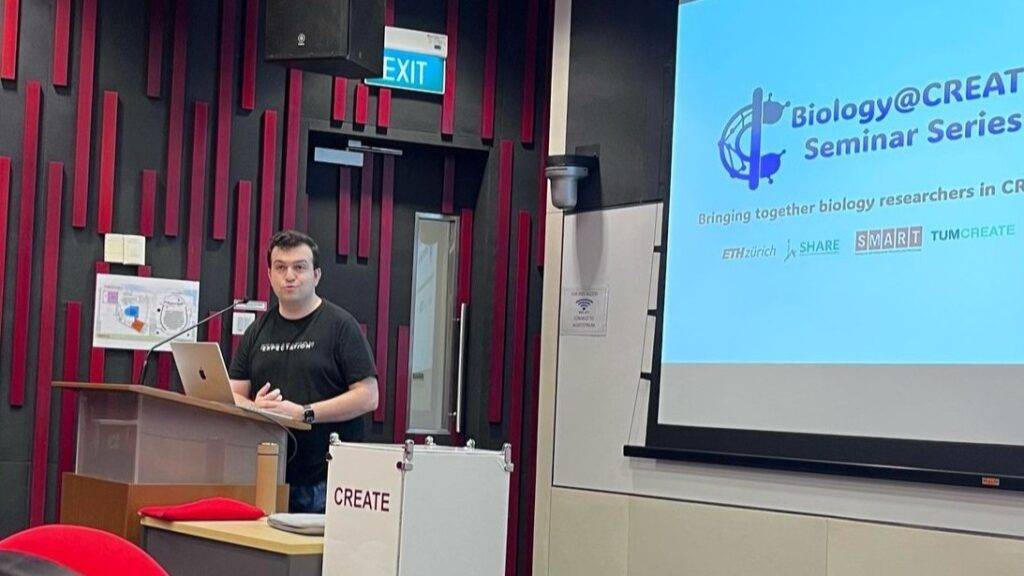
News Trends and Predictions for AI in 2025 Leading experts at TUM and TUMCREATE weigh in on Artificial Intelligence (AI) including agentic AI AI is revolutionising science and reshaping industries. It increases our efficiency and can transform how researchers and decision makers analyse large amounts of data, identify patterns and model complex systems. This could accelerate scientific breakthroughs, redefine impact and streamline workflow automation. Read the insights from experts across AI-assisted medical imaging, urban transport planning and more! From Bench to Bedside: AI revolutionising healthcare The recent hype in AI aside, one thing is clear – AI is here to stay. There is no doubt, one of the largest and most crucial sectors for society that AI will improve is healthcare, from enhancing patient satisfaction in hospitals to robotic surgeries. We anticipate rapid growth in cellular imaging-based diagnostics as AI continues to drive personalised and preventive medicine in the coming years. This progress will translate into faster, more precise, and information-rich test results for clinicians—offering insights that simply weren’t possible with traditional image and data-processing algorithms. That’s why at CellFACE, we are at the forefront of advancing AI-enhanced imaging flow cytometry for haematology and infectious diseases, leveraging our patented technology to uncover hidden biomarkers. We also recognise Singapore as an excellent ecosystem for conducting clinical studies, ensuring that innovative AI-based medical solutions reach patients quickly and cost-effectively. As we look ahead, one thing remains certain. AI will continue to revolutionise healthcare, enabling us to deliver better patient outcomes, more efficient workflows, and ultimately shape a healthier future for everyone. – Kerem Delikoyun, Research Associate at TUMCREATE, CellFACE Trends Shaping AI-assisted medical imaging in 2025 Photo credit: Juli Eberle / TUM There are several trends which will shape the field in 2025. The first trend is the significant growth of foundation models in the field of medical imaging. A foundation model is a large-scale, pre-trained neural network that serves as a general-purpose model for a wide range of tasks. These models are trained on vast amounts of data and can be fine-tuned for specific applications. In the context of medical imaging, these models can significantly improve medical imaging by enhancing accuracy, efficiency, and accessibility, ultimately leading to better patient care. A second trend is the development of large language models (LLMs, such as chatGPT), in particular vision language models (VLMs). Such VLMs understand and generate both visual (e.g. understanding radiological images) and textual information (e.g. understanding radiological reports). Since VLMs can learn the relationships between visual and textual information, they can be used for a wide variety of tasks such as Visual Question Answering (e.g. “show me the tumour in the image”) or Report Generation. This provides a completely new way to interface with AI systems in the context of radiology and pathology. Agentic AI – autonomous action and decision-making One important trend is the emergence of agentic AI systems in medicine and healthcare. In particular, LLM-based agentic systems are capable of processing input information, making plans and decisions, recalling and reflecting, interacting and collaborating, utilising various tools, and taking action. This capability unlocks numerous opportunities in medicine and healthcare, from automating clinical workflows to supporting multi-agent-assisted diagnosis. This is also described in a recent publication [1]. Challenges, transformation and future of medicine and healthcare I expect that the transformative impact of AI in medicine and healthcare will continue, but the speed of adoption will be limited by the fact that clinical translation requires careful validation of AI solutions, understanding AI regulations but also understanding clinical needs and workflows. To tackle these challenges, it will be crucial for multi-disciplinary teams to work together to advance AI for the benefit of patients and doctors. I also expect that the future of biomedical research will be fully data-driven: Experiments will increasingly be guided by data-driven AI models, complementing the currently prevalent serendipity-based methods. This approach will be applicable to both basic research and clinical translation. Just as engineering has facilitated the simulation-based design of cars and planes, data-driven system models will revolutionise human health by enabling the development of therapeutic strategies and precision diagnostics. – Prof. Daniel Rückert, Alexander von Humboldt Professor for AI in Medicine and Healthcare at the Technical University of Munich. Navigating AI and AI-human interactions The scientific community increasingly recognises AI’s importance in research, as evidenced by recent Nobel Prize awards in Chemistry and Physics for AI-related breakthroughs. We’ll see the merging of traditional knowledge silos, with AI serving as a bridge between different scientific disciplines. However, with the current AI hype, one of the big challenges I foresee on the application side is to acknowledge and understand the limitations of certain AI approaches, especially when reasoning and explainability play an important role. Domain expertise must remain at the core of innovation. That’s why Singapore’s National AI Strategy[2] is so important as it allows us, researchers, to strengthen the very foundation on which future technology will rely on. I believe there’s significant potential to improve how humans interact with complex software, particularly expert tools. By incorporating powerful natural language interfaces and AI agents capable of deriving insights and executing concrete actions, we can flatten traditionally steep learning curves and make these tools more intuitive and productive. For CityMoS (City Mobility Simulator), our transport planning software, this could mean AI agents analysing large datasets, identifying key metrics, and automating the extraction of insights, enabling users to focus on strategic decisions rather than on technical details. – Dr. David Eckhoff, TUMCREATE Principal Scientist and Business Development Manager, Co-Founder intobyte (a spin-off from TUMCREATE) References Qiu, J., Lam, K., Li, G. et al. LLM-based agentic systems in medicine and healthcare. Nat Mach Intell 6, 1418–1420 (2024). https://doi.org/10.1038/s42256-024-00944-1 Singapore National AI Strategy 2.0 (NAIS 2.0) | Ministry of Digital Development and Information (2025) Available at: https://www.smartnation.gov.sg/nais/ Media and Communications: Email ← Back to News