Carbon Neutrality

EPSG Singapore Pathway to Carbon Neutrality workshop 250305_ (20)

TUMCREATE Engages Policymakers from Energy Sector in findings for Singapore’s Pathway to Carbon Neutrality

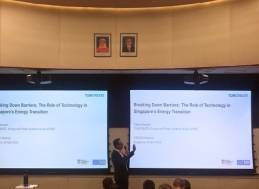
TUMCREATE’s Energy and Power Systems Group (EPSG) hosted a workshop on 5th March 2025, bringing together policymakers from the energy system sphere.   As the project moves into its final year, the team around the project’s lead PIs, Prof Dr Thomas Hamacher, Prof S Viswanathan, Prof Harald Klein, Dr Ding Ovi Lian and Dr Tobias Massier, Principal Scientist and Head of EPSG, presented a summary of their findings to date. This included the latest results on new energy technologies such as carbon capture and storage (CCS), liquid air energy storage, and hydrogen technology pathways.     Among other findings, the studies projected the energy and electricity demand for Singapore and the region. The team has integrated demand estimates and forecasts on the new energy technologies into its energy system model. This model has been proven to find the optimal power production mix for Southeast Asia with a high share of renewable energies, CCS plants, hydrogen and nuclear plants. The main finding from the energy system model is the future dominance of solar photovoltaics in the region to reduce carbon emissions from power generation.   The engaged experts discussed insights on the possible pathways for Singapore’s energy future which include electricity imports, carbon utilisation and Singapore as a hydrogen hub. The best options for Singapore’s energy future in the mid-term concluded a lively event.     These exchanges took place against the backdrop of Singapore’s Green Plan to use cleaner energy sources1, supporting the nation’s climate neutrality goals, its transition to net zero by 2050 and Singapore’s National Hydrogen strategy2.   The Singapore’s Pathway to Carbon Neutrality project is a collaboration with Nanyang Technological University (NTU). 

TUMCREATE-EPSG workshop240725

TUMCREATE EPSG Research Team Hosted Workshop on Renewable Energies in Southeast Asia

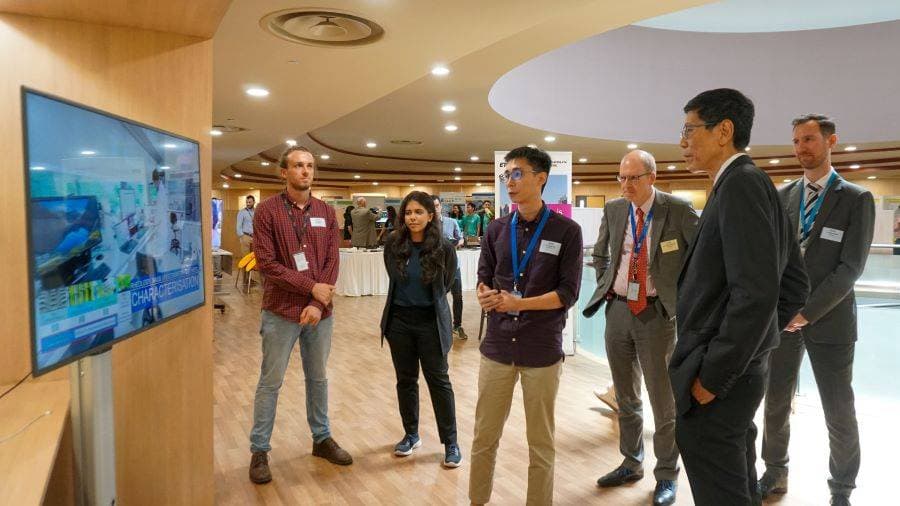
The Energy and Power Systems Group (EPSG) at TUMCREATE hosted a workshop on ASEAN’s transition to a low-carbon future using renewable energy. This is part of TUMCREATE’s research project on Singapore’s Pathway to Carbon Neutrality in collaboration with Nanyang Technological University (NTU).    Both invited and internal speakers addressed current and future challenges to reach the goal of climate neutrality. Requirements for a low-carbon energy system in the Association of Southeast Asian Nations (ASEAN) were also discussed.  Shiddaling Devihosur, a research associate at TUMCREATE, who forecasts Singapore’s and ASEAN’s future energy demand as part of his work package shared about “Forecasting ASEAN’s Electricity Demand”.     He noted, “The electricity demand across ASEAN is expected to triple by 2050. This is driven by population growth and economic prosperity. The transition from petroleum to electric vehicles is an essential first step towards decarbonising our road transport sector. The utilisation of green electricity would further reduce carbon emissions significantly in this sector.”    ASEAN’s path to a low-carbon future is reachable in the years to come.   Fellow research associate and teammate ShweSin Han shared, “Reaching 80% or 95% CO2 reduction in the power sector by 2050 is possible by harnessing ASEAN’s renewable potentials.”    “Introducing new photovoltaic (PV) systems or H2 fuel reduces electricity curtailment and lowers energy system costs. PV, as the leading renewable technology in the region, can be more effectively utilised. This together with hydrogen can serve as an alternative energy carrier, allowing countries with limited renewables to diversify their electricity generation mix,” said Han who presented “A Low-Carbon Power System for ASEAN with Renewables”.    The session concluded with an engaging round-table discussion that included all speakers and the audience.    Thank you to Dr Zulfikar Yurnaidi from ASEAN Centre for Energy, Associate Professor Azmi from Universiti Teknologi MARA and Professor S. Viswanathan from Nanyang Technological University Singapore for sharing valuable insights and to all participants for joining the discussion.    We look forward to future sessions and fostering interdisciplinary discussions with experts from diverse fields within CREATE building and across various research institutions.   Find out more about TUMCREATE’s research on EPSG here.
TUMCREATE_Create Webinar_Tobias Massier

TUMCREATE Presents Breaking Down Barriers – Singapore’s Pathway to Carbon Neutrality

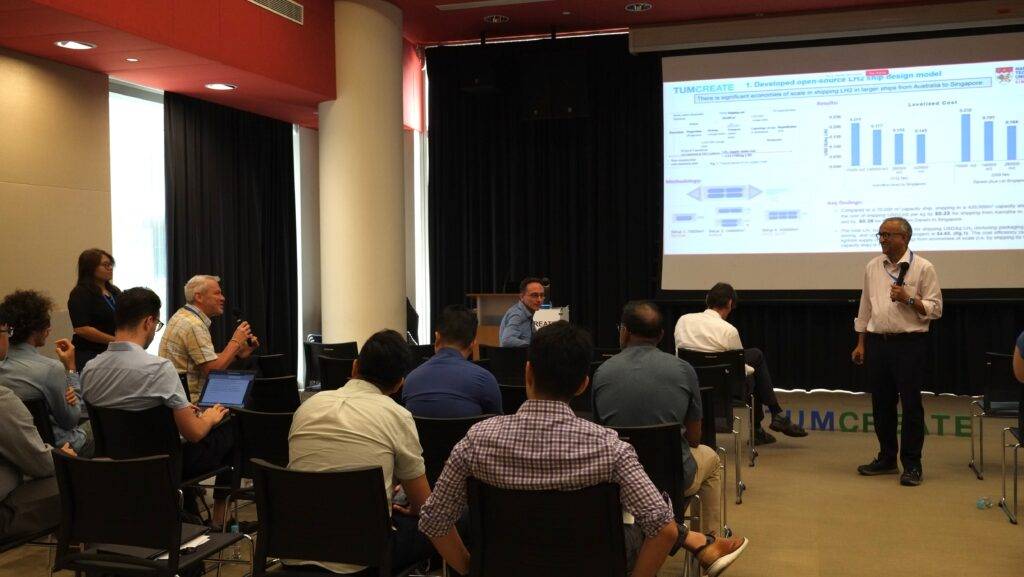
With the impact of #climatechange becoming increasingly palpable, the need for climate action has become more pressing than ever.    In the monthly #CREATESeminar series by CREATE, Dr. Tobias Massier, the Lead Principal Scientist of TUMCREATE’s Pathway to Carbon Neutrality, gave a talk about Singapore’s energy transition and its path to carbon neutrality and the role technology can play in this space.   As Singapore sets a slew of initiatives in motion to reach net-zero emissions in the power sector by 2050, many questions begin to unfurl: With 95 per cent of Singapore’s electricity generating from natural gas, what does it mean to be #carbonneutral? How does it affect the supply of energy sources, and how are we achieving net zero emissions?   In this seminar, Dr. Massier shared some strategies researched in the Singapore’s Pathway to Carbon Neutrality project, in which carbon emissions can be mitigated from the demand side, such as utilising cleaner-energy vehicles and making the switch to alternative systems, such as using a central cooling system. In a separate Geothermal-Driven Technologies for Passing Enabling of Urban Sustainability Solutions project, NTU and TUMCREATE have also been exploring Singapore’s #geothermal potential and how it could help to cover the cooling demand in Singapore. Other strategies discussed to reduce Singapore’s carbon footprint are #carboncapture, utilisation and storage, electricity imports, alternative fuels and, in the further distant future – #nuclearpower.   Taken together, they tell a larger narrative of our efforts towards carbon neutrality, and of a long journey in achieving net zero carbon emissions at the core of tackling climate change. We hope the seminar provided an opportunity to learn about some strategies for climate action. We believe that learning in-depth and the magnitude of the work in achieving carbon neutrality would lend more power and impact to the end work itself.    #sustainability #sustainablefuture

Singapore Pathway to Carbon Neutrality

Singapore’s Pathway to Carbon Neutrality Analysis of New Technologies

Prof Thomas Hamacher (Chair of Renewable and Sustainable Energy Systems, TUM) and S Viswanathan (ERI@N, NTU) were recently awarded the Intra-CREATE project starting on 1 October 2022,  “Singapore’s Pathway to Carbon Neutrality Analysis of New Technologies”. The project The Principal Scientist coordinating the project is Dr Tobias Massier from TUMCREATE.  This is a 3 year Intra-CREATE project in collaboration with NTU to address Singapore’s energy future and the project will be based in Singapore. This project is aligned with Singapore’s commitment to sustainable development and achieving long-term net-zero emissions. Emissions in Singapore are dominated by the power generation, industry and transport sectors. The most significant component is carbon dioxide, primarily from burning fossil fuels in our cars, trucks, ships, trains and planes in the Transport sector,  while the residential and commercial sectors use electricity generated from burning natutal gas in power stations. Singapore’s mitigation efforts includes improving energy efficiency through several programmes by tapping on four switches to transform our energy supply. 1. Solar to counter the intermittency of renewable energy sources 2. Regional  Power Grids to access low-carbon electricity 3. Emerging Low-Carbon Alternatives like the utilization and storage (CCUS) technologies and hydrogen to help reduce carbon footprint 4. Natural Gas produces the least amount of carbon emissions and is currently still the dominant fuel for Singapore. However, there are still limitations. How does TUMCREATE’s new Singapore’s Pathway to Carbon Neutrality Project Analysis of New Technologies ome in? Three groups of scenarios will be examined. The first scenario looks at the potential of the development of a global market for hydrogen or synfuels with Singapore as a regional hub for these energy carriers. The second group assumes intense cooperation of ASEAN countries in the field of energy. The third group remains in the fossil fuel paradigm but reduces emissions using CCU, CCUS or carbon production with Singapore as the central hub in the ASEAN region.  Click to read more about the project HERE If you are interested in embarking on this meaningful journey, do check out the Careers page HERE

Scroll to Top